Brussels – Since the start of US and Israeli military operations against Iran on 28 February, the European Union has spent an additional 24 billion euros – over 500 million euros a day – on energy imports due to rising prices. Less than five years since the energy crisis triggered by Russia’s large-scale aggression against Ukraine, the Old Continent therefore finds itself facing another vulnerable situation on the same front, caused by its dependencies.
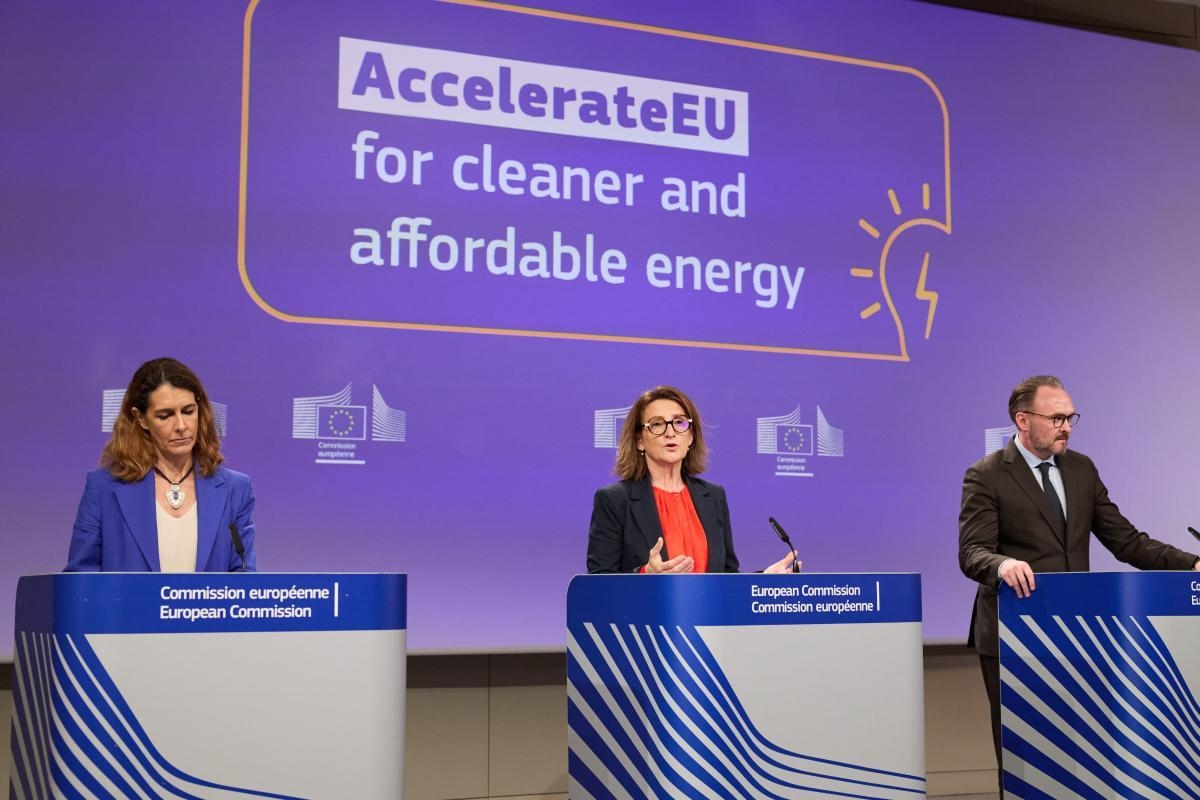
“Europeans are paying the price of Europe’s dependency on imported fossil fuels,” the European Commission said. To address the situation, it presented today (22 April) AccelerateEU, a package of measures “to bring immediate relief to European households and industries, especially the most vulnerable ones, while putting Europe on a steady pathway to energy independence.”
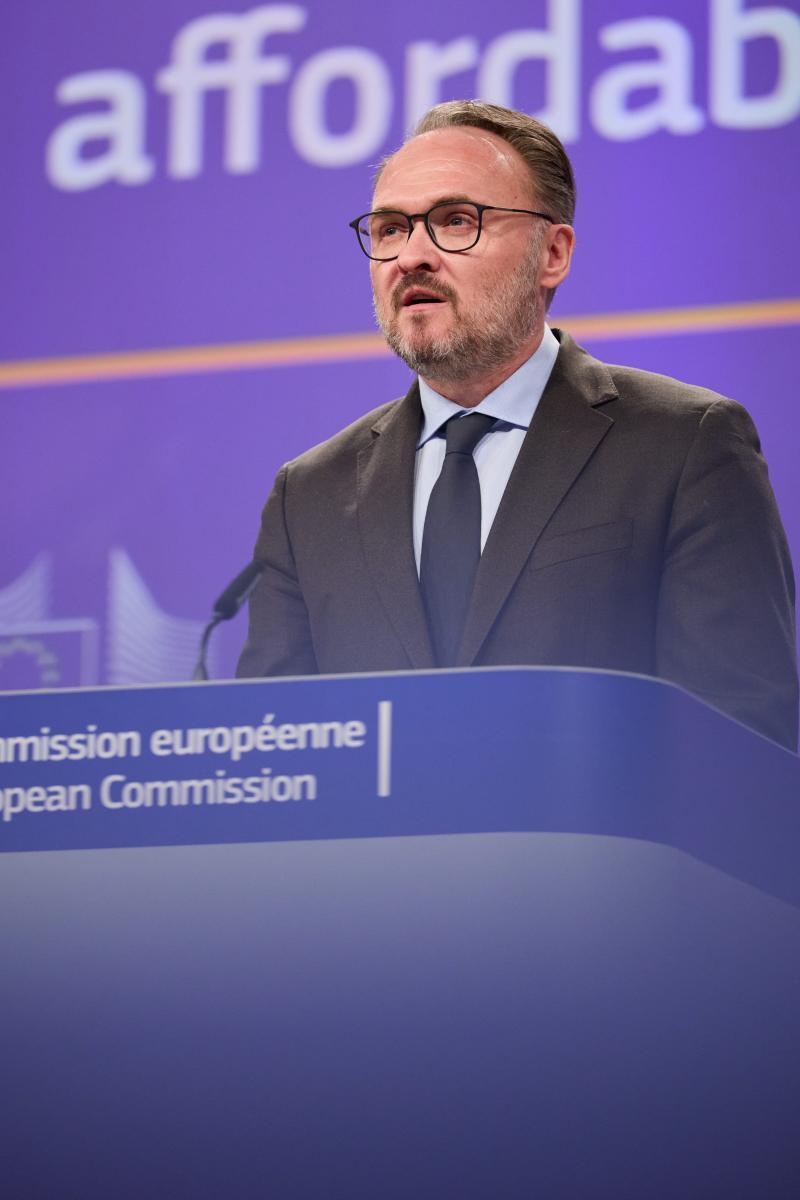
“These costs are being felt here and now, in homes and businesses across Europe. But the true impact of this crisis is long-term. It is evolving. It is unpredictable,” European Commissioner for Energy, Dan Jørgensen, said at a press conference. According to the Danish politician, it is necessary “to be clear with our citizens” as “the coming months will be full of uncertainty” and “The crisis will hit different Member States in different ways.” But since “we cannot predict everything, we must be prepared for anything,” he added. For the Energy Commissioner, “this is not a slight short-term price rise”, but “a crisis likely to be as severe as those of 1973 and 2022 combined” and “this means that very difficult months, or perhaps even years, lie ahead, depending, of course, on developments in the Middle East.” Even in the most positive scenarios. “If we assume that peace arrives tomorrow, it will take, for example, two years, perhaps even longer, for Qatar to rebuild its gas production and transport infrastructure” and “this means that LNG prices on the world market will neither stabilize nor fall over the next two years,” he explained, adding that in the worst-case scenario, “we would be talking about far-reaching and widespread consequences for our economy as a whole.”
In this uncertain climate, the European Commission Vice-President responsible for a Clean, Fair, and Competitive Transition, Teresa Ribera, made it clear that the EU executive is “ready to take further action if the situation could worsen.” Because she wanted to make clear, “we don’t know how long it could last. We know that we want to respond since the very first moment. Five sets of actions, to be undertaken both at the European level and at the Member State level,” explained Ribera.
The starting point for AccelerateEU is the recognition “in no uncertain terms that accelerating the transition to clean, secure, and affordable energy is an economic and security imperative,” according to Brussels.
Coordination, the establishment of a new Fuel Observatory, timely, targeted, and temporary measures, accelerating the transition to domestic clean energy, strengthening the grid system, and promoting investment: these are the five key measures.
According to the President of the European Commission, Ursula von der Leyen, “Our AccelerateEU strategy will bring both immediate and more structural relief measures to European citizens and businesses. We must accelerate the shift to homegrown, clean energies. This will give us energy independence and security, and mean we are better able to weather geopolitical storms.”
For Brussels, coordination is “key.” This coordinated action by the 27 Member States includes filling underground gas storage facilities, using flexibility in filling rules, or an exceptional release of oil reserves. The oil and gas coordination groups meet frequently to ensure full situational awareness among Member States, while “national emergency measures and measures aimed at ensuring the availability of jet fuel and diesel, including the availability of oil refinery production capacities, should be closely coordinated,” the EU executive states.
A new Fuel Observatory will be established to to track EU production, imports, exports and stock levels of transport fuels in the EU. This will enable swift identification of potential shortages and, in the case of emergency stock releases, inform targeted measures to maintain balanced fuel distribution.
To mitigate the impact of high fuel prices and possible fuel shortages on the EU aviation sector, the Commission will also provide clarity on existing flexibilities within the EU aviation framework. “We will set up an observatory to gather all the necessary data: where capacity is located, who owns it, how much we import or export, and where we can source supplies should we find ourselves in a situation like this,” Jørgensen explained, noting that this is the “sector currently under the greatest pressure.” Even though over the past days Brussels has repeatedly emphasized that there is currently no fuel shortage, according to the EU Commissioner, the estimate by the International Energy Agency , which calculated a range of just six weeks for the EU , must be taken “seriously.” And “even though we are not there yet, we could indeed find ourselves in a situation that would cause us a real problem,” and “we are well aware that our economies depend, of course, on the ability to fly: many people will be going on holiday this summer. Many cities, regions, and Member States depend on tourism and, naturally, are very concerned,” he stressed.
There will be timely, targeted, and temporary measures to protect consumers, including industry, from price spikes. This includes targeted income support schemes, energy vouchers, and social leasing programs, as well as a reduction in electricity excise duties for vulnerable households. “The Commission will also adopt a State Aid Temporary Framework, which will provide additional flexibility for national governments, including emergency measures to support the most exposed economic sectors,” the Commission explained.
In addition to protective measures, Brussels intends to accelerate the transition to homegrown clean energy to replace oil, gas, and fossil fuels for transport, and, by the summer, the Commission will present an action plan for electrification “to remove barriers to the electrification of the industrial, transport, and building sectors.” Meanwhile, “swift implementation of the Sustainable Transport Investment Plan is key to accelerating the rollout of sustainable aviation fuels.” Furthermore, work is needed to strengthen the grid system, where the aim will be both to ensure the full implementation of existing legislation and the swift conclusion of negotiations on the European Networks Package, as well as to maximize existing infrastructure for renewable energy. “Rapid repowering of big wind farms and renewable plants, including offshore wind parks and hydropower plants, can quickly deliver much-needed additional relief,” the Commission said, adding that it will “present a legislative proposal on network charges and taxation, ensuring, among others, electricity is taxed less than fossil fuels,” the EU executive stated.
Finally, investments. Here, the Commission will help Member States make the best use of available EU funding. But public funds alone will not be enough to cover the massive investment needs – 660 billion euros a year until 2030 – required for the energy transition. And, to mobilize private investment, the Commission will build on the clean energy investment strategy adopted in March and organize a clean energy investment summit bringing together the financial services sector, including major institutional investors, industry leaders, project developers, and public funding bodies, with a view to accelerating private financing.
Some no’s
In addition to the five proposed measures, however, Brussels has also issued a series of no’s. Such as the rejection of the resumption of imports of Russian energy, subsidies for fossil fuels, or any challenge to the emissions trading system, the ETS. “It would be a huge mistake to start importing Russian energy again. And the Commission’s decision is very, very clear: no, in future we will not import a single molecule of Russian energy,” Jørgensen emphasised, recalling that Russian President Vladimir “Putin has used energy as a weapon against Member States” to “blackmail them,” and that “when we buy – if we buy – his energy, we are also indirectly helping fund the war against our friends in Ukraine.”
He also took a firm stance on the most polluting energy sources. “We should not simply be burning taxpayers’ money on fossil fuel subsidies,” but “use these funds to develop and invest in modern technologies that create added value for European consumers and producers,” Jørgensen noted. This way, “year after year, we will help Member States to scale up solutions of this kind, and improve energy efficiency and replace oil and gas with alternatives such as geothermal energy, solar thermal energy, and sustainable next-generation biofuels.”
While the ETS “is the main driver of Europe’s decarbonization, and has been a success,” enabling us to “significantly reduce our emissions” while “at the same time fostering growth in the sectors covered by the ETS.” Therefore, “it has not been a competitive disadvantage: on the contrary, it has triggered a transition and a transformation that have strengthened the competitiveness of many industries,” Jorgensen said. A fact also highlighted by Vice-President Ribera: “The long-term signals put in place alongside climate policies, including the emissions trading system, and the cost of CO2 emissions have been among the most successful factors in driving the transformation of energy systems and the modernization, as far as possible, of many of our industrial sites. We should therefore not compromise these long-term signals.”
English version by the Translation Service of Withub![Il commissario per i Trasporti, Apostolos Tzitzikostas [Bruxelles, 5 novembre 2025]](https://www.eunews.it/wp-content/uploads/2025/11/tzitzikostas-251105-350x250.png)



![Il ministro dei Trasporti, Matteo Salvini [Bruxelles, 5 dicembre 2024. Foto: Emanuele Bonini per Eunews]](https://www.eunews.it/wp-content/uploads/2024/12/salvini241205-120x86.jpeg)