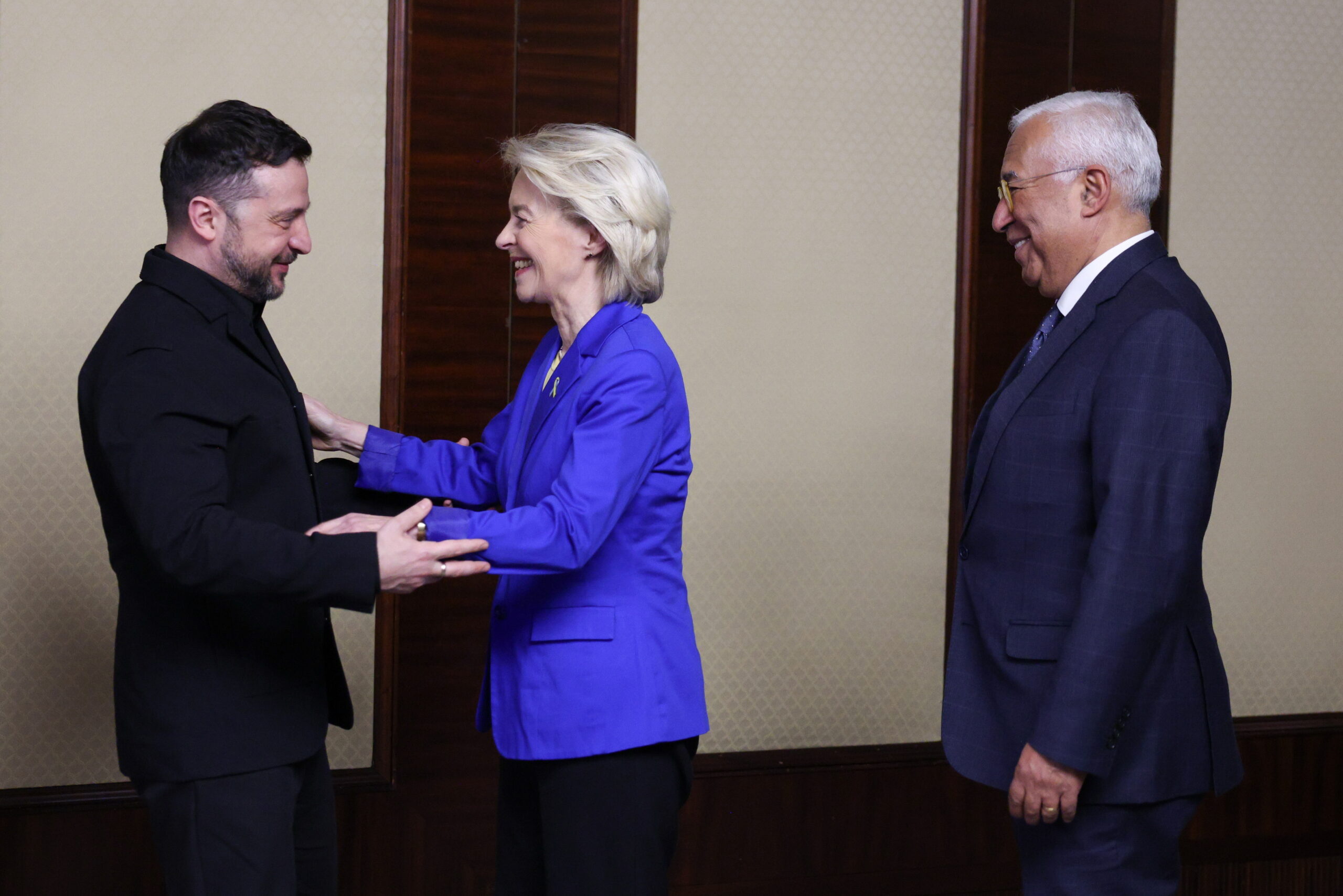
Brussels – Final approval has been given to the European Union’s €90 billion aid package for Ukraine for 2026 and 2027 and to the twentieth package of sanctions against Moscow. The loan to Kyiv had been agreed at the December European Council by the heads of state and government of the EU-27, and today (23 April), following the lifting of the Hungarian veto linked to the disruption of oil supplies from the Druzhba pipeline, the Council adopted the final legislative act. This will enable the European Commission to begin disbursing the funds to Kyiv as soon as possible, in the second half of this year.
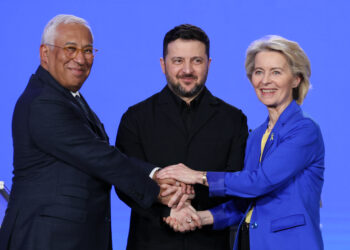
“The written procedures for amending the regulation on the Multiannual Financial Framework (MFF) to support the €90 billion loan for Ukraine and the 20th package of sanctions against Russia have been successfully concluded. Both documents were adopted unanimously,” announced a spokesperson for the Cypriot Presidency of the Council of the EU at 13.44. The President of the European Council, António Costa, rejoiced: “Promised, delivered, implemented. The EU’s strategy for achieving a just and lasting peace in Ukraine is based on two pillars: strengthening Ukraine, increasing pressure on Russia. Today we moved forward on both.”
The former Portuguese Prime Minister, who now heads the EU institution bringing together the heads of state or government of the 27 Member States, as well as the President of the European Commission, and which sets the EU’s priorities and general political guidelines, has clarified that the aim was to “unblock the €90 billion loan to Ukraine, guaranteeing financial and military support for 2026–2027″ and to “adopt the 20th package of sanctions against Russia, reducing its ability to wage war.” And this demonstrates that “Europe remains steadfast, united and unwavering in its support for Ukraine“.
Meanwhile, Ukrainian President Volodymyr Zelensky emphasised that “today is an important day for our defence and for our relations with the European Union.” He clarified on X that “the European support loan for Ukraine has been unblocked: €90 billion over two years. This package will strengthen our army, make Ukraine more resilient and enable us to fulfil our social obligations towards Ukrainians, as set out in law.
It matters that Ukraine is securing this level of financial certainty—after more than four years of full-scale war.”
With regard to financial assistance, the Council had already adopted on 24 February the regulation establishing the support loan for Ukraine—agreed by means of enhanced cooperation among the 24 Member States, excluding Hungary, Slovakia and the Czech Republic, as decided in December—and the regulation amending the Ukraine Facility, the fund through which the loan will be disbursed.
All that remained was to secure today’s outcome—namely, the green light for the proposed amendment to the multiannual budget: a measure needed to cover the EU’s borrowing on the markets, but one whose adoption—requiring unanimity among EU member states—had been blocked by Budapest until the start of this week.
The funding comprises €30 billion earmarked for macroeconomic support to Ukraine that will be disbursed to Kyiv via macro-financial assistance or through the Ukraine Facility and may be used to address Ukraine’s most urgent budgetary needs, and €60 billion to strengthen Ukraine’s capacity to invest in the defence industry, including the procurement of defence equipment. Under the decisions taken, €45 billion will be made available to Ukraine this year: €16.7 billion for budgetary support (€8.35 billion provided through macro-financial assistance and €8.35 billion through the Ukraine Facility) and €28.3 billion to support Ukraine’s industrial capabilities in the defence sector.
With these funds, Ukraine will have access to defence products from Ukrainian, EU, EEA-EFTA and other third-country industries, such as Canada, which will have concluded a bilateral agreement with the EU under the SAFE Regulation—the European Security Instrument which will enable up to €150 billion in loans to be raised for defence investments by Member States—or have demonstrated that they have met specific conditions and commitments, such as having concluded a security and defence partnership with the EU, have committed to providing a fair and proportionate financial contribution to the costs arising from the loan, and provide significant financial and military support to Ukraine. Exemptions are also provided for in cases where Ukraine’s military requirements necessitate the urgent supply of a defence product not available within the envisaged scope.
The 20th package of EU sanctions against Russia
The twentieth package of sanctions against Moscow, presented on 6 February, had also been blocked by Hungary’s veto but has now been given the green light by the member states. It targets Russia’s energy, financial, and commercial sectors, as well as the defence industry, and expands anti-circumvention measures. In particular, “it lays the groundwork for a future ban on the use of maritime services for Russian oil,” explain European sources, who stress that “this will take place in full coordination and consultation with the G7 and the Price Cap Coalition, comprising G7 members and other participating countries.”
More specifically, the 20th package adds 36 designations to the sanctions list, covering both the upstream and downstream segments of the Russian energy sector, including oil exploration, extraction, refining, and transport. A further 46 vessels from the “shadow fleet” are subject to a ban on access to ports and the provision of a wide range of maritime transport-related services, bringing the total number of designated vessels to 632. At the same time, 11 vessels are removed from the list in this 20th package as they have returned to compliance. Furthermore, safeguards are being introduced on sales of oil tankers from the EU to prevent end-use in Russia, a mandatory specific due diligence check by EU sellers, as well as a mandatory “no Russia” clause to be included in sales contracts, and, from January 2027, it will be illegal to provide LNG terminal services to Russian entities or to entities owned or controlled by Russian nationals or operators.
Transactions involving two Russian ports, Murmansk and Tuapse, are also prohibited, as are, for the first time, transactions involving an oil terminal in a third country, namely the port of Karimun in Indonesia, used to circumvent the oil price cap.
From a financial perspective, the new measures extend the ban on EU operators conducting business with an additional 20 Russian banks, with limited exceptions, such as humanitarian transactions. This brings the total number of Russian banks barred from access to the EU’s internal market to 70.
Furthermore, the EU is extending the transaction ban to four banks in Kyrgyzstan, Laos, and Azerbaijan “that are contributing to Russia’s war effort by significantly circumventing sanctions or connecting to the Russian Financial Message Transfer System, the Russian banking messaging network,” explains the Commission. Today’s package includes a total ban on trading with any Russian cryptocurrency service provider and any decentralised platform that facilitates cryptocurrency trading, due to their use in circumventing sanctions. Indeed, Brussels notes that, due to the sanctions imposed on the financial sector, “Russia is becoming increasingly reliant on cryptocurrencies for international transactions.” Consequently, it adds to the list of sanctioned entities a Kyrgyz entity operating an exchange platform on which substantial volumes of the government-backed stablecoin A7A5 are traded, and prohibits the use and support of the RUBx cryptocurrency, a stablecoin pegged to the rouble, and the digital rouble, a digital currency currently being developed by the Russian Central Bank, created to enable the circumvention of sanctions. At the same time, the package removes five third-country financial entities from the sanctions list on the basis of their commitments not to engage in prohibited activities.
For the first time ever, the EU is activating its anti-circumvention instrument, banning the export of all numerically controlled machines and radio equipment to Kyrgyzstan, where there is “a high risk that such products will be re-exported to Russia.” A decision which, the Council explains, “follows an in-depth analysis of trade data highlighting a significant increase in re-exports of high-priority common items via Kyrgyzstan to Russia.” On this front, the package adds 60 entities to the list of those providing direct or indirect support to the Russian military-industrial complex or involved in sanctions evasion. Of these, 32 entities are based in Russia and 28 in third countries (China, including Hong Kong, Turkey, the United Arab Emirates, and Thailand).
On the trade front, the EU has decided to extend the export ban to laboratory glassware, certain high-performance lubricants and related additives, energy materials, chemicals, rubber and vulcanised rubber articles, steel products, metalworking tools, and industrial tractors, with a total value exceeding €360 million. In addition, further restrictions are being imposed on imports of goods that generate significant revenue for Russia: certain raw materials, metals, certain minerals, steel and other metal scrap, chemicals, vulcanised rubber articles and tanned hides, worth over €570 million. A quota is also being introduced for ammonia imports.
In the military sphere, the 20th package designates 58 companies and individuals involved in the development and production of military equipment, such as drones. In addition, the EU has now designated 16 entities based in China, the United Arab Emirates, Uzbekistan, Kazakhstan, and Belarus that have supplied dual-use goods or weapons systems to the Russian military-industrial complex. Meanwhile, 60 new entities will be subject to stricter export restrictions on products that contribute to the technological advancement of the Russian defence sector. Some of these entities are also based in third countries other than Russia, such as China (including Hong Kong), Turkey, and the United Arab Emirates.
Finally, today’s package contains 120 additional listings, including 33 individuals and 83 entities, resulting in the freezing of assets and a ban on making funds and economic resources available to them, as well as, in the case of individuals, travel bans; introduces further legal protection for EU companies against retaliation by the Russian government, allowing courts in Member States to fine Russian citizens who bring abusive lawsuits in Russian courts; provides for a settlement ban against Russian competitors who take advantage of the de facto unlawful expropriation of EU operators by the Government of the Russian Federation and includes a settlement ban against Russian nationals who steal and use the intellectual property rights of EU operators in Russia without their consent.
Measures against Kremlin propaganda also include combating mirror sites that circumvent the broadcasting ban by disseminating online the same content as the listed propaganda media outlets (such as Russia Today, Sputnik, etc.), and a ban on accepting funding, including donations or grants, from the Russian government in the research and innovation sector.
English version by the Translation Service of Withub