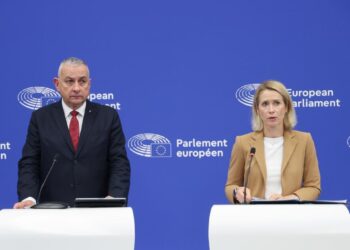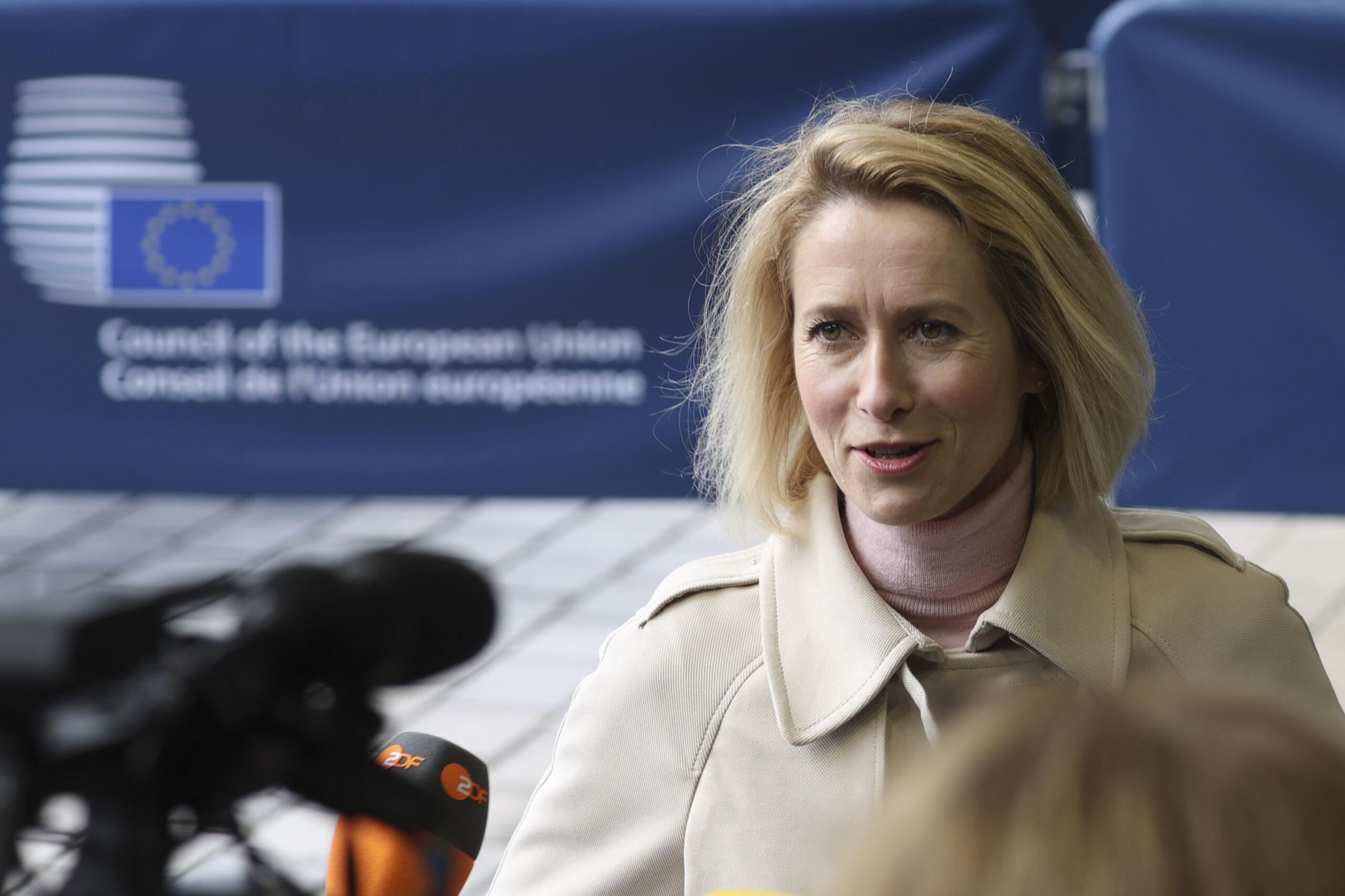
Brussels – The European Union expects to approve the 90 billion euro loan for Ukraine tomorrow, EU High Representative for Foreign Affairs and Security Policy Kaja Kallas confirmed on her arrival today (21 April) at the EU Foreign Affairs Council in Luxembourg. “We expect positive decisions tomorrow on the 90 billion euro loan to Kyiv. Ukraine really needs this loan, and it also signals that Russia cannot overwhelm Ukraine. This is extremely important at this moment,” she said. Other EU ministers share this hope. They see the breakthrough as a direct consequence of the electoral defeat of former prime minister Viktor Orbán, his veto on aid, and on the 20th EU sanctions package against Moscow.
As the Swedish Minister for Foreign Affairs, Maria Malmer Stenergard, explained, “The European Union must strengthen, accelerate, and expand its support for Ukraine, as well as increase pressure on Russia. I am fairly optimistic, following the removal of the Hungarian obstacle, that we will be able to keep the promise made to the Ukrainians regarding the 90 billion euro [loan, ed] and that we will be able to proceed with the twentieth package of sanctions, but also with the twenty-first package of sanctions that we must adopt before the summer,” she explains. Or, as the Latvian minister, Artjoms Uršuļskis, puts it. “It is clear that Russia is not willing to accept a ceasefire. They tried at Easter, without success. This means that our policy should be to exert continuous pressure and now, following the elections in Hungary, a truly significant window of opportunity is opening up,” he said. “We must get back to breaking the deadlock. We must return to the 20th package of sanctions. We must work concretely on the 21st package. We already have a list of points to add, and we expect our partners to act swiftly and decisively,” he added.
The Cypriot Presidency of the Council of the EU announced yesterday that it had added the following items to the agenda for a vote without debate at tomorrow’s (22 April) meeting of Coreper II – that is, the meeting of the ambassadors of the 27 EU Member States – the amendment to the Multiannual Financial Framework (MFF), which is the final green light required for the European Commission to disburse the first installments of the 90 billion euro joint loan to Kyiv agreed by the heads of state and government in December 2025. Meanwhile, the other two elements of the measure – the loan to support Ukraine and the regulation amending the Ukraine Facility – were already formally adopted in February. Now, once EU ambassadors approve the amendment to the MFF, the Cypriot Presidency will launch the written procedure for its final adoption. At that point, the disbursement process could take place within two or three weeks.
Brussels is therefore keen to see positive changes in its relationship with Budapest as soon as possible. The announcement from Cyprus and Kallas’s statement are the first consequences of the election in Hungary, which, with the end of Viktor Orbán’s time at the helm of the government, has also led to the lifting of the veto that the former prime minister had placed on the loan to Kyiv and on the 20th package of EU sanctions against Moscow. In a letter sent to António Costa, President of the European Council, Orbán explained that “Hungary will accept without delay the amendment to the Multiannual Financial Framework regulation if oil transfers via the Druzhba pipeline are restored.” An announcement already made by the former Hungarian prime minister on Sunday on X. “Through Brussels, we have received an indication from Ukraine that they are ready to restore oil deliveries via the Friendship pipeline as early as Monday, provided that Hungary lifts its blockade of the €90 billion EU loan. Hungary’s position has not changed: no oil = no money. Once oil deliveries are restored, we will no longer stand in the way of approving the loan. The disbursement of the loan does not impose a financial burden or obligation on Hungary,” Orbán wrote.
A development from Budapest that Brussels seized, with the European Commissioner for Enlargement, Marta Kos, who, speaking at a hearing before the European Parliament’s Committee on Foreign Affairs yesterday (20 April), explained: “We expect that, as soon as oil starts flowing again through the Druzhba pipeline – which could happen this week – we will be able to provide Ukraine with the long-awaited 90 billion euro loan.“
English version by the Translation Service of Withub