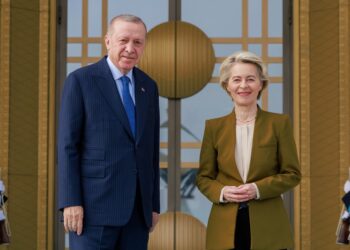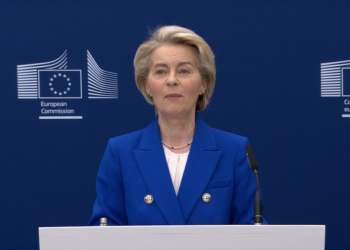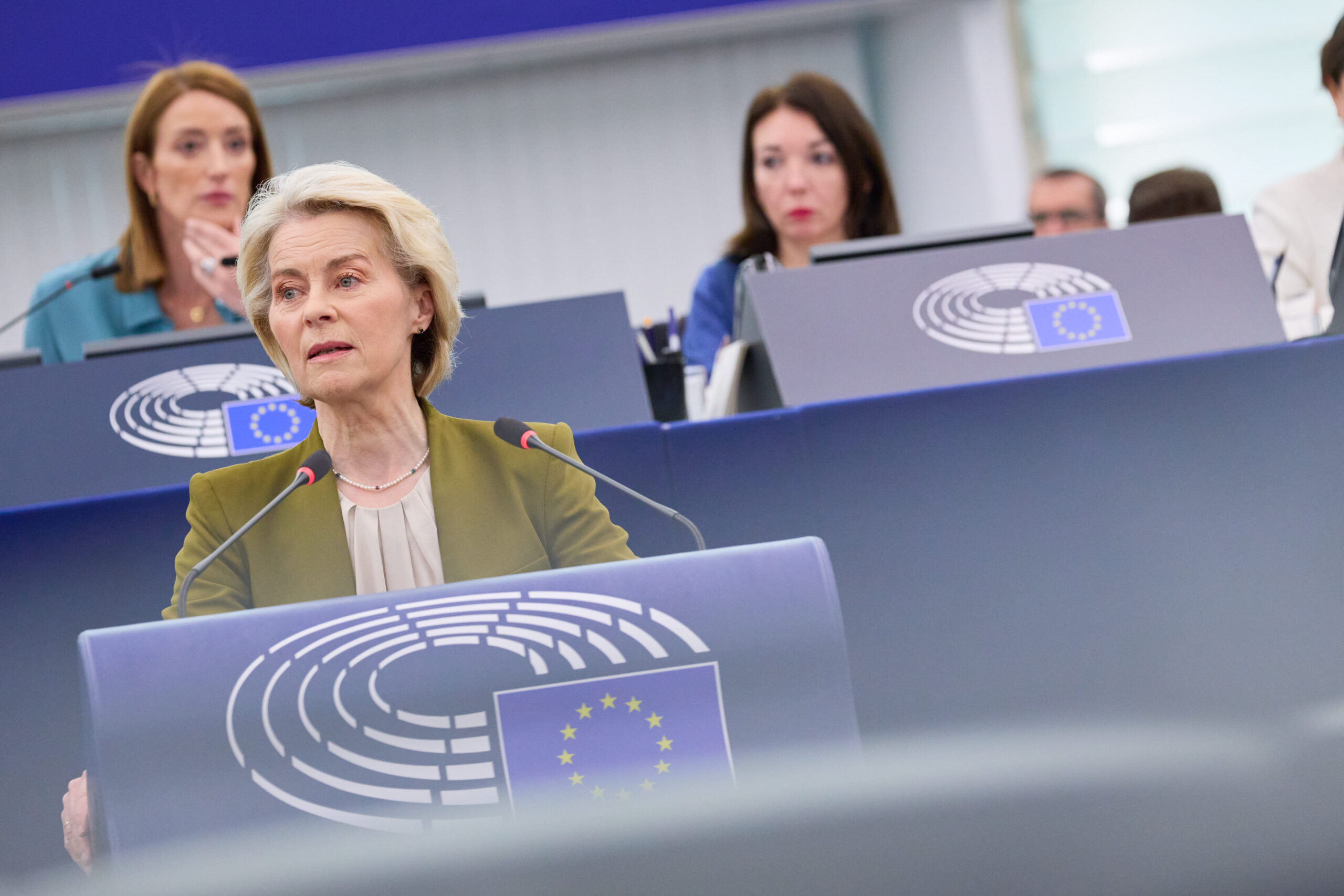
It does not seem to be an easy time for the European Commission, and especially for its President, Ursula von der Leyen.
The war in the Middle East, with the return of politics taking precedence and, perhaps, some early ill‑timed statements of support for the Israeli‑American attack, with little regard for international law, has pushed into the background what, first during the Covid crisis and then with the war in Ukraine, had become for many the “voice of Europe.”
Since the signing of the EU-Australia Free Trade Agreement over forty days ago, there have been no significant statements or positions taken by Ursula von der Leyen, not even on the current severe energy crisis; to address it, the Commission has so far proposed more “stopgap measures” than a concrete action plan at the European level, partly due to divisions amongst member states over how to proceed.
In addition, on Monday, in Berlin, she faced criticism from her own party over the red tape and bureaucratic obstacles that the Commission is accused of having created under her presidency, which have had the effect of holding back the European economy – and the German economy in particular – making her a scapegoat for the crisis facing the governing coalition.
Bend, don’t break, until the danger is over (Calati junco che passa la china), von der Leyen must have said, borrowing the famous Sicilian saying. “In the meantime, let me surround the Commission with people close to me.”
No sooner said than done: following a minor reshuffle this week, the key posts of Director-General of DG Trade and Director-General of DG Energy have changed hands, with both positions going to two of von der Leyen’s staunchest allies, just two weeks after the post of Director-General of the highly influential DG Competition was filled by a former member of the President’s cabinet, Anthony Whelan.
With her former deputy chief of staff, Stéphanie Riso, at the helm of the Directorate-General for Budget, her former climate adviser, Kurt Vandenberghe, as Director-General of the Directorate-General for Climate Action, and her former spokesperson, Eric Mamer, appointed Director-General of the Directorate-General for the Environment, the European Commission is increasingly coming to reflect its President.
What also stood out was the removal of the outgoing director‑general of DG Trade, Sabine Weygand, who was “guilty,” as many believe, of having criticised a few months earlier the downplaying of the tariff war with Trump by the von der Leyen–Šefčovič duo, when Šefčovič was serving as European Commissioner for Trade.
With the end of the old European ‘Cencelli’ system — a careful balancing of personal competence and the political weight of each member state — the team of director‑generals of the European Commission, essentially the EU’s “deep state”, increasingly appears to be shaped by what is emerging as the only real centre of power: President von der Leyen’s cabinet.
Who, then, will replace the Italians Roberto Viola and Sandra Gallina, both of whom are stepping down this year from their respective posts as Directors-General of DG Connect and DG Health?
English version by the Translation Service of Withub