
Brussels – “Defence is a fundamental public good.” Andrius Kubiulius is certain of this, and the European Commissioner for Defence has no doubts on the matter. We must move forward, and do so in a truly European way, because we can no longer rely too heavily on NATO, he explains in an interview with Eunews.
Eunews: US President Donald Trump has threatened to withdraw from the North Atlantic Treaty Organisation (NATO), using strong language towards the allies. Don’t you think this weakens NATO, even in the public’s eyes?
Andrius Kubilius: “The United States is making it clear that Europeans must take responsibility for their own defence. As for Trump, he sometimes makes statements in the hope of achieving something, but his remarks create confusion and misunderstandings. The underlying issue is that NATO faces not only defence challenges, but also challenges regarding mutual political trust.”
E: On that note, Denmark, partly due to the US position on Greenland, decided to purchase the Franco-Italian Samp-T air defence systems instead of the American Patriots. Is this the start of a rift between the European Union and the United States?
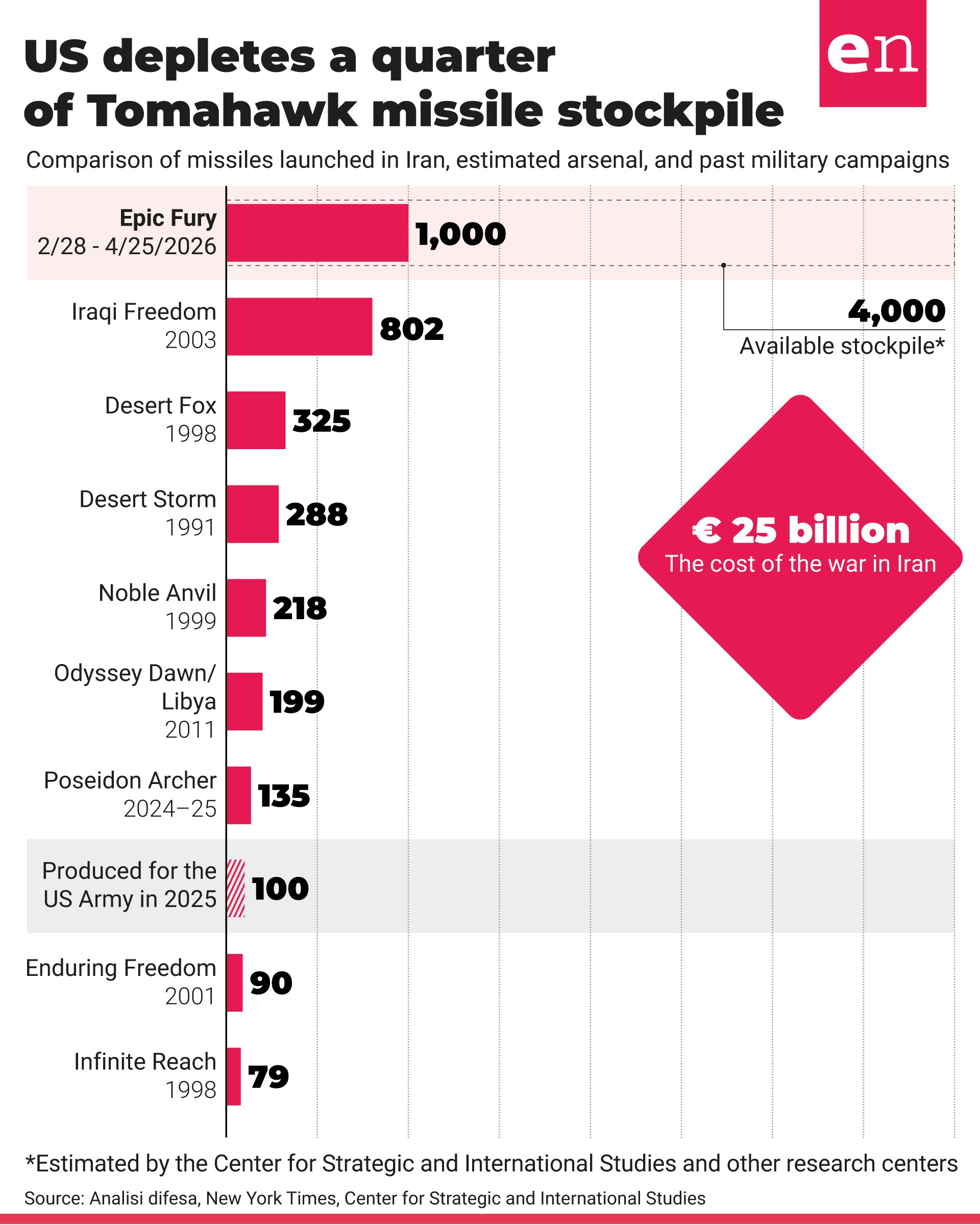
A.K: “There are various reasons and various decisions at play here. To participate in wars, the United States is depleting its missile and interceptor reserves, including Patriots, because when we say interceptors, we mean Patriots. This means that in the coming years, the US industry will be producing to replenish American arsenals, which is a challenge for Europe, as we currently source 40 per cent of our weapons from the United States. We are not buying American technology, not because we no longer like it, but because the supply available for purchase is beginning to run out. Secondly, there is another problem for us Europeans, and I want to point this out to our American counterparts: the AECA regulation on the export of defence products. In practice, the United States does not allow them to be used in a certain way, as we have seen with Ukraine.”
 E: So, in light of this, to what extent will Member States be able to launch joint procurement procedures?
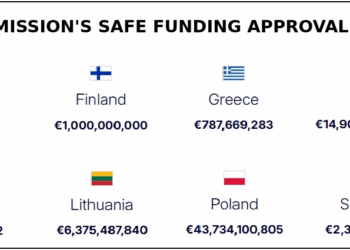
A.K: “We are pushing for this, but we are dealing with a legacy of fragmented defence industries. We have national policies, and the EU has a limited role, but we do still have a part to play in developing a European industry. We are taking action using the tools at our disposal, such as SAFE and support for major pan-European projects. In my view, these initiatives may not be enough to overcome such significant fragmentation. More political and institutional steps are needed. Personally, I urge the countries with the largest industries in the sector to sit down at the table and devise strategic approaches.”
E: Are you confident that this will happen?
A.K: “We have no alternative. There are various ideas for a more European defence framework, such as intergovernmental treaties. Now is the time for wide-ranging discussions.”
E: How have the events of recent months and years affected you? Do they worry you? Or, on the contrary, do they act as a stimulus?
A.K: “There are some very clear challenges: we know that Russia is producing more than we are and that there is a possibility of Russian aggression; we know that our allies have ceased to bear primary responsibility for Europe’s defence and have assumed a secondary role. The United States has now turned its attention to the Indo-Pacific. And the third challenge is the war in Iran.”
E: On that note, the defence sector remains dependent on fossil fuels. How can we protect Europe’s defence sector from crises such as the one caused by the closure of the Strait of Hormuz?
A.K: “Prices are a major concern. When it comes to energy supplies, there is a specific problem with jet fuel. We know that the long-term strategy is for Europe to generate its own energy from renewables and nuclear power, but that will take time. For now, we need coordination at the European level.”
E: How, on the other hand, can citizens be persuaded to accept higher defence spending, which, from a public spending perspective, means cuts in other sectors?
A.K: “Defence is expensive, that’s true. But not investing costs far more. If war breaks out, all opportunities for education and other things are lost. This is a choice that must be made, and it is the responsibility of politicians. I wouldn’t say that citizens aren’t concerned about defence: looking at the polls now, Europeans consider defence a strategic priority. Europeans want to see more European defence, even more than national defence or NATO defence, and now it is up to us to move forward in that direction. Now we must listen to European leaders to find out what they want and what they intend to achieve.”
English version by the Translation Service of Withub


![Il ministro dei Trasporti, Matteo Salvini [Bruxelles, 5 dicembre 2024. Foto: Emanuele Bonini per Eunews]](https://www.eunews.it/wp-content/uploads/2024/12/salvini241205-120x86.jpeg)