Brussels – We are facing a structural crisis that calls for a genuine paradigm shift: housing must cease to be an economic mirage and once again become the foundation of social dignity and competitiveness in Europe. This is the key message that emerged from the event organised jointly by the European Commission and the European Parliament, specifically by the European Parliament’s Special Committee on the Housing Crisis. This morning’s (5 May) event was an initiative which brought together, at the European Parliament’s Belgian headquarters, institutional leaders, mayors, development banks, and youth representatives for an open discussion on the Housing Emergency Plan presented by the Berlaymont Building in December 2025, then amended by Parliament in the plenary session of March 2026.
“Although housing policy remains the responsibility of Member States and local authorities,” notes Irene Tinagli (PD/S&D), Chair of the Parliamentary Committee, “the cross-border nature of these crises means that a stronger European role is not only legitimate, but truly necessary.”
A structural crisis: “The home is the heart of society”
The President of the European Parliament, Roberta Metsola, opened the proceedings with a video message containing a stark warning: “A home is not just four walls; it is where lives are built. When it becomes out of reach, everything else becomes more difficult.” The figures are alarming: one in ten Europeans spends almost half their income on housing, a situation described as “unacceptable” by the President. “Access to housing is a fundamental right to ensure that the essential rights of democracies remain strong and fair,” said the Vice-President of the Commission for a Just, Clean and Competitive Transition, Teresa Ribera, who also emphasised the need to change the paradigm and shift the concept of “home” from an economic asset to an inalienable right. The Vice-President drew attention to the Commission’s work, which is being carried out on three fronts: funding, legislation, and support for young people. These three points formed the basis for the three panels, which featured numerous contributions.
The funding issue
The first focused on the issue of mobilising private and public investment through a European investment platform, with the support of the next multiannual financial framework (MFF), which “places housing needs at the centre, providing Member States with the necessary tools to finance affordable housing projects quickly and efficiently.” The Mayor of Rome, Roberto Gualtieri, quantified the financial challenge: to address the emergency, an estimated €153 billion per year is needed at the EU level. Gualtieri stressed that the mere “eligibility” of housing funding in the next EU budget is not enough, calling instead for housing to become an “explicit and dedicated objective” without diverting resources from other priorities. The Mayor of Rome emphasised that the affordable housing crisis is not merely a matter of social justice, but also affects economic competitiveness, and that “the deepest inequalities are no longer between regions, but within cities themselves.”
Sorcha Edwards, Secretary General of Housing Europe—the European federation for public, cooperative and social housing—went further by comparing housing to the “heart” of an organism: “If the heart isn’t working, nothing works.” According to Edwards, the current crisis is not due to a lack of capital, but to ill-conceived speculative investments that have fuelled social anger and disillusionment with institutions, as well as a lack of support for Europe’s public housing sector, which is struggling to survive due to high construction and capital costs. “The task force’s advisory committee has done an excellent job of emphasising that housing must be treated as infrastructure,” Edwards stresses, “which means we need to think long term.”
Financial institutions took part in the discussion. Tanguy Desrousseaux, Chair of the Housing Emergency Task Force at the European Investment Bank (EIB), announced the aim of doubling the bank’s support to reach €6 billion annually by 2026 for social housing and innovation in construction. Johannes Böhmer, Vice-Governor for Social Development Strategy at the Council of Europe Development Bank (CEB), also confirmed the CEB’s commitment but drew attention to two “necessary” conditions: continued access to InvestEU, the fund that finances high-impact, high-risk social projects, and the availability of adequate subsidies to ensure the economic sustainability of housing for the most vulnerable. With this in mind, the CEB proposes a concrete measure: to allocate 3 per cent of the European Social Fund Plus (approximately €3.5 billion) specifically to tackling housing exclusion.
The forum was marked by a heated debate, sparked by a complaint from a representative of small property owners in Barcelona, who pointed the finger at large American investment funds accused of buying up entire buildings in historic city centres—some of which were even built with European funds—and evicting residents to create tourist accommodation. The spokesperson for the EIB responded to these concerns, noting that its loan agreements now include strict clauses: the financed assets must remain used for affordable housing, and speculative resale is strictly prohibited. According to the bank’s guidelines, such properties may only be purchased by tenants after a long period of time, whilst always guaranteeing public authorities the right of first refusal. The underlying logic is that “every euro invested in construction generates a return multiplied across the entire economy”; however, local governance remains the key element. For the speakers, in fact, it is not enough simply to distribute resources: a solid capacity for absorption at a local level is necessary to create housing ecosystems that are truly sustainable over time.
Simpler legislation
However, money alone is not enough to resolve the crisis. The second panel focused on the need to create a uniform European legal framework (a future Affordable Housing Act) that supports cities, promotes the industrialisation of the sector, and advances environmental sustainability without being held back by administrative issues. The construction sector, represented on this occasion by Federica Brancaccio, President of the Italian National Association of Construction Companies, is calling for a radical simplification of bureaucracy. “Where there is work, there is no housing, and where there is housing, there is no work”: the President emphasised that the housing crisis has a significant impact on regional competitiveness and that national regulations do not help in this regard. “In Italy, it has been highlighted that cities often have to contend with obsolete town planning laws dating back to 1942, where delays in obtaining planning permission can drive up construction costs by up to 16 per cent,” reports Brancaccio.
The issue of young people
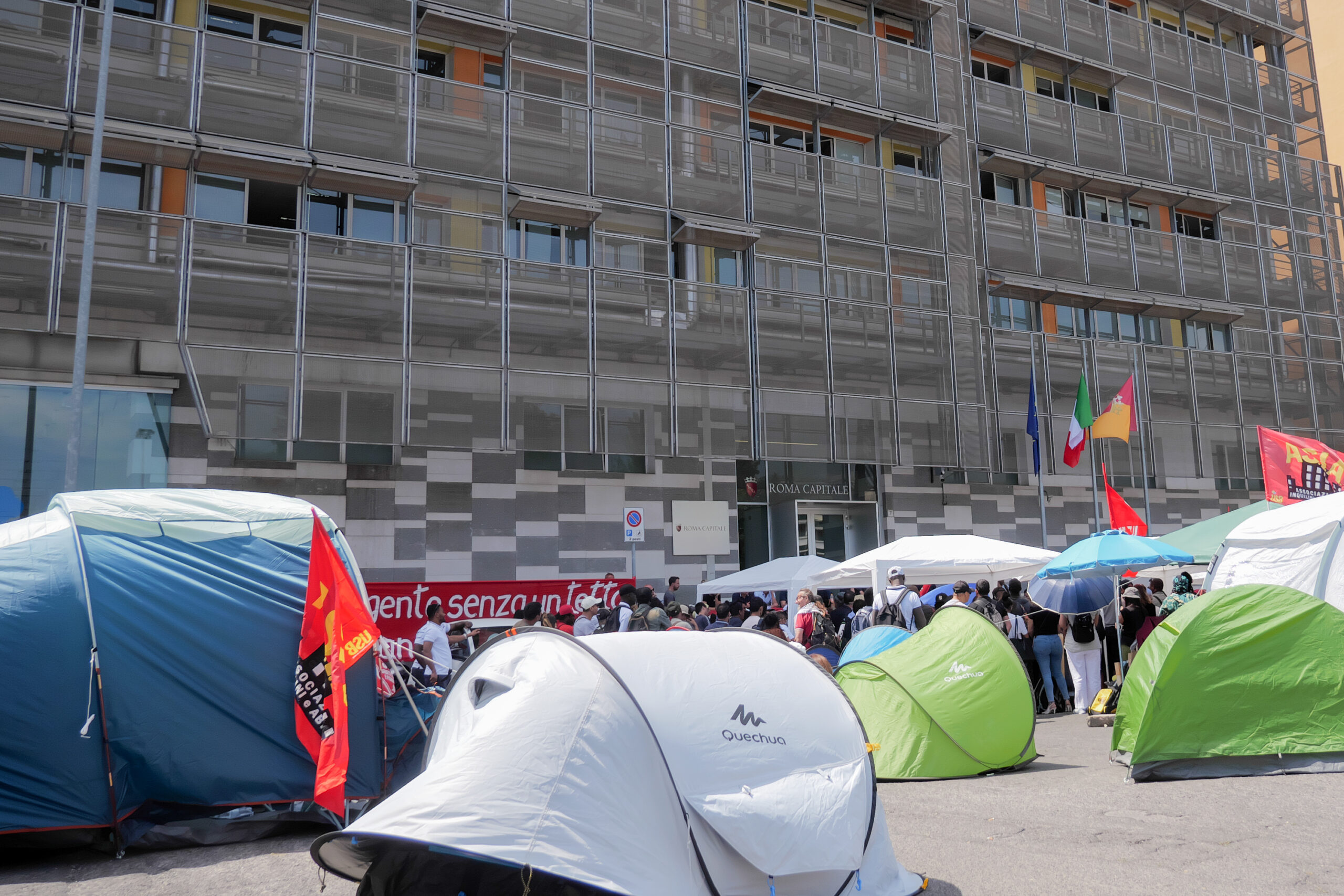
The final panel focused on the third priority announced by the Vice-President of the European Commission: preventing too many young Europeans from being forced to delay their life choices due to the excessive costs of the housing and property market. Local representatives presented data and real-life experiences: “In Italy, only 6 out of 100 students living away from home have access to accommodation at subsidised rates,” reported Tito Rodolfo Maraz Galassi, a member of the Italian National Council of University Students, bringing to mind the famous protests that swept across the entire peninsula, with students camping in tents outside Italy’s major universities. Student representatives have warned against private halls of residence built for speculative purposes, where rents exceed even market prices. A representative of the Erasmus Student Network reports that Erasmus mobility is also at risk: the cost of accommodation has become the leading cause of students dropping out of or abandoning international exchange programmes.
At the close of the event, the European Commissioner for Energy and Housing Policy, Dan Jørgensen, urged everyone not to lose their resolve, stating that, through enhanced cooperation, “the European Union will be able to turn the current difficulties into a reality in which everyone has a place to call home.”
English version by the Translation Service of Withub




![Il ministro dei Trasporti, Matteo Salvini [Bruxelles, 5 dicembre 2024. Foto: Emanuele Bonini per Eunews]](https://www.eunews.it/wp-content/uploads/2024/12/salvini241205-120x86.jpeg)