



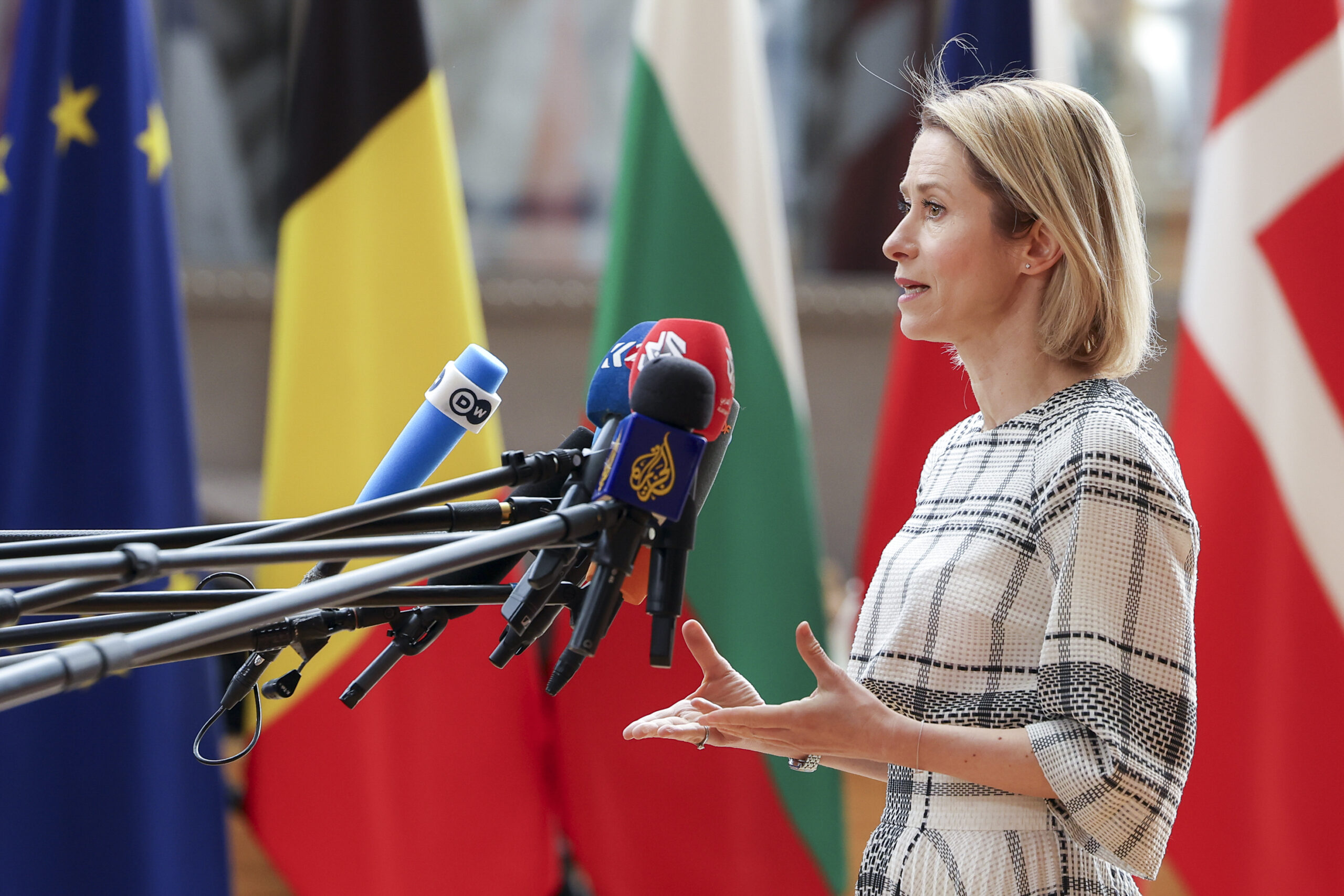

Brussels – So far, the European Union has stood by and watched. The war with Iran is someone else’s war, the United States and Israel, and the 27 member states clarified this immediately and without hesitation. But looking ahead, the EU will have a role to play, and it is already preparing for that moment. “When the war ends, the region will no longer be the same,” said the EU’s High Representative for Foreign Affairs and Security Policy, Kaja Kallas, on the sidelines of the Foreign Affairs Council meeting on defence. The European Union, she explains, is already forging ties with the countries of the Middle East and, even more so, with those of the Persian Gulf, for a new chapter of diplomacy, reconstruction, and stability. “The Gulf countries have told us that they recognise Europe’s role“, the High Representative said. Therefore, “in the long term, there is a place for us.”
Everything now rests in the hands of the United States and its president, Donald Trump, who does as he pleases. While the US is taking military action, the EU intends to act through diplomatic channels and in the name of global prosperity. This is why the Aspides naval mission is back on the agenda. Launched in February 2024 in response to the unrest in Yemen, and in particular to the guerrilla actions of the Houthis, Aspides was considered impossible to extend to the Strait of Hormuz. However, something around the table seems to have changed as discussions on the matter have now begun.
In the debate on the Middle East that defence ministers are holding in Brussels, Kallas goes on to explain that one topic concerns Lebanon and “the other topic is, of course, the Strait of Hormuz and the Aspides naval operation.” For the High Representative, “we just need to amend the operational plan for that mandate, so we can actually proceed quite well if Member States reinforce it, provide more ships, and it already has all the necessary facilities.” In short, imagining Aspides in the Persian Gulf is no longer taboo. This is also because discontent over the economic fallout from the war in Iran and the naval blockade of the Strait of Hormuz is growing. More than a ceasefire, “we would like to see an end to the problems between the United States, Israel, and Iran,” hopes Ireland’s Minister for Defence, Thomas Byrne. “An end to the conflict would allow the economy to flourish.”
Meanwhile, Romania announced its intention to join the international coalition tasked with securing the Strait of Hormuz. But “after the conflict has ended,” Bucharest’s Defence Minister, Radu-Dinel Miruta stressed.
English version by the Translation Service of Withub
![Il presidente del Consiglio europeo, Antonio Costa [Doha, 15 aprile 2026]](https://www.eunews.it/wp-content/uploads/2026/04/costa-260415-350x250.png)





![[Berlino, 10 settembre 2026. Foto: Lorena Deidda/ECB. Copyright: (c) 2026 European Central Bank www.ecb.europa.eu]](https://www.eunews.it/wp-content/uploads/2026/09/lagarde-vucic-260910-120x86.jpg)
