- Europe, like you've never read before -
Sunday, 12 July 2026
No Result
View All Result
  • it ITA
  • en ENG
Eunews
  • Politics
  • World
  • Business
  • News
  • Defence
  • Health
  • Agrifood
  • Other sections
    • Culture
    • Rights
    • Energy
    • Green Economy
    • Finance & Insurance
    • Industry & Markets
    • Media
    • Mobility & Logistics
    • Net & Tech
    • Sports
  • Newsletter
  • European 2024
    Eunews
    • Politics
    • World
    • Business
    • News
    • Defence
    • Health
    • Agrifood
    • Other sections
      • Culture
      • Rights
      • Energy
      • Green Economy
      • Finance & Insurance
      • Industry & Markets
      • Media
      • Mobility & Logistics
      • Net & Tech
      • Sports
    No Result
    View All Result
    Eunews
    No Result
    View All Result

    Home » Business » The ECB: “China’s industrial advancement brings few benefits and many challenges”

    The ECB: “China’s industrial advancement brings few benefits and many challenges”

    The European Central Bank is attempting to assess the impact of the People’s Republic’s growth on the eurozone: “European manufacturers are losing market share”

    Emanuele Bonini</a> <a class="social twitter" href="https://twitter.com/emanuelebonini" target="_blank">emanuelebonini</a> by Emanuele Bonini emanuelebonini
    12 May 2026
    in Business
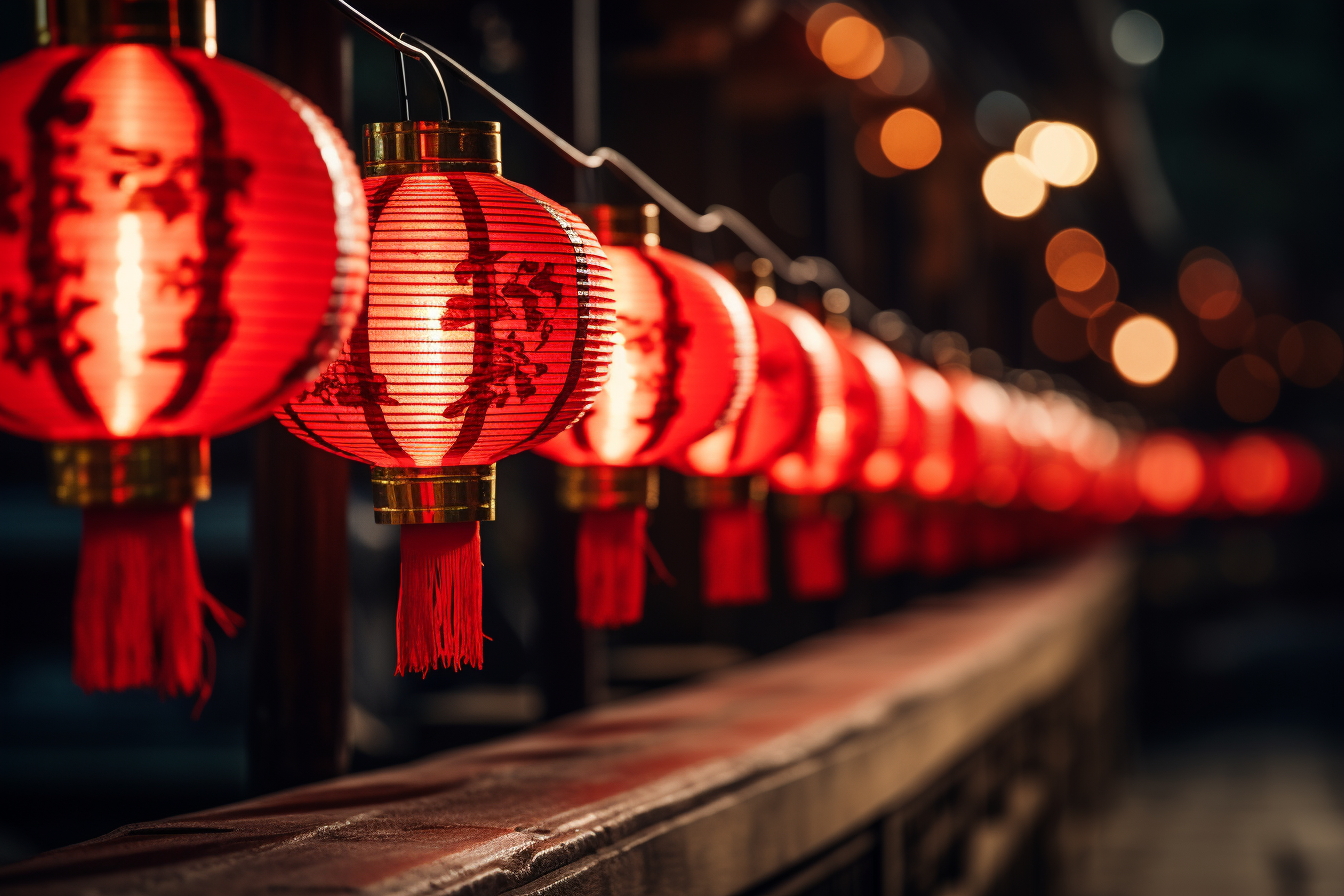
    LANTERNE CINESI LANTERNA CINESE LUCE  LUCI CINA GENERATE AI IA

    LANTERNE CINESI LANTERNA CINESE LUCE LUCI CINA GENERATE AI IA

    Brussels – Weighing up the costs and benefits,”Made in China” is a real headache for the eurozone, which is increasingly having to contend with industrial growth that makes China an almost existential problem. Indeed, because there are also positive spin-offs from the People’s Republic’s rise. EU countries using the single currency find themselves having to welcome Chinese industrial imports to some extent, despite their generally unfavourable impact. The European Central Bank, through a targeted analysis, is attempting to take stock of a phenomenon—Chinese exports—that is becoming increasingly real and already a cause for concern.

    Essentially, as the ECB’s economists point out, China’s industrial expansion “is a key external factor that influences trade, production, and prices in the euro area.” The Chinese manufacturing sector is certainly seeing lower selling prices, “increasing competitive pressures on euro area producers.” It is no coincidence, the Eurotower further notes, that “euro area producers are losing market share where they face competition from China, particularly since 2020.”

    https://www.eunews.it/en/2024/10/28/ecb-china-influence-eurozone-increases/ 

    Furthermore, while in the early 2000s, eurozone countries mainly imported traditional products such as textiles and home furnishings from the People’s Republic, “recently” European demand has shown “stronger growth in advanced manufacturing sectors such as electronics and the automotive industry,” underscoring a loss of competitiveness in more innovative products.

    “Made in China”: between deflationary pressures and challenges for the domestic market

    Not all Chinese imports are the same. When imports mainly concern intermediate goods, the ECB study emphasises that they help reduce costs and support domestic production. When, however, they mainly concern final goods, European consumers can “easily” shift their consumption towards Chinese imports, which are relatively cheaper, and as a result, “EU producers face greater competition and a fall in demand for their products, which slows down EU sectoral production.” 

    However, the availability of cheaper imported goods allows households to spend more, thereby increasing aggregate demand and benefiting the EU’s GDP. Not only that: cheaper Chinese goods “exert a disinflationary pressure in the EU through various channels depending on the sector.” So the eurozone also benefits from Chinese imports, but the European Central Bank’s analysis urges caution. 

    Although the Asian giant’s recent industrial growth may have a positive overall impact on the EU economy in the short term, it has coincided with weak import demand in China and a loss of market share for EU exporters. Furthermore, “the positive effects on EU GDP reflect short-term channels, but do not take into account long-term risks, such as the potential negative effects arising from the relocation of production, or the structural risks and strategic vulnerabilities” that the EU already faces, as in the case of its ports controlled by Beijing, with all the consequences that this entails for security.

    English version by the Translation Service of Withub
    Tags: bcecinacommercioeuropean central bankeurozoneexport

    Related Posts

    Business

    ECB warns that greater Chinese presence in the eurozone could hurt employment

    6 August 2025
    Business

    ECB: Tariff war can deepen Chinese presence in the Eurozone

    31 July 2025
    BANCONOTE CINESI
 CINA
 YUAN
 RENMINBI
 MAZZETTE
 BANDIERA CINESE
    Business

    ECB study: Less democracy in the name of trade with China in the WTO, EU shares some blame

    8 July 2025
    map visualization
    Manifestazione a sostegno dell'Ucraina a Bruxelles. Sullo sfondo il palazzo del Consiglio UE. Source: Photo de Anastasiia Krutotasur Unsplash

    Ukraine and Moldova on the path to the EU: the 27 member states give the green light to the launch of a new accession cluster

    by Giulia Torbidoni
    10 July 2026

    This is the sixth cluster, relating to external relations. Progress has also been made regarding Montenegro and Albania, with the...

    Sede della Procura europea (EPPO) in Lussemburgo. Crediti: EPPO via Imagoeconomica

    Hungary joins EPPO. Von der Leyen: “Welcome to the European Public Prosecutor’s Office”

    by Iolanda Cuomo
    10 July 2026

    The Commission has adopted a decision confirming this: the EPPO will now have a presence in Hungary to protect European...

    Seveso - sicurezza industriale - UE

    Seveso, 50 years on: the lesson that transformed industrial safety in the EU. Still not enough

    by Annachiara Magenta annacmag
    10 July 2026

    The chemical disaster in Brianza led to the introduction of the Seveso Directive, adopted in 1982 by the European Community...

    AMF 'AUTORITÀ PER I MERCATI FINANZIARI FRANCESE FINANZA SEDE

    Financial markets: Ecofin agrees to seek an agreement by October

    by Emanuele Bonini emanuelebonini
    10 July 2026

    The economic ministers of the 27 Member States have given themselves a political mandate to try to approve the reform...

    • Director’s Point of View
    • Opinions
    • About us
    • Contacts
    • Privacy Policy
    • Cookie policy

    Eunews is a registered newspaper
    Press Register of the Court of Turin n° 27


    Copyright © 2025 - WITHUB S.p.a., Via Rubens 19 - 20148 Milan
    VAT number: 10067080969 - ROC registration number n.30628
    Fully paid-up share capital 50.000,00€


    No Result
    View All Result
    • it ITA
    • en ENG
    • Politics
    • Newsletter
    • World politics
    • Business
    • General News
    • Defence & Security
    • Health
    • Agrifood
    • Altre sezioni
      • Culture
      • Rights
      • Energy
      • Green Economy
      • Gallery
      • Finance & Insurance
      • Industry & Markets
      • Media
      • Mobility & Logistics
      • Net & Tech
      • News
      • Opinions
      • Sports
    • Director’s Point of View
    • Draghi Report
    • Eunews Newsletter

    No Result
    View All Result
    • it ITA
    • en ENG
    • Politics
    • Newsletter
    • World politics
    • Business
    • General News
    • Defence & Security
    • Health
    • Agrifood
    • Altre sezioni
      • Culture
      • Rights
      • Energy
      • Green Economy
      • Gallery
      • Finance & Insurance
      • Industry & Markets
      • Media
      • Mobility & Logistics
      • Net & Tech
      • News
      • Opinions
      • Sports
    • Director’s Point of View
    • Draghi Report
    • Eunews Newsletter

    Attention