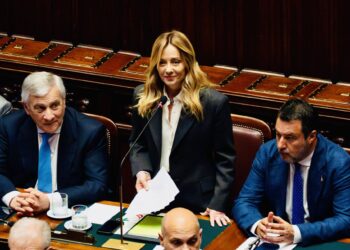
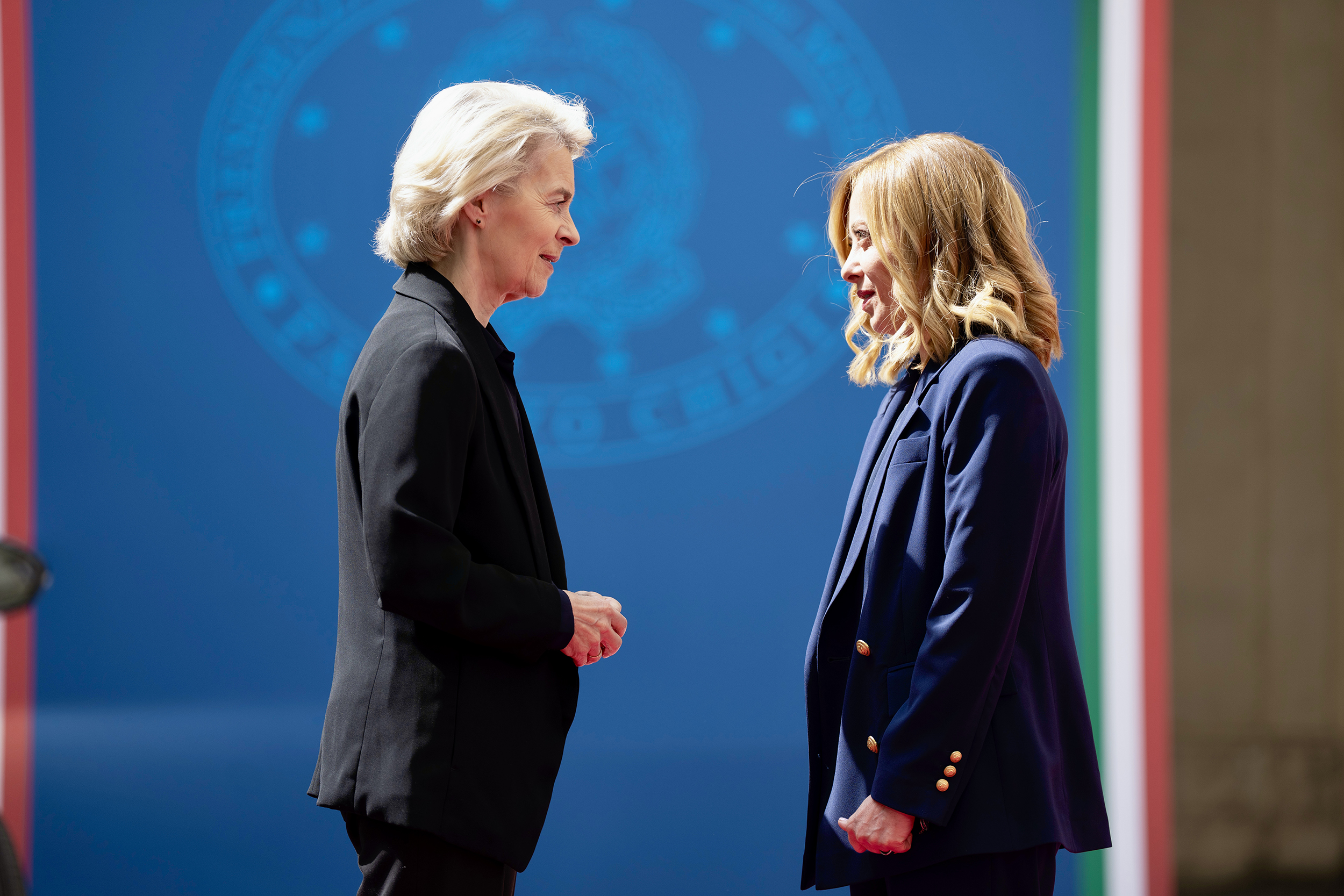

Brussels –Relaxing common spending rules to address high energy costs: Italy is once again pressing for action on an issue that has become a fundamental concern for Giorgia Meloni, with the Prime Minister admitting to domestic difficulties and appealing directly to the President of the European Commission, Ursula von der Leyen, for help. Meloni has personally written a letter to the head of the EU executive, asking that the concept of security be broadened so that it is not understood solely in a military sense. Faced with rising energy prices and yet another round of steep bills, Meloni argues, “we cannot justify to our citizens that the EU allows financial flexibility for security and defence in the strict sense, but not to defend families, workers, and businesses from a new energy crisis that risks hitting the real economy hard.”
Given the situation, Italy “considers it necessary to temporarily extend the scope of the National Escape Clause, already applicable to defence expenditure, to include investments and extraordinary measures required to address the current energy crisis, without altering the maximum deviation limits already set,” Meloni explicitly asks. “In the absence of this necessary political coherence, it would be very difficult for the Italian government to explain to the public any recourse to the SAFE programme under the conditions currently envisaged,” she warns, meaning that Rome is in trouble.
The 150 billion euro SAFE programme provides funding, in the form of loans to be repaid, to spend public money on supporting the defence industry. Meloni is now keeping a close eye on her approval ratings, which have eroded since the governing majority lost the referendum on judicial reform. From that point on, a period of constant problems began for Meloni, all of domestic political nature (starting with the resignations of the Under-Secretary of State for Justice, Andrea Delmastro, and the Minister for Tourism, Daniela Santanché, over legal matters), which have affected the approval ratings of a Prime Minister aware of the current difficulties and who now seems almost to be threatening, by highlighting the possibility of using SAFE funds, to go back on her commitments for national reasons.
From Brussels, for the time being, there have been few comments and only a few tentative openings: “We will explore the existing flexibility within the EU’s budgetary rules,” is all Paula Pinho, head of the European Commission’s press office, is willing to say. The rules will not be changed, nor will Italy be a reason to question them. Balazs Ujvari, spokesperson responsible for budgetary matters, reminds the government that, among all the various EU funds and programmes, “95 billion euros remains available” to finance measures to address high energy costs and high utility bills. In short, the remaining resources can be put to good use. “The focus at this stage is on making full use of the substantial EU resources already available, as the President herself noted following the informal European Council in Cyprus: around 300 billion euros has already been made available for energy investments through instruments such as NextGenerationEU, the Cohesion Policy, and also the Modernisation Fund, with around 95 billion euros still to be utilised,” Ujvari explained. “The main objective now is to ensure that Member States actually use the remaining funds. In addition to public funding, we are also working to mobilise private investment,” he added, noting that the Commission has “recently made the state aid framework more flexible as well, precisely to support this type of investment, including in the context of energy shortages and high prices.”
English version by the Translation Service of Withub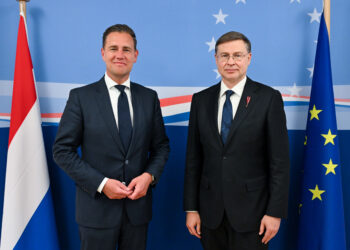
![Il commissario per l'Economia, Valdis Dombrovskis [Atene, 23 aprile 2026]](https://www.eunews.it/wp-content/uploads/2026/04/dombro-260423-350x250.png)