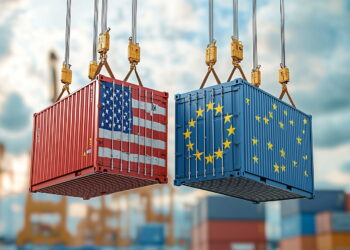
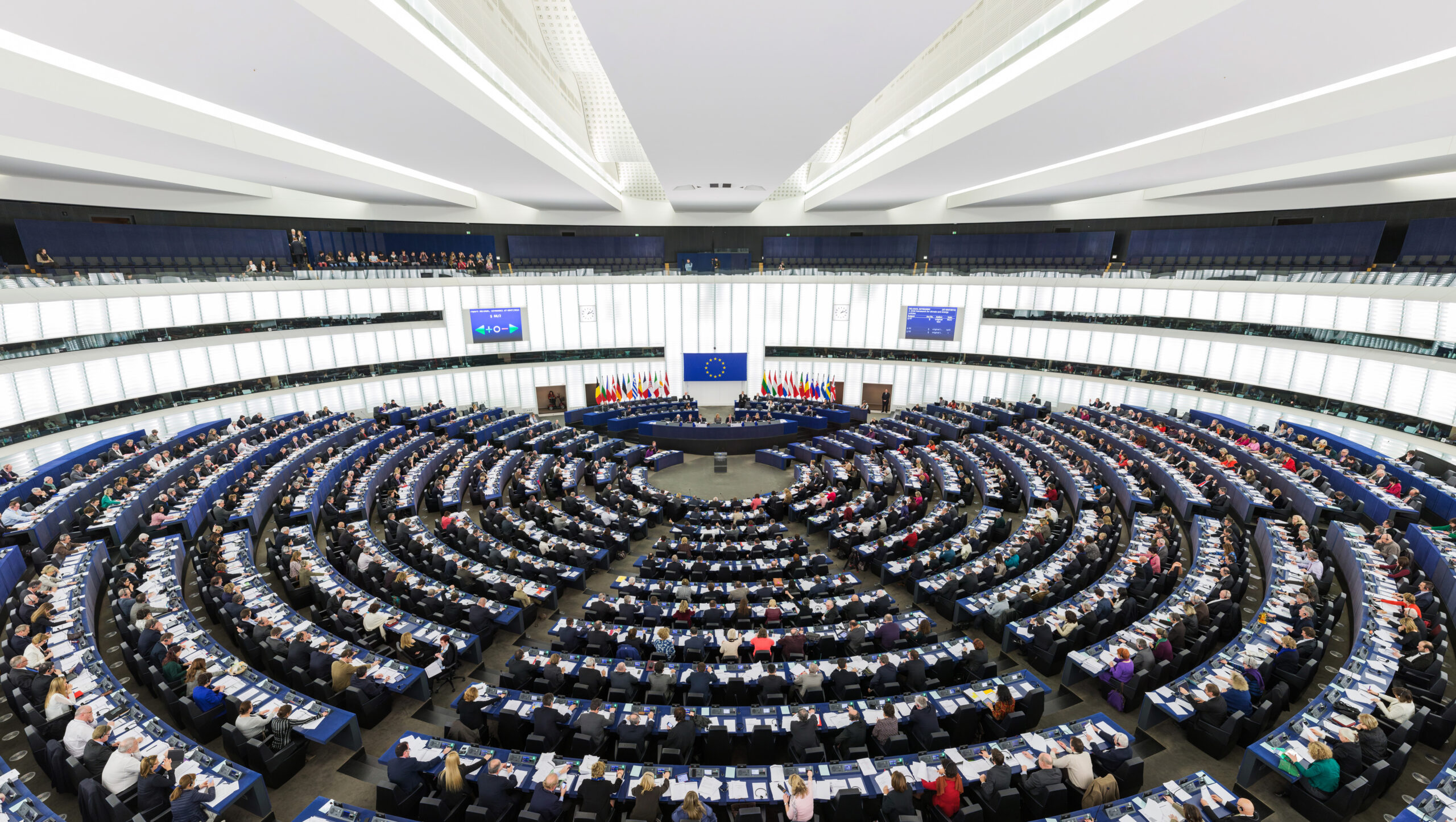

Brussels – The People’s Party, Socialists, and Liberals are united, as they should be according to the political agreements reached at the start of the parliamentary term, but with the support of the Conservatives, which is not in line with those agreements. Meanwhile, the far right and the radical left are maintaining their roles as opposition parties. The interinstitutional agreement on tariffs has given rise to both common ground and differences of opinion within the EU institution directly elected by citizens, regarding a contentious issue which, however, has met with the approval of the EPP, S&D, RE, and ECR groups, while leaving room for discontent among the Left and the sovereigntists of PfE, with the latter choosing to remain silent.
It is mainly the EPP that is celebrating the agreement reached between Parliament and the Council: “The agreement offers greater certainty to European businesses, helping to protect investment and economic stability,” commented the EPP group, sticking to the line that “Europe cannot afford a trade conflict with its most important strategic and economic partner.” The S&D group, on the other hand, rejoices because “the EU-US trade agreement now includes real protections for European workers and businesses.” The Socialist coordinator on the Committee on International Trade, Brando Benifei (PD), points out that “the Tumberry agreement was never what we wanted,” but “rather than accepting the agreement as it stood, we insisted on the introduction of concrete safeguards to protect European interests.”
MEPs from the Renew Europe group also say they are “pleased” that the inter-institutional agreement on tariffs includes “Trump-proof” clauses. According to Karin Karlsbro, the European Liberals’ lead negotiator on the dossier, “Europe has now set the terms for transatlantic relations,” and with the finalisation of the agreement, “we are doing everything possible to ensure the greatest possible stability for ourselves and for European businesses under the current circumstances.” The Conservatives are also satisfied. “The ECR Group has always advocated the need for a pragmatic and forward-looking transatlantic trade relationship, centred on growth, stability, and cooperation. Today’s agreement moves in this direction,” said Kris Van Dijck, the group’s negotiator.
The Greens are sceptical, with Belgian MEP Sara Matthieu asking: “What is an agreement with Trump worth? Last summer, he signed the agreement; this winter, he simply announced a 25 per cent tariff on European cars, in defiance of all the agreements.” On a war footing is Pasquale Tridico, head of the Five Star Movement delegation to the European Parliament: “We are facing a crushing defeat for our Made in Italy products, which will be penalised by unilateral tariffs of 15 per cent compared to US products, which, in some cases, do not even pay tax on the profits they generate.” However, criticism comes from the entire Left group: “The EU-US agreement provides for 15 per cent tariffs on EU exports and zero tariffs on US imports. Meanwhile, Europe will be forced to purchase over €1 trillion worth of oil, liquefied natural gas, and defence products from the United States.”
English version by the Translation Service of Withub