
Brussels – The precarious position of the traditional parties, the rise of anti-establishment forces – often (though not always) of the far right – and an increasingly fragmented party system. This is the picture that emerges from the final results of the parliamentary elections in Cyprus, held yesterday (24 May). These trends are now common to many European Union countries, but in the case of the eastern Mediterranean island, they take on an even more significant, and symbolic, symboli value: Nicosia holds the rotating presidency of the Council of the EU until 30 June, and every political development at home has the potential to influence the choices the country is called upon to make in Brussels.
The stagnation of the traditional parties
Of the 12 parties standing in yesterday’s election, none came close to reaching the 29-seat threshold required to secure an absolute majority in the Cypriot Parliament. Formally, there are 80 seats available, but since 1963, only 56 have been allocated due to the Turkish minority’s refusal to participate in the country’s political life, thus leaving vacant the 24 seats to which they would be entitled.
For the fourth consecutive time since 2011, the Democratic Rally (DISY) won the most votes. With 27.2 per cent of the vote, the centre-right party – a member of the European People’s Party (EPP) family – managed to retain all 17 seats it won in the previous elections in 2021, but has nevertheless suffered a slight drop in popularity: it lost 0.8 per cent of the preferences compared to five years ago.
A stalemate that is essentially similar to that of Cyprus’s other major political family, the Progressive Party of Working People (AKEL). Like its historic rival, the communist-oriented party – whose MEPs are part of The Left group in Strasbourg – retained control of the 15 seats it won in 2021. In this case, however, the slight change in the percentage of votes translates into a positive outcome: AKEL won 23.9 per cent of the vote, an increase of 1.4 per cent compared to five years ago.
The third traditional party to retain its seat in Parliament is the Democratic Party (DIKO), which is liberal socialist in orientation. However, with 10 per cent of the vote, DIKO lost one seat compared to 2021 and ended up with eight.
The rise of the far right and anti-establishment forces
While the political forces representing the so-called ‘establishment’ are trying to hold their ground, the advance of the parties belonging to the diverse anti-establishment movement continues at a much faster pace.
Above all, the party that recorded the most significant growth is the National Popular Front (ELAM), a far-right party belonging to the European Conservatives and Reformists (ECR) group. ELAM – whose roots lie with the neo-Nazis of Golden Dawn, a Greek movement officially designated a criminal organisation by the Athens courts in 2020 – won 10.9 per cent of the total vote, doubling its number of seats from 4 to 8 and achieving the best result in its electoral history. Throughout this campaign, the party led by Christos Christou focused primarily on two issues, particularly sensitive to a section of the Cypriot electorate: immigration and the assertion of the island’s exclusively Greek identity, showing itself to be particularly hostile towards Turkish authorities who have controlled the northern part of Cyprus since 1974.
“This result shows that conservative forces defending security, responsibility and national interests continue to receive support across Europe,” said Polish MEP and ECR co-spokesperson Patryk Jaki in an immediate reaction. His Italian colleague Nicola Procaccini shared this view, emphasising that “the conservative family continues to grow across Europe.”
ELAM is not the only novelty to have surfaced in Nicosia’s political landscape after yesterday’s vote. For the first time, two new political forces will enter Parliament, both expressing the same anti‑establishment sentiment that characterises ELAM, yet without any far‑right ideological profile. These are Citizens for Cyprus (ALMA) — a centrist party founded by former audit‑court judge and anti‑corruption “hero” Odysseas Michaelides — and Direct Democracy (ADK), the personal vehicle of MEP and YouTuber Fidias Panayiotou. With 5.8% and 5.4% of the total vote, respectively, the two newcomers secured four seats each.
President Christodoulides fails the pre-2028 test
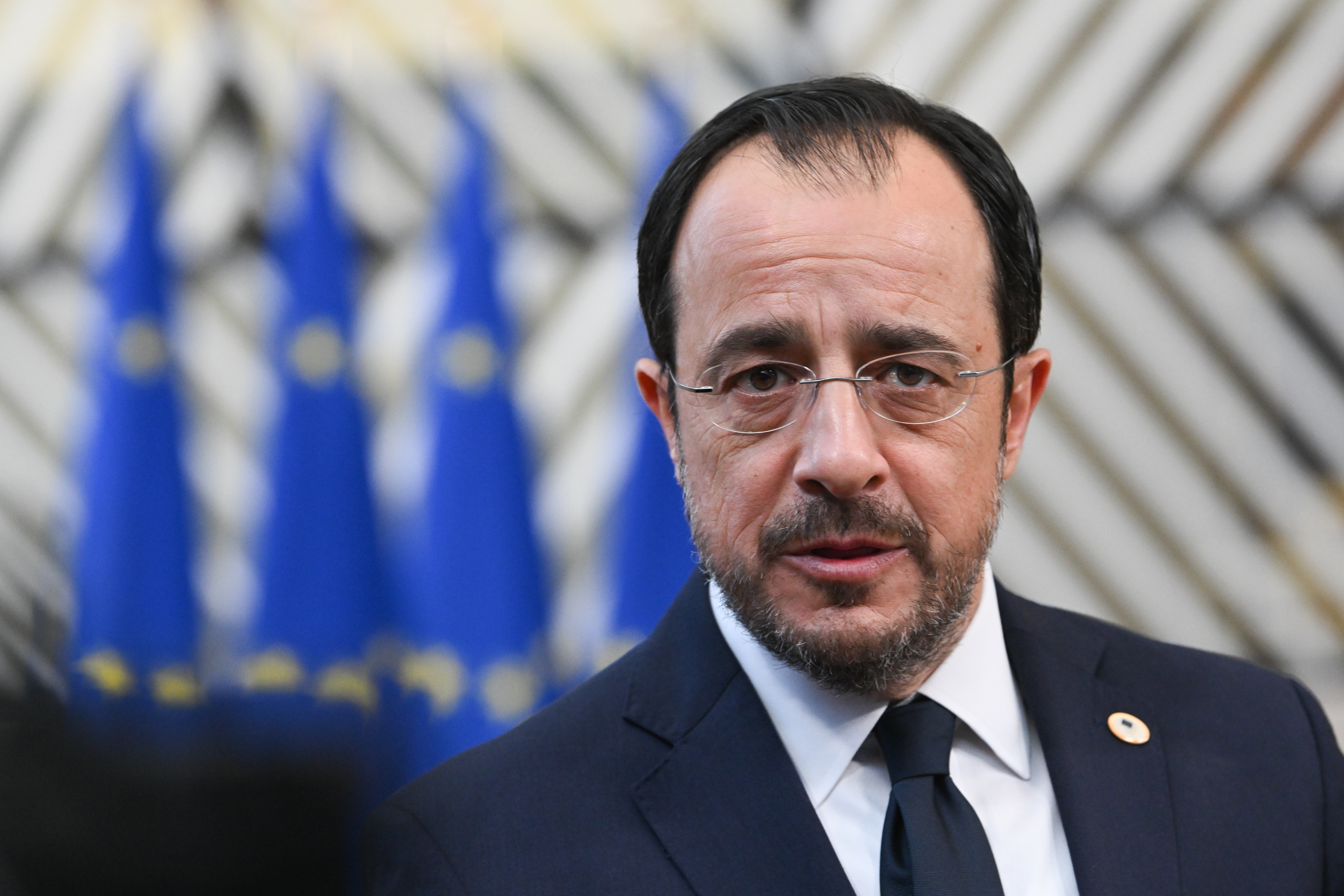
The government system established by the Cypriot Constitution is presidential in nature: the President of the Republic, Nikos Christodoulides, serves as both Head of State and Head of Government and is not bound by any vote of confidence in Parliament. However, the consent of the legislature remains necessary for the adoption of any measure, from ordinary laws to the budget, including constitutional reforms. For this reason, yesterday’s vote was seen as a sort of mid-term test for Christodoulides, and the outcome was largely negative.
Even during the previous parliamentary term, Christodoulides was backed by a minority coalition comprising various liberal-socialist parties, and was regularly forced to seek “outside support” from DISY (the party to which he belonged until 2023, when he was expelled for deciding to challenge the party’s official presidential candidate) to get his bills passed. With yesterday’s vote, the pro-government bloc’s numbers have shrunk further: DIKO is the only party to have returned to Parliament, while the Socialist Party, the Greens, and the liberals of Democratic Alignment failed to clear the electoral threshold. Doing the maths, the government will be able to count on the support of 8 MPs out of 56.
Christodoulides’ position – and his room for manoeuvre – therefore risks being severely weakened by the mid-term vote, and this time, even the support of DISY’s friends-turned-foes might not be enough. Although the party leader, Annita Demetriou, delivered an open-to-dialogue victory speech, stressing the need to forge “agreements to implement reforms that deliver results,” the numbers are stark: even with DISY’s support, only 25 MPs would be willing to vote for the government’s measures, four short of an absolute majority.
For the current President of the EU Council, the concerns do not end there. In addition to the day-to-day running of government affairs – which may require him to reach out to at least one of the anti-establishment parties – Christodoulides will also have to reassess his position ahead of the upcoming presidential elections in 2028.
With the liberal‑socialist support base weakened, the question now is where the country’s leader will turn. If Demetriou’s personal ambitions make a last-minute rapprochement with DISY unlikely, is a dramatic shift towards the far-right ELAM conceivable?
According to Manfred Weber, the leader of the EPP to which the Cypriot president belongs, albeit no longer formally, this is an option that must be categorically ruled out. But ever since his dramatic election in 2023, Christodoulides has repeatedly shown himself capable of unthinkable political manoeuvres.
English version by the Translation Service of Withub