

projected to be significantly higher, which means that even with a lower European beet sugar
production in the upcoming marketing year, sufficient sugar is expected to be available to
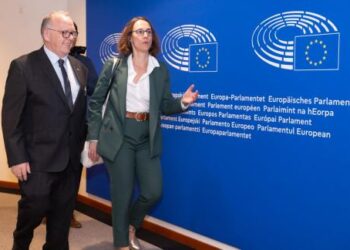
supply the whole EU marke,” said the Commissioner for Agriculture, Christophe Hansen, in response to a parliamentary question submitted to the European Commission on 15 April by the Portuguese MEP from the European People’s Party (EPP), Paulo do Nascimento Cabral.
In his question, the Portuguese MEP asked the Commission to comment on the impact of limited access to raw materials by cane sugar refineries on the local economies of Portugal, Spain, and Italy. He also asked what measures the Commission intends to take to safeguard consumer supplies should they become dependent on surplus production from Northern Europe, an urgent issue particularly in years of low agricultural yields, when producers may prioritise domestic markets, as happened in 2022.
Do Nascimento Cabral pointed out that given the sustained growth in EU beet sugar production over the past two years and the resulting market oversupply, consideration has been given to the possible suspension of inward processing arrangements (IPR) in the sugar sector. DPI processing agreements (or more correctly customs procedures for processing/manufacturing) are special customs regimes that allow non-EU materials or goods to be imported into the Union for processing, without paying customs duties on the original components.
The Portuguese MEP explained that sugar cane refineries in Portugal, Spain, and Italy rely on IPR for their supply of raw cane sugar, so it is unlikely that these plants could replace it with another product without incurring significant and unsustainable import duties. “Cane refining volumes have declined over the past two years while beet sugar production has increased, indicating that cane refiners have not contributed to the current market imbalance,” he concluded.
The written response was received on 26 May 2026. Speaking on behalf of the executive, Hansen reiterated, first and foremost, that the Commission recognises the importance of cane sugar refineries in ensuring a sufficient supply of sugar to the EU market and their role in supporting the local economy and employment. Furthermore, as recommended by the High-Level Group on Sugar, the Commission seeks to maintain the balance between the interests of EU beet sugar producers and those of cane sugar refineries. This is reflected, for example, in trade negotiations, where the Commission aims to take account of the interests of both sectors. In line with this approach, the Commissioner highlighted the recent agreements with Mercosur and Australia, which include duty-free tariff quotas for the import of raw sugar, allowing refineries to access competitively priced cane sugar on the global market.
“Compared to marketing year 2022/23, 2026/27 production and carry-over stocks are
projected to be significantly higher,” he said, adding that “the suspension of inward processing is considered
for a limited time and with a review clause.”This would lead to the implementation of a temporary freeze on the processes allowing the transfer or incorporation of sugar products into the EU and the introduction of a provision, the review clause, which would allow the Commission to periodically review market conditions and regulations and to assess the reopening or amendment of the entry rules.
As a result, during this period, refineries will have access to raw cane sugar from countries that enjoy preferential access to the EU market to supply their local markets, but the Commission has not provided further details.
According to the Commission’s estimates, the tariff rate quotas (TRQs)— trade policy mechanisms allowing the import of a specific quantity of a given commodity at reduced or zero customs duties — provided for under existing free trade agreements and international obligations offer the possibility of importing over 700,000 tonnes at reduced duties and 530,000 tonnes duty-free.
In addition to TRQs, raw cane sugar may be imported duty-free and quota-free from countries with which the EU has an Economic Partnership Agreement or which fall under the Everything but Arms (EBA), an EU trade facilitation scheme that guarantees access to the EU market with total exemption from duties and quotas for all products, with the exception of arms and ammunition.