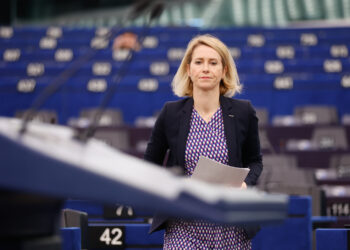


Brussels – Sanctions against Israel: decision postponed until the meeting on 15 June. The issue of restrictive measures against members of the Tel Aviv government was discussed by foreign ministers today (28 May), but “the Gymnich format (informal meeting, ed.) is not a forum where we take decisions,” and therefore “we will return to this topic when the Foreign Affairs Council meets in Luxembourg,” explains the EU High Representative for Foreign Affairs and Security Policy, Kaja Kallas, at the end of the meeting. Everything has been postponed to 15 June, the date of the formal meeting.
There are concerns over the actions of the Tel Aviv government, which has launched new strikes on Lebanon in defiance of the ceasefire. “In Lebanon, the ceasefire seems to be becoming more and more of a mere formality with each passing day, and a return to full-scale war is a real possibility,” Kallas denounces, in what amounts to a condemnation of Israel’s military actions.
The European Union, however, remains divided over what action to take. Sanctions are approved unanimously, and once again, the EU is unable to find common ground against Israel, much to Luxembourg’s dismay: “Germany and Austria say they have an eternal debt to Israel, but that cannot be used to excuse what is happening today,” thunders the Grand Duchy’s Foreign Minister, Xavier Bettel, determined to take action against Israel. It is not only Austria and Germany that are holding back, but also Bulgaria and the Czech Republic.
Spain has also taken a firm stance: “It is unacceptable for southern Lebanon to be declared a war zone and for the population to be warned to leave the area,” says the Spanish Foreign Minister, José Manuel Albares, who goes on to add: “Other countries have the same right as Israel to have a state.” For the Madrid government, the situation is such that Israel can no longer be considered a democracy because “democracies do not violate international law and human rights.” Spain’s uncompromising stance is summed up by effectively declaring Israel’s Minister of National Security a “persona non grata”: “I demand that Ben Gvir not be allowed to enter the EU.”