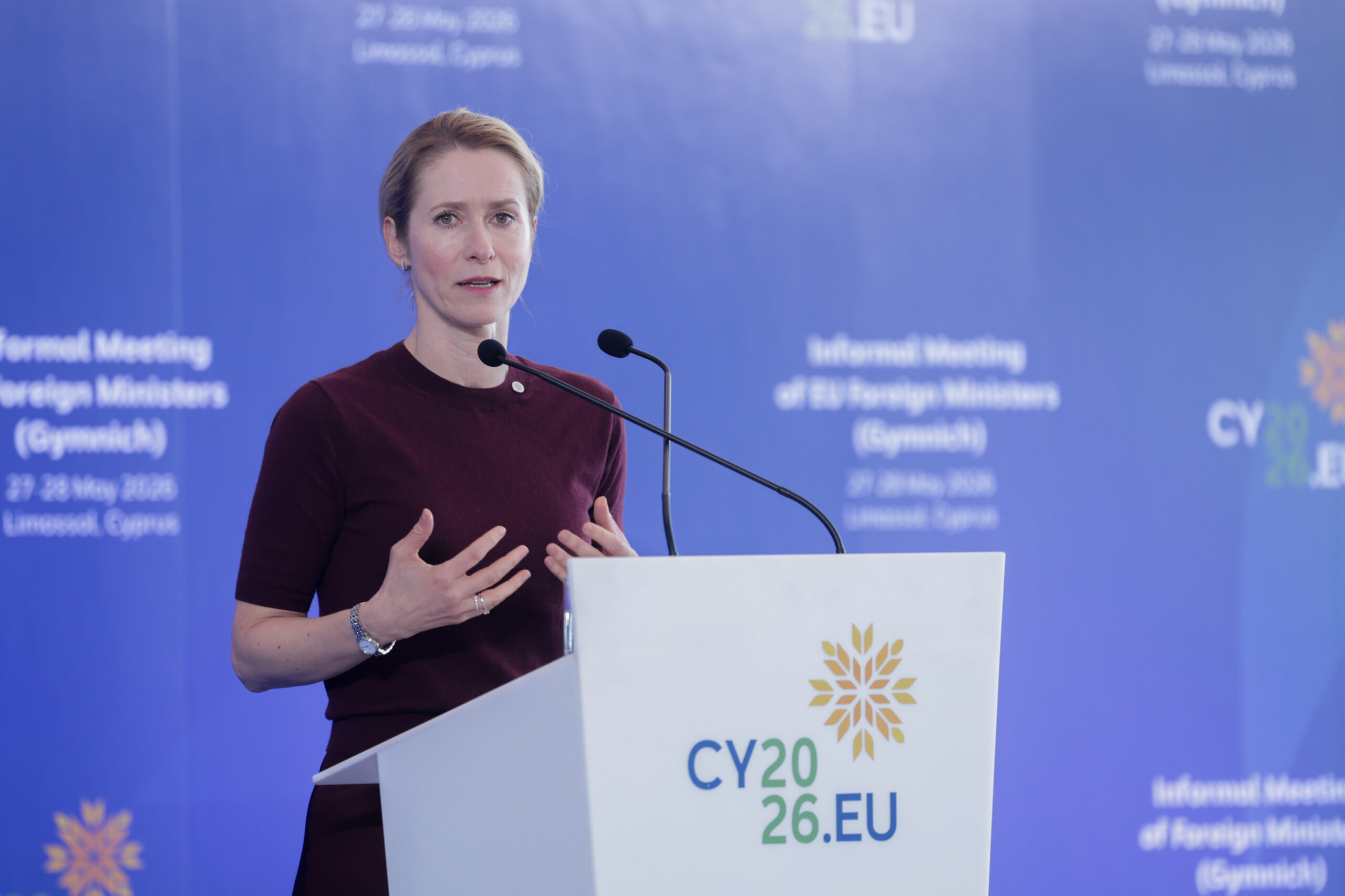

Brussels – ‘Mediator? What mediator? This is how one might summarise the position of the High Representative of the European Union for Foreign Affairs, Kaja Kallas, regarding the recent discussions on the need for Brussels to put forward a high-profile figure capable of bringing Ukraine and Russia to the negotiating table and ending hostilities
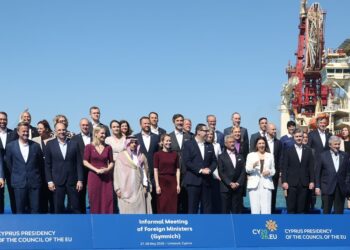
After having soundly rejected—due to his well-known ties with Moscow—the name of the former German Chancellor Gerhard Schröder, recommended directly by the Russian President, Vladimir Putin, today (28 May) Kallas returned to the issue once again. During the press conference following the informal meeting of EU foreign ministers—the so-called Gymnich format—held in Limassol (Cyprus), the former Estonian prime minister was crystal clear: “One thing is absolutely clear: Europe will never be a neutral mediator between Russia and Ukraine, because we have always been firmly on Kyiv’s side,” she stated.
“Whether it is a matter of negotiating a ceasefire or facilitating an agreement on any other issue, we cannot be the ones to do it” because “we cannot be neutral by treating both sides equally,” the EU’s foreign policy chief further clarified.
In an unlikely convergence of geopolitical views, Kallas’s position appears to be the same as that of Donald Trump’s United States. A few weeks ago, the US Secretary of State, Marco Rubio, stated that “the United States is the only country in the world that can mediate and bring an end to the war in Ukraine.” Today, in a way, Kallas agreed with him, explaining that “our efforts must complement those of Washington.” Europe, therefore, “will not take the place of the Americans in the negotiations; it will simply bring to the fore issues that the United States is not addressing in the current talks.”
Whether it is our allies across the Atlantic or someone else (at this point, it seems clear, not the EU), for Kallas, the role of mediators appears to be of little importance. “There may be states carrying out this ‘shuttle diplomacy’, but ultimately we must push for Ukraine and Russia to talk directly to each other: on many issues, only they can decide, and no one else,” she said.
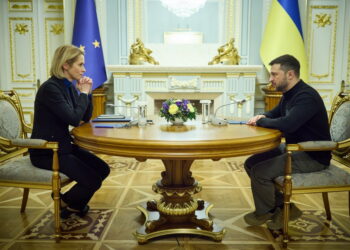
Estonian politician’s stance does not appear to be an isolated one within the EU. Sharing this view, for example, is a heavyweight figure in European politics who, paradoxically, just a few days ago, was mentioned as one of the possible candidates as a mediator for the Old Continent: Norway’s Foreign Minister, Espen Barth Eide. Interviewed in today’s edition of the morning newsletter Brussels Playbook by Politico, Oslo’s chief diplomat had anticipated Kallas’s views by a few hours, explaining that “Europe has misinterpreted its own role and, instead of seeking a mediator, should appoint someone to represent its interests unambiguously at the negotiating table.”
So, if for Kallas (and others) “who” matters little, what really needs to be emphasised is “what”. In other words, “which issues do we want to see discussed” during any peace talks. In this regard, the High Representative took the opportunity at today’s press conference to reiterate the content of a discussion paper that she presented in February.
In addition to “an unconditional ceasefire, Russia’s recognition of Ukraine’s territorial sovereignty and independence, and Moscow’s cessation of all acts of sabotage, cyberattacks, electoral interference, and airspace violations carried out in Europe,” the document stipulates that among Brussels’ “red lines” for a peace agreement there is also an issue that is very often overlooked: the withdrawal of Russian troops stationed in Georgia and Moldova.
“This poses a clear security risk, and it is in our interest that these troops be withdrawn, particularly as these countries are seeking to embark on a path towards EU membership,” Kallas emphasised.
English version by the Translation Service of Withub