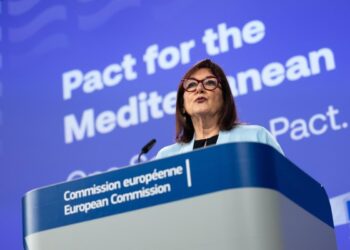
Brussels – The European Union aims to mobilise €25 billion in investment to accelerate the development of renewable energy, hydrogen, and clean technologies, as well as electricity grids, in the Mediterranean region and Southern Europe. The ultimate aim is to make the region’s energy market more sustainable. Today (9 June), the EU launched the Trans-Mediterranean Renewable Energy and Clean Tech Cooperation (T-MED). The initiative forms part of the Mediterranean Pact, announced on 28 November 2025 in Barcelona, to strengthen the EU’s cooperation and partnerships with countries in the Middle East and North Africa.
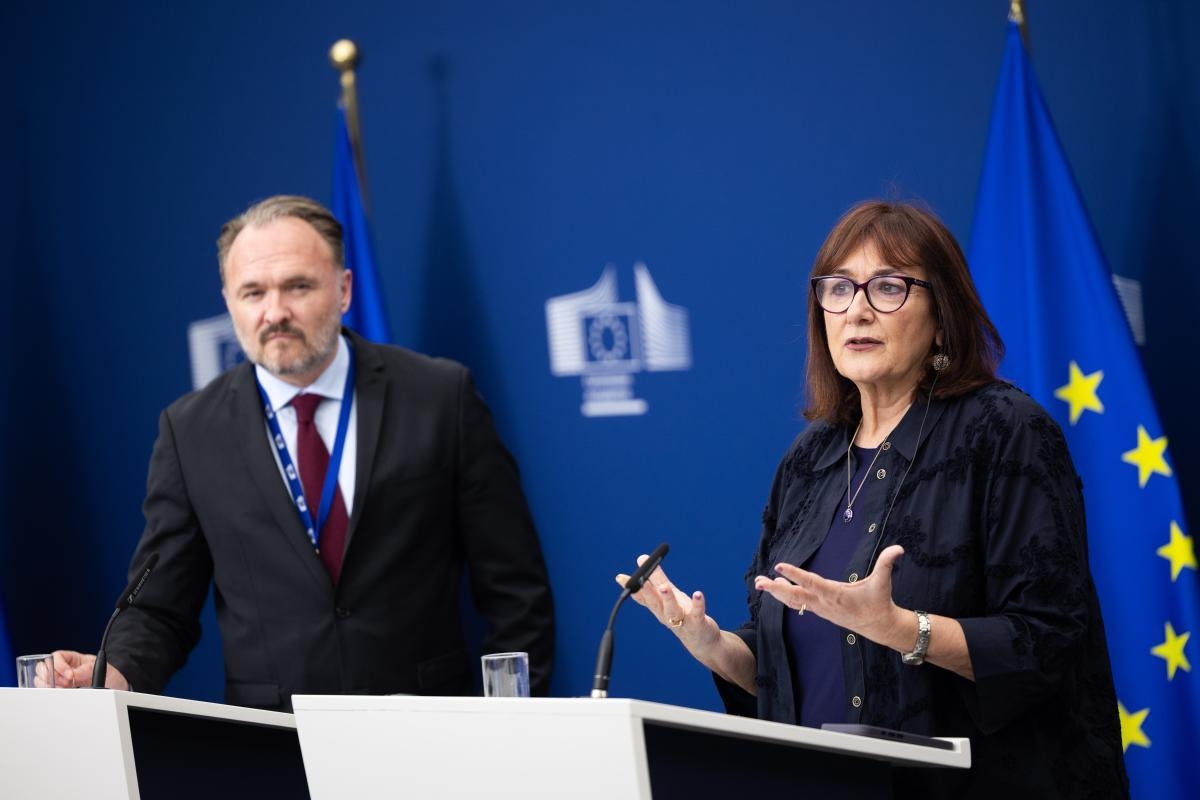
The T-MED plan was presented by the Commissioner for the Mediterranean, Dubravka Šuica, and the Commissioner for Energy and Housing Policy, Dan Jørgensen. The starting point is a simple fact: the Mediterranean region has a renewable energy potential of 2,300 gigawatts, more than double the current installed capacity in the European Union, with solar and wind production costs “30–40 per cent lower than in Europe,” explained Šuica. “Investment levels, however, remain well below what is needed” and “many countries in the southern Mediterranean remain heavily dependent on fossil fuels, exposed to price shocks, geopolitical tensions, and climate targets that are still a long way off.”
Dan Jørgensen also spoke in similar terms: “The EU’s bill for fossil fuel imports has risen by over €47 billion over the last 100 days. Diversifying our fossil fuel supply is not enough to protect us.” A structural response, he emphasised, requires “electrified energy systems based on clean energy, modern grids, and greater connectivity.”
To generate projects and investments in the sectors covered by T-MED, the European Commission has made available over €5 billion in guarantee capacity under the European Fund for Sustainable Development Plus. Up to €25 billion in investments are expected by 2035, alongside strengthened energy cooperation in the Mediterranean. By the same year, the initiative is expected to contribute to the development of 15 gigawatts of new renewable energy capacity, support regulatory reforms in partner countries and help create over 100,000 jobs in the clean energy sectors. By bringing together governments, financial institutions, private operators and local stakeholders, T-MED will promote cross-border cooperation and strategic energy partnerships.
T-MED will be implemented through five coordinated actions. Firstly, the mobilisation of investment. T-MED will bring together the Commission, European and international financial institutions, and the private sector to reduce investment risks and attract funding. “Public institutions alone,” the Commissioner for the Mediterranean pointed out, “cannot finance the scale of transformation we need. We need the expertise, innovation and capital of the private sector.”
A second focus will be regulatory cooperation: partner countries will be supported in improving the investment climate, including by simplifying authorisation procedures, harmonising regulations, and reducing investment barriers. Furthermore, through a T-MED Skills Agenda, efforts will be made to align vocational training with the needs of the clean energy sector, modernise technical and vocational education systems, strengthen university partnerships and promote excellence in engineering, digital technologies and green finance.
Infrastructure will also be involved. T-MED will support the modernisation of electricity grids, promote cross-border energy trade, and encourage the adoption of smart technologies to better integrate renewables into energy systems. Finally, T-MED will support local production and more resilient supply chains and promote innovation and industrial partnerships across the Mediterranean.
Private investors will be able to express their interest by 15 June, while project promoters have until 15 August. The first operational meeting of the T-MED Investment Platform will be held by October 2026, while the first industrial partnerships in the clean technology sector between the EU and the MENA region will take shape by 2027. “The Mediterranean,” concluded the Commissioner, “has always connected people, economies, and cultures. Through T-MED, it can also become a space for energy security, prosperity, and shared growth.”
English version by the Translation Service of Withub