
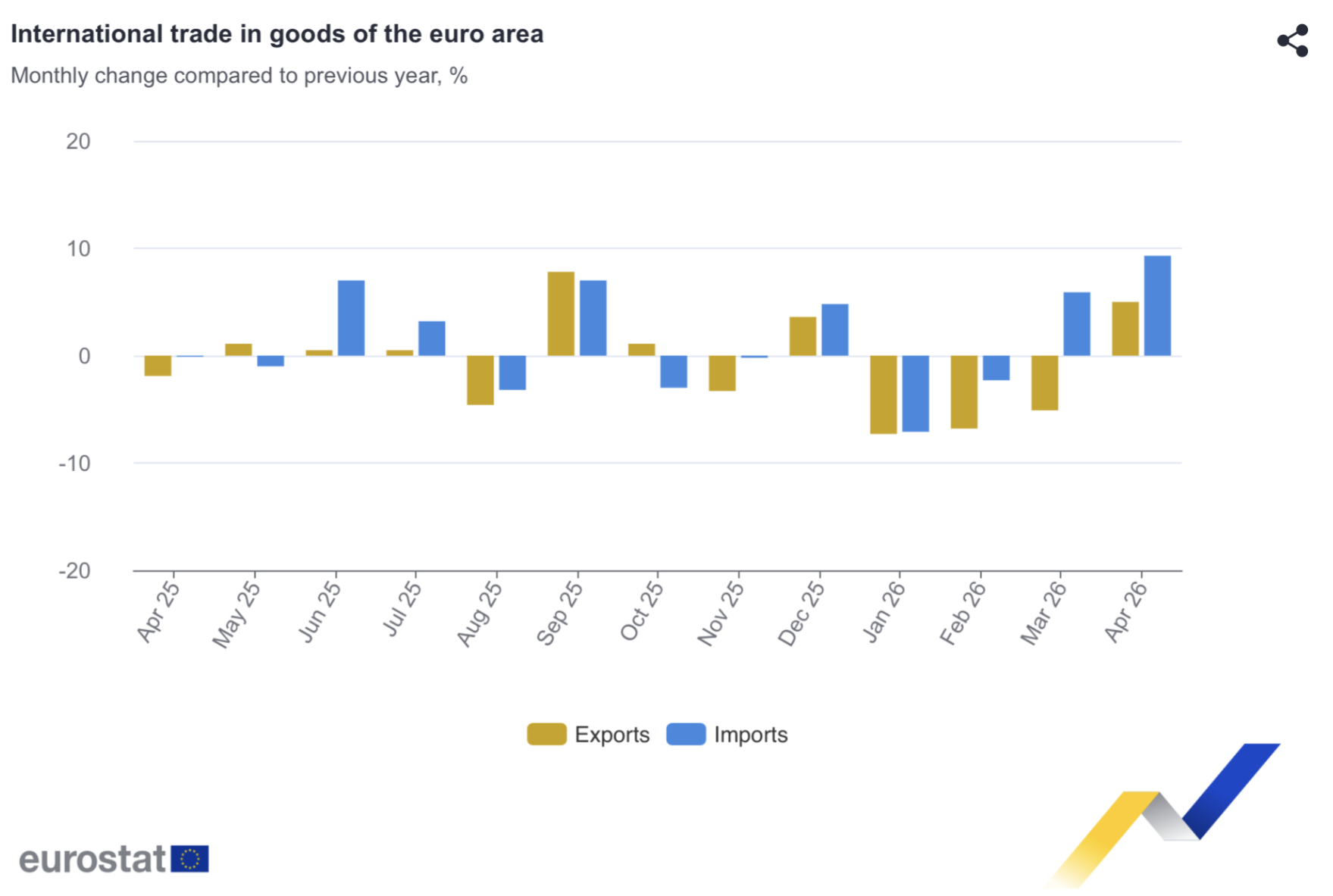
Brussels – As of April 2026, the eurozone recorded a deficit of one billion euros in trade in goods with the rest of the world, compared with a surplus of 8.7 billion euros recorded the previous year. According to Eurostat, the European Union’s statistical office, exports of European goods amounted to €255.4 billion, an increase of 5 per cent compared with April 2025 (€243.3 billion) and imports to €256.4 billion, an increase of 9.3 per cent compared to last year (€234.6 billion).
More specifically, between January and April 2026, the eurozone recorded a surplus of €12.9 billion, compared with €63.7 billion in the same period the previous year. European exports fell to €970.1 billion (-3.6 per cent compared to the January–April 2025 period), and imports rose to €957.2 billion (+1.5 per cent). During the same period, trade within the eurozone reached €924.9 billion, marking a +3.1 per cent increase compared to the January–April 2025 period.
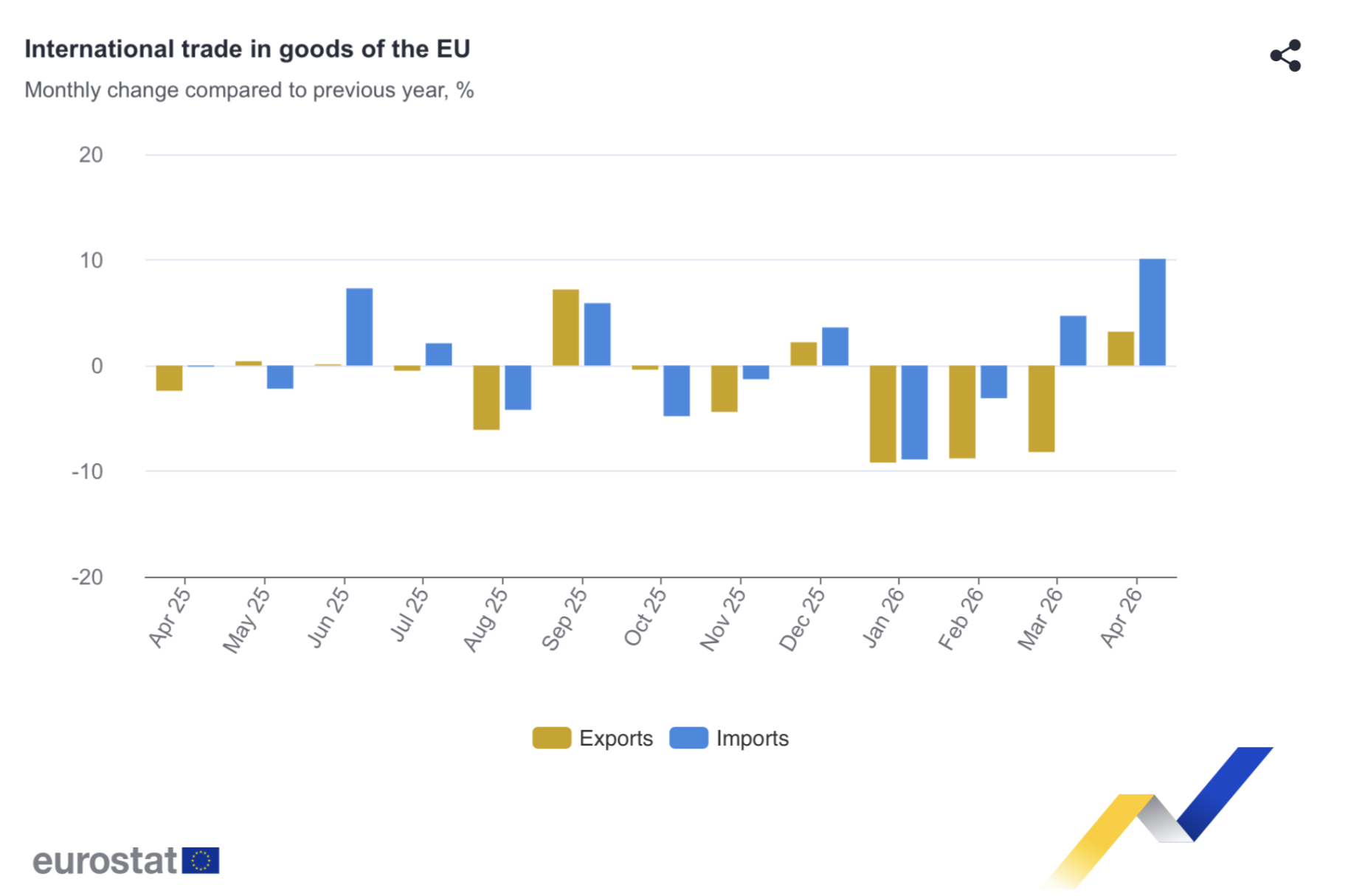
The data also show that in April 2026 the EU’s trade balance (which also includes the six countries that have not adopted the euro as their currency, namely Denmark, Poland, the Czech Republic, Romania, Sweden, and Hungary outside the Union) recorded a deficit of €7.1 billion in trade in goods with the rest of the world, compared with a surplus of €2.3 billion in March 2026 and a surplus of €7.3 billion in April 2025. This change reflects a deterioration of €14.4 billion year-on-year, mainly due to the same factors highlighted for the euro area (an increase in the energy deficit and a reduction in the surplus in the machinery and vehicles product group). Exports of goods to non-EU countries amounted to €225.7 billion (+3.2 per cent compared with April 2025), while imports reached a value of €232.8 billion (+10.1 per cent).
From January to April 2026, the EU also recorded a deficit of 2.2 billion, compared with a surplus of 57.5 billion between January and April 2025. During the same period, extra-EU exports of goods fell to 857.7 billion (-5.8 per cent compared to January–April 2025), while imports rose to 859.9 billion (+0.8 per cent). Intra-EU trade, on the other hand, stood at 1,445.4 billion, marking a 4.2 per cent increase compared to 2025.
Analysing the EU’s main products, the trade balance for the machinery and vehicles sector has almost halved, falling from 14.5 billion in 2025 to 7.1 billion in 2026, while it also declined for manufactured goods (from 32.3 to 22.7) and chemicals (from 20 to 18.4).
Regarding relations with key global partners, data for April 2026 show that the trade surplus with the United States has almost halved, falling from 17.1 billion to 9.9 billion, with exports down by 12.6 per cent and imports up by 3.9 per cent. The balance with China remains negative, with the deficit worsening by a further 2.9 billion compared with April 2025 (from 29 billion to 31.9 billion): exports to Beijing grew by 1.8 per cent and imports by 7.1 per cent. In the case of the United Kingdom, the surplus rose by 1.2 billion over the year to 16 billion, with exports and imports increasing by 7.8 per cent and 7.6 per cent, respectively.
English version by the Translation Service of Withub






![[Copyright: European Union]](https://www.eunews.it/wp-content/uploads/2026/10/euco-261015-120x86.png)