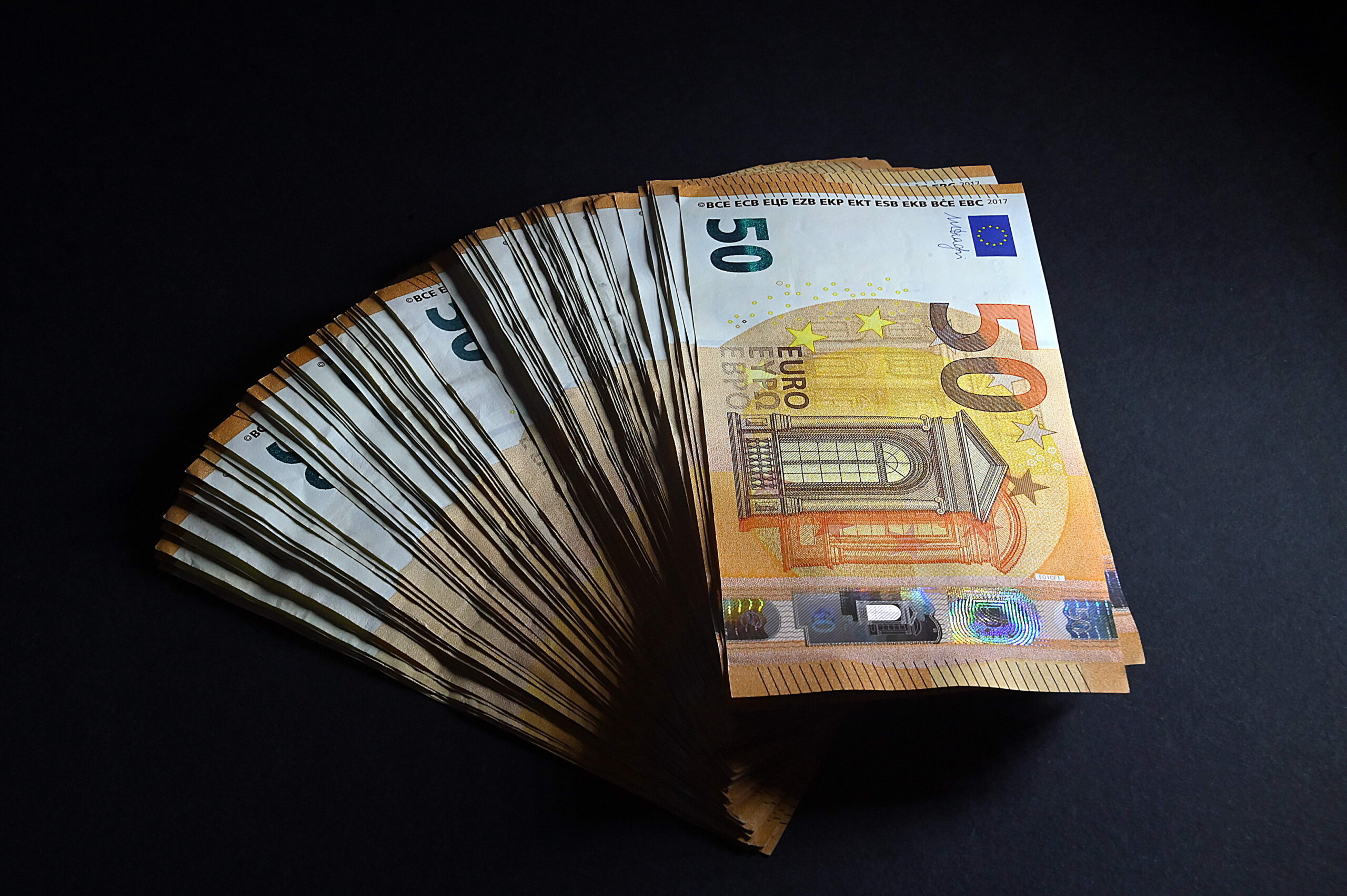
Brussels – Multiannual budget: the approval process is beginning to cause concern amongst EU leaders. The disagreements between between Member States and EU institutions over the proposed seven-year budget (MFF 2028–2034) are still sufficient to cause unease among the heads of state and government of the Member States, who are due to discuss the total amount of resources and how to allocate them. This is no easy process, and it risks becoming even more complicated with elections on the horizon—a prospect that is certainly causing anxiety for Gitanas Nauseda, President of Lithuania: “Several elections are scheduled for next year, and this risks complicating the budget debate,” she stated publicly upon her arrival in Brussels to take part in the European Council summit.
The new common budget will take effect on 1 January 2028, and an overall inter-institutional political agreement must be reached before then. The aim is to try to finalise everything by the end of 2026, and to this end, the task of stepping up the pace has been entrusted to Cyprus and Ireland, the current and incoming presidencies, respectively (from 1 July). If it proves impossible to reach an agreement by 31 December this year, “we are ready to take on the challenge during our presidency,” emphasises Nauseda, noting that from 1 January 2027, Lithuania will hold the rotating presidency of the Council of the EU responsible for managing legislative dossiers.
The 2027 EU elections
The reason why Nauseda—though he is probably not the only one—is keeping an eye on the calendar is linked to the European Union’s political and electoral events and the associated consequences. The 2027 election year begins with the German presidential election (30 January), which may provide an early indication of the direction the country is taking. On 7 March, Estonia will hold parliamentary elections, following which a new prime minister and government will be appointed. In April, it is the turn of the French presidential election: Emmanuel Macron cannot stand for re-election, and it remains to be seen which political force will lead the country and, consequently, negotiate the MFF. A victory for the far-right Eurosceptics could make things very difficult. But on 18 April, Finland will also hold parliamentary elections, leading to a new government. The Scandinavian republic, too, will therefore have a period of electoral hiatus.
https://www.eunews.it/en/2026/04/24/the-european-council-faces-an-uphill-battle-over-the-budget-meloni-extremely-difficult-negotiations/
While the elections in the first half of next year may pose an obstacle, other elections are added to the list, including those in Spain. The general election will be held on a date yet to be confirmed, but it will certainly take place no later than 22 August 2027. Then there are the general elections in Slovakia (by 28 September), Poland (by 11 November), and Italy (by 30 December at the latest), to renew the parliaments and form new national governments.
An agreement still a long way off
In short, the Lithuanian Presidency’s term is punctuated by events that risk hindering progress on the multiannual budget proposal unless a compromise is reached in the meantime. Such a compromise seems a long way off, judging by the words of Prime Minister Pedro Sánchez: “We are a long way from an agreement, due to a lack of ambition,” he stated upon his arrival in Brussels. “The proposal by the Cypriot Presidency is far less than that of the Commission, with which we are in complete disagreement.” For Madrid, the proposal on the table “is not an ambitious one in terms of competitiveness,” particularly in the areas of “training, education, innovation, digitalisation, and the green transition.” In all these areas, “we are talking about policies for which the provisions are more than insufficient.”
Today’s European Council summit (18 June) will not be a turning point. Sánchez wants to avoid raising expectations: “We are a long way from an agreement.” That will take time. “Today we are beginning the debate with some figures, and we hope to reach an agreement before the end of the year. In any case, as the Spanish government, we remain sceptical because the differences are truly considerable and there is a great deal of work to be done.”
However, the starting positions leave no room for imagining scenarios of agreement. While Spain is critical of the lack of resources, Austria wants even deeper cuts. “Just as the increase proposed by the Commission was too high, the Council’s reduction is too low,” complains the Austrian Chancellor, Christian Stocker. “A 2 per cent reduction is simply not enough; the volume of this multiannual financial framework will have to be significantly reduced.” “Finland also believes the level is still too high,” states the Finnish Prime Minister, Petteri Orpo, who is ready to support budget cuts and determined to channel the remaining resources towards “support for the sparsely populated northern regions and our unique position as a country bordering Russia.”
The so-called “frugal” countries (Austria, Denmark, Finland, the Netherlands, Sweden, and Germany)—those that wish to contribute as little as possible to the European Union’s coffers—find in the Danish Prime Minister, Mette Fredriksen, the figure set to drive a wedge between Denmark and a significant portion of the European Union, represented by those countries, including Italy, which have a firm “belief” in cohesion policies and agricultural support: “We must invest more in defence, technology, and energy, but not in the old agricultural regimes and some of the old systems, which have traditionally taken up a large part of the budget,” states the Danish Prime Minister, who reiterates: “The EU budget is too high.” The view of Luxembourg’s Prime Minister, Luc Frieden, is diametrically opposed: “We need more money to achieve our new objectives, which are competitiveness, research, security, and defence.”
Positions that are far apart—too far apart. So much so that the German Chancellor, Friedrich Merz, has postponed the whole matter until at least 31 December: “We will have to discuss this in depth over the course of the year.” For an agreement to be possible, however, Berlin insists that the condition must be met whereby “there can be no new European debt; the budget must be balanced.”
English version by the Translation Service of Withub


![Da sinistra: il presidente del Consiglio europeo, Antonio Costa; il presidente dell'Ucraina, Volodymir Zelensky: la presidente della Commissione europea, Ursula von der Leyen [Bruxelles, 18 giugno 2024. Foto: European Council]](https://www.eunews.it/wp-content/uploads/2026/06/euco_ua260618-120x86.jpg)
![[foto: Saverio De Giglio/imagoeconomica]](https://www.eunews.it/wp-content/uploads/2026/10/cpt-120x86.png)