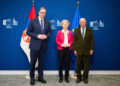
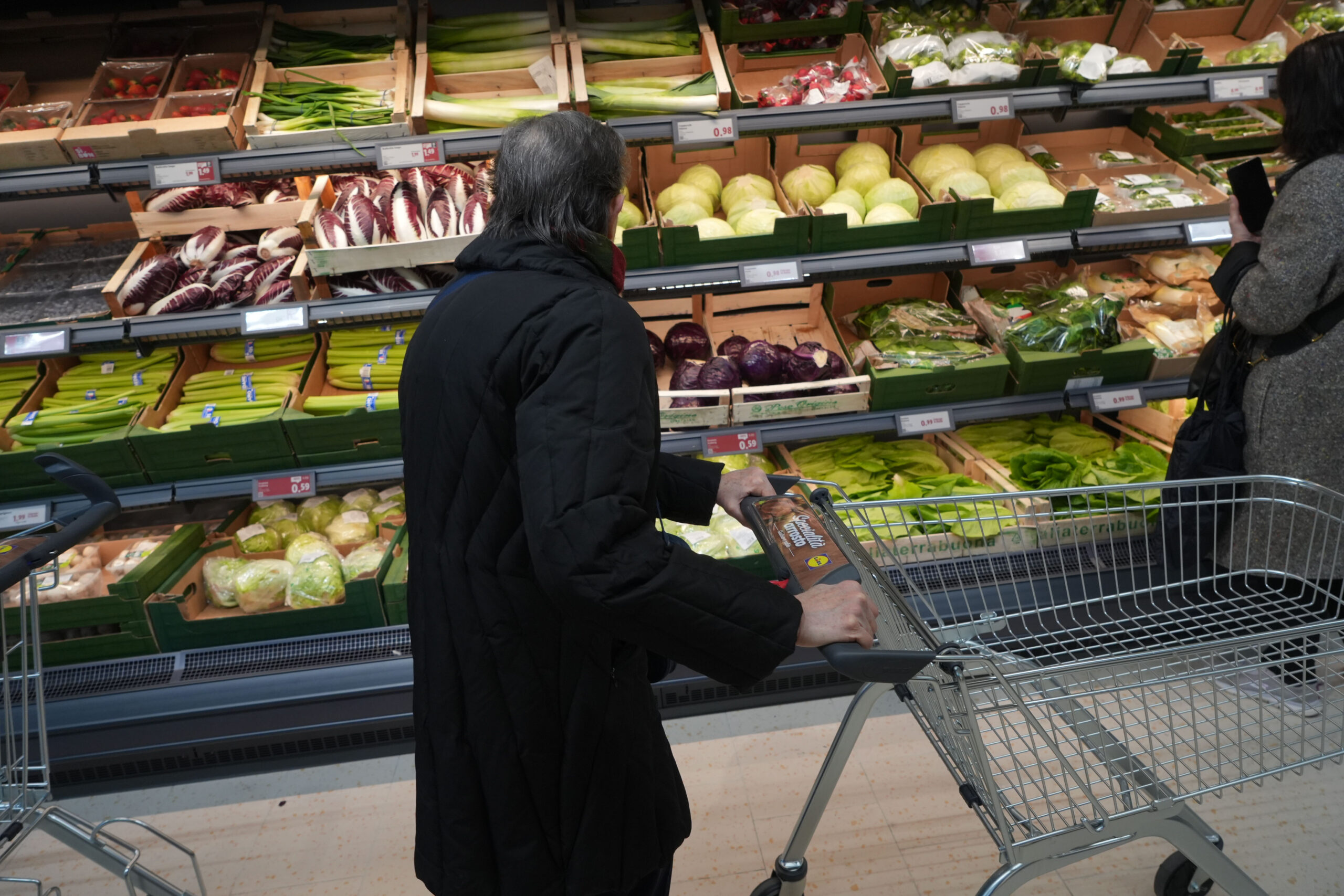
Brussels – Bad news for European families: following the rise in energy prices, a rise in food prices is on the horizon. As part of the broader inflationary trend, the war in Iran is set to spill over into supermarkets, with rising food prices. This is the warning issued by the President of the European Central Bank, Christine Lagarde, during her hearing in the Committee on Economic Affairs at the European Parliament.
The vice-chair of the same parliamentary committee, the Slovak Liberal Ludovit Odor (RE), is seeking clarification on a specific aspect of the cost of living. “It is more complicated to make forecasts for food inflation,” Lagarde begins. She points out that a significant quantity of fertiliser passes through the Strait of Hormuz. Yet, “in recent months, the price of basic foodstuffs has fallen, and this is counter-intuitive.” Because, she continues, “we would have expected the closure of the Strait of Hormuz to lead to a rise in food inflation, but this has not been the case.” Therefore, she explains, “we believe” that a rise in the cost of food “will take longer” to materialise, and “we are more likely to see it in the course of 2027 than in the course of 2026.”
So, following the rise in utility bills, we are now facing a rise in the cost of living. And for households, this means further financial strain—in other words, further pressure on household spending. The war in Iran and its repercussions, therefore, show no sign of ending.
English version by the Translation Service of Withub