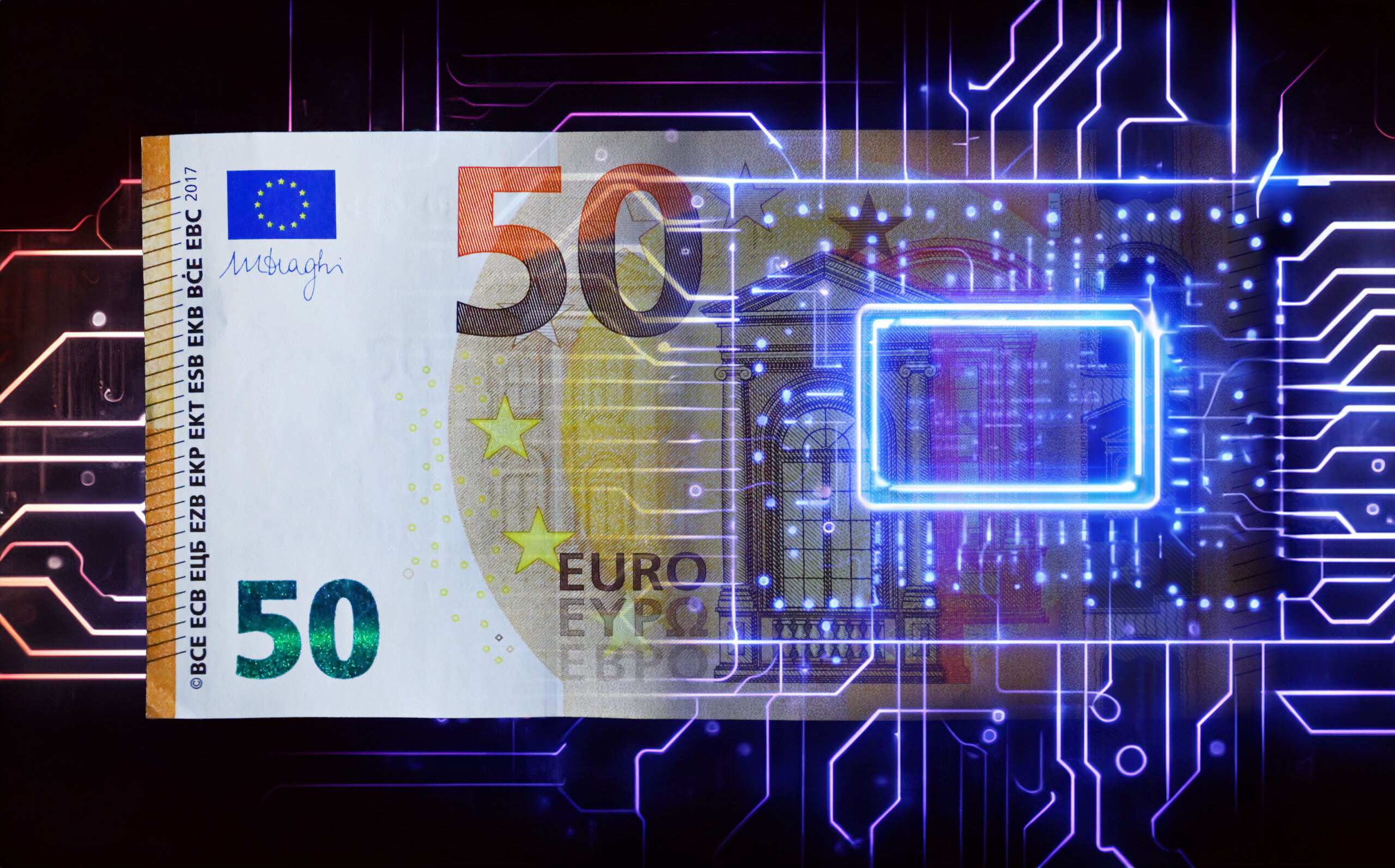
Brussels – The European Parliament gave its first approval to the digital euro. The Committee on Economic Affairs voted by a large majority in favour of the first of three measures to introduce an alternative payment system to the Mastercard and Visa networks, with 49 votes in favour, 14 against, and 1 abstention, for the text authorising the creation of a digital euro under the management of the European Central Bank. This is the most important measure in a legislative package that also includes rules on the use of the digital euro in third countries (given the green light with 43 in favour, 9 against, 6 abstentions) and a third piece of legislation on the acceptability of the new version of the single currency in everyday life (46 yes votes, 4 no votes, 8 abstentions). Everything is now subject to a plenary vote expected in July, but in the meantime, Parliament is pushing for change.
The digital euro will go ahead, and the ECB will be in charge of it
The main change brought about by the vote is therefore the introduction of a new version of the single currency, which is not only a way to pay in euros using entirely European electronic payment channels but also a new form of cash. The money will be loaded onto a card with a chip, and if the card is lost or stolen, the money will be lost. Unlike debit cards, which allow the “return” of funds upon reactivation, the digital euro will not offer such a refund. It is therefore a wallet in its own right, but in a different form.
According to the approved text, the European Central Bank is responsible for issuing the new electronic currency and ensuring its operation both online and when connected to payment networks (offline). In these new roles, MEPs want to ensure that the ECB’s role remains distinct from its monetary policy functions. To this end, prior to the official launch of the digital euro, the Frankfurt-based institution is called upon to finalise regulations, build the infrastructure, conduct field pilot trials, and define liability rules, with particular attention to offline risks, such as double spending. Once all this has been done, a phased roll-out period of at least 24 months should follow, to give banks, service providers, and users time to prepare. Governments and providers should also launch awareness campaigns.
Ownership limits and zero costs
On the subject of raising awareness, the European Parliament makes it clear that the digital euro would neither generate nor entail any costs for citizens. It also highlights that the digital euro is a new form of cash, with limits on holdings and withdrawals. Just as with cash (for example, you cannot withdraw the full balance of your current account from ATMs), to protect the financial system, a limit would be imposed on the amount of digital euros that each individual can hold. According to the vote by the European Parliament’s Committee on Economic Affairs, this limit is to be set by the European Commission, based on recommendations from the ECB, and reviewed at least every two years. MEPs are calling for Parliament to have full decision-making powers in this process.
Enthusiasm amongst Italians
Pasquale Tridico, head of the Five Star Movement’s delegation to the European Parliament and the sole Italian rapporteur on the regulation on the digital euro, welcomes the approval. He stressed that the green light to the digital euro regulation “strengthens European monetary sovereignty,” as it provides the EU and its eurozone with “a public, modern tool capable of reducing dependence on foreign American payment systems such as Visa, Mastercard and PayPal.” As the Five Star Movement, he noted, “we have achieved our political objective: to make the digital euro a secure, instant, free, and always accessible payment method.”
There was also satisfaction from the ranks of the Socialists (S&D), expressed by the PD’s delegation leader, Nicola Zingaretti: “The digital euro is a step towards a stronger, more autonomous Europe.” As the European Union, he stressed, “we cannot rely solely on infrastructure built elsewhere: we need European sovereignty in the area of payments too.” Marco Falcone (FI) expressed similar satisfaction from the People’s Party (EPP): “We are satisfied. It is the first stage of a dossier that Forza Italia and the EPP strongly advocated for, because we believe it will strengthen our independence and autonomy from third-country payment platforms.” At the same time, he added, “transaction fees are being reduced through a currency that is not an alternative to, but a supplement to, cash.”
Among ECR Conservatives, Stephen Bartulica, the group’s shadow rapporteur, strikes a less triumphant tone. “Cash must remain a genuine option. Any digital euro must complement cash, not replace it.” For this reason, he insists, “we will have to monitor the practical development of this project very closely.”
English version by the Translation Service of Withub
![euro digitale [foto: European Central Bank]](https://www.eunews.it/wp-content/uploads/2023/06/digital-euro.png)