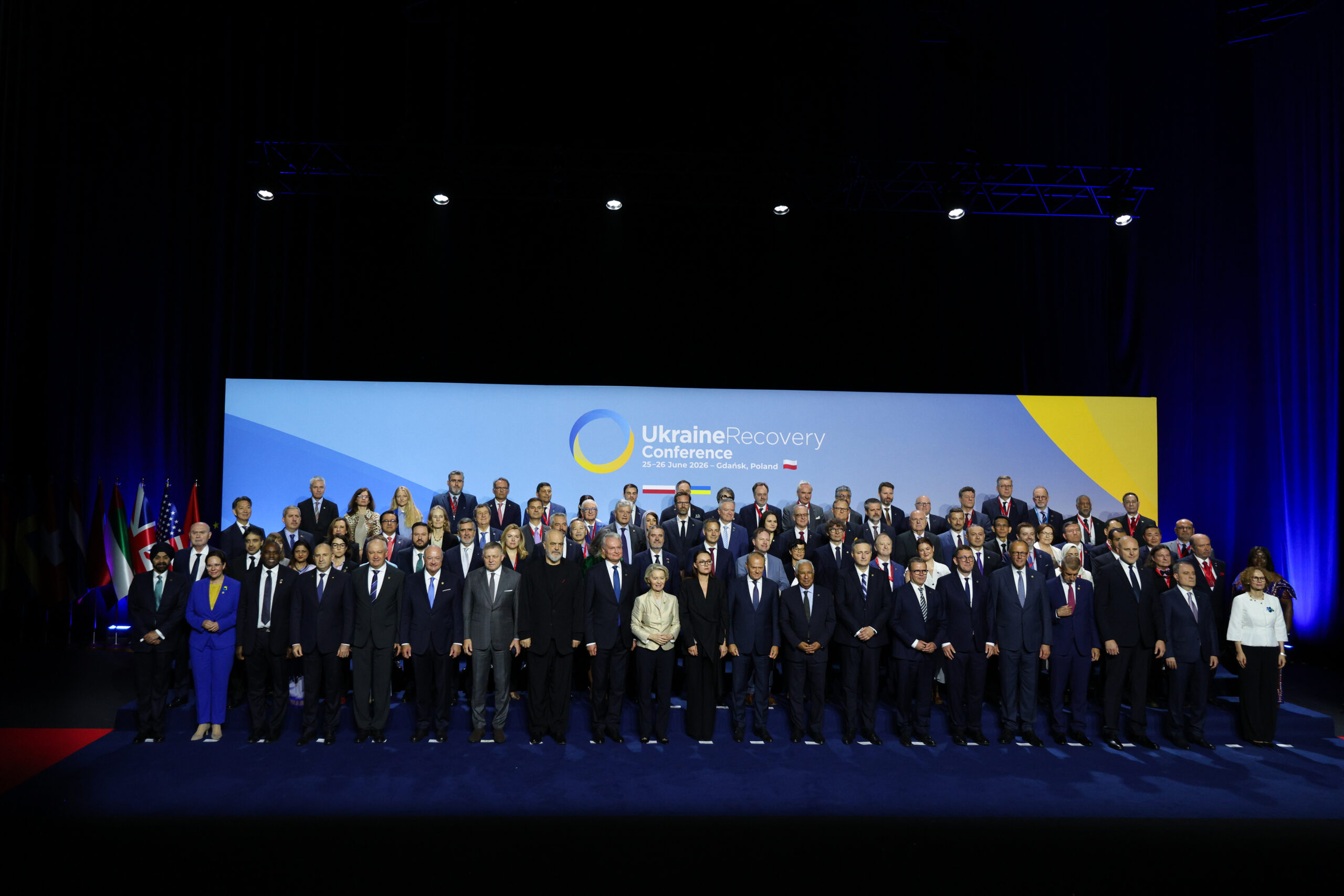
Brussels – “Today, we are transferring the first tranche under this loan, €3.2 billion in macro-financial assistance.” The European Commission President, Ursula von der Leyen, chose the conference on the reconstruction of Ukraine in Gdańsk to announce the start of disbursements from the 90 billion euro package that the EU struggled to secure for Kyiv. The financial instrument known as the Ukraine Support Loan is intended to provide economic and financial aid for the 2026–2027 two-year period. The EU had hoped to have it up and running by the end of March, had it not been for the Hungarian veto imposed by former Prime Minister Viktor Orbán. The cheques are finally being issued, much to the satisfaction of von der Leyen, who also announced a second disbursement: “We will start paying the first money of the EUR 6 billion for drone production in the coming days.”
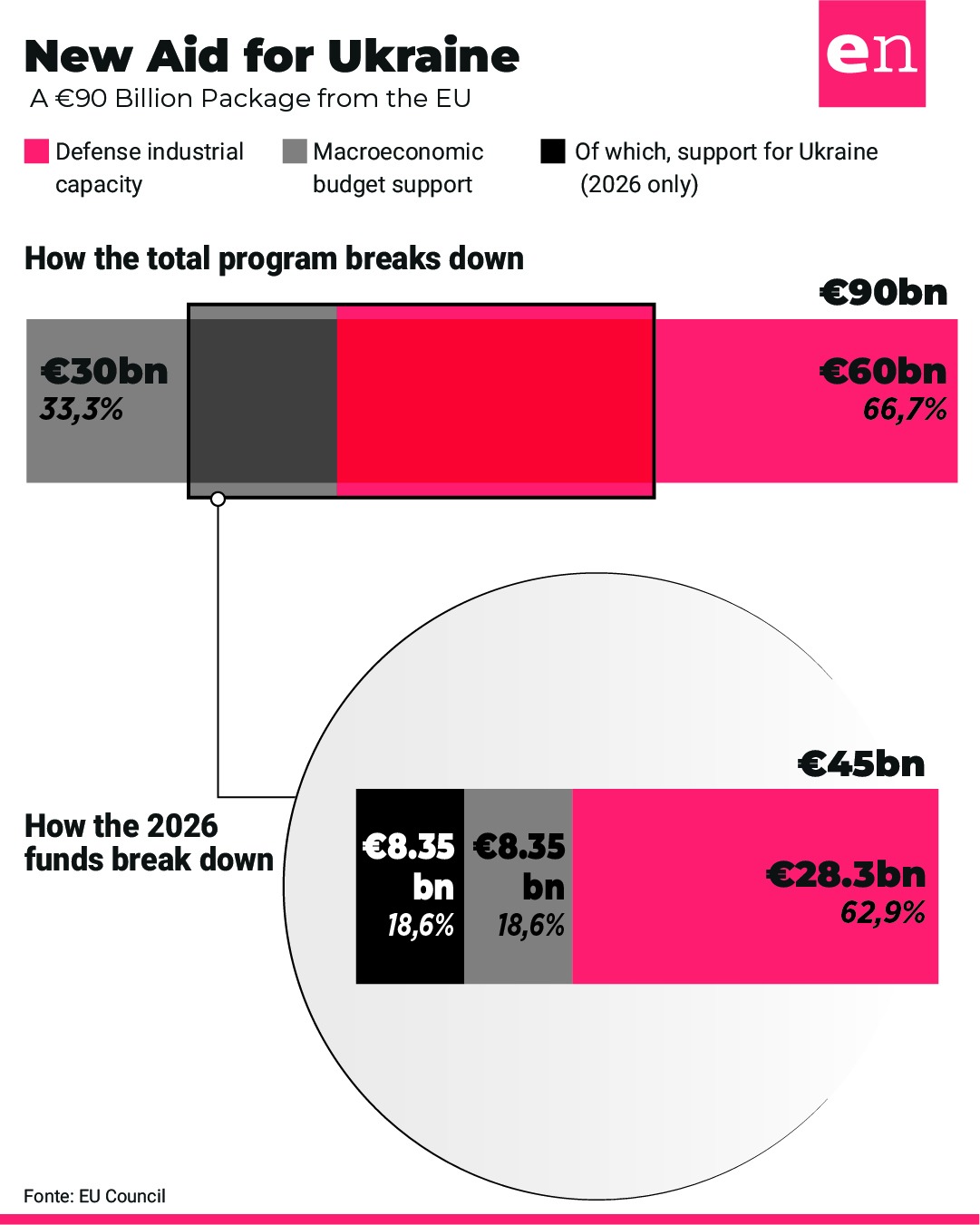
Three billion euros today, and a further six billion very soon: a total of nine billion announced in the absence of Ukrainian President Volodymyr Zelensky, who chose to boycott the Gdańsk event in open defiance of Poland. The conference on Ukraine’s reconstruction was preceded by clashes over events dating back to the Second World War. Tensions arose when Zelensky decided to name an elite unit of the Ukrainian army after the ‘heroes of the UPA’, the Ukrainian Insurgent Army (UPA), which, together with the Germans, was responsible for the massacre of Polish and Jewish civilians in the Volhynia region. It is estimated that around 100,000 people were killed as a result of the UPA’s actions, mainly women and children. These events date back to 1943, at the height of the Second World War, but their effects have never been fully overcome and continue to fuel Polish nationalism.
Zelensky has been accused of pursuing pro‑Russian policies, with the (far‑right) president of the Polish Republic, Karol Nawrocki, withdrawing the highest honour that Poland can grant to a non‑Polish citizen, the Order of the White Eagle. Speaking from Kyiv, the Ukrainian Foreign Minister, Andriy Sybiha, responded by describing Nawrocki’s decision as “a strategic error that plays into Moscow’s hands.” This exchange of accusations of pro-Putin sympathies was followed by the announcement that Ukraine intended to return the honour that the Poles had granted to Sybiha in 2022: the Commander’s Cross with Star of the Order of Merit of the Republic of Poland.
Zelensky’s decisions place the spotlight on the values that the European Union claims to uphold, defend, and take into account in its political actions. Von der Leyen turns a blind eye, ignores the glorification of groups responsible for the massacre of civilians, and announces the EU’s financial contribution to Ukraine today. Indeed, she urged to overlook any such issues because today’s priority is to wrest Ukraine from Vladimir Putin’s Russia and bring it into a new sphere of influence. “We continue to call on all our partners to maintain their support, because a strong and independent Ukraine is in all our interests.“
The Polish Prime Minister, Donald Tusk, who belongs to a different political party than President Nawrocki, tried to act as a peacemaker: “The fact that you are all here is proof of solidarity and the strength of unity against aggression.” He then welcomed the Ukrainian Prime Minister, Yulia Svyrydenko: “You can feel at home here.” And he assured them: “The reconstruction of Ukraine will be possible, thanks to our solidarity,” and because, he pointed out, “the history of Gdańsk, which was almost razed to the ground, shows that it can be done.”
But “reconstruction is not only about repairing destruction; it is about building back a better Ukraine,” European Council President António Costa stressed, who sees the post-war process as a political redefinition of the country. “Ukraine’s recovery process goes hand-in-hand with its path to European Union accession,” he noted. In this regard, “ I reaffirm the commitment made by European Union leaders four and a half years ago: Ukraine’s future is in the European Union.” He therefore called on the Ukrainian authorities and partners to make a genuine, profound effort, because “true reconstruction is about people… no community should be left behind.”
English version by the Translation Service of Withub


![Il ministro dei Trasporti, Matteo Salvini [Bruxelles, 5 dicembre 2024. Foto: Emanuele Bonini per Eunews]](https://www.eunews.it/wp-content/uploads/2024/12/salvini241205-120x86.jpeg)