
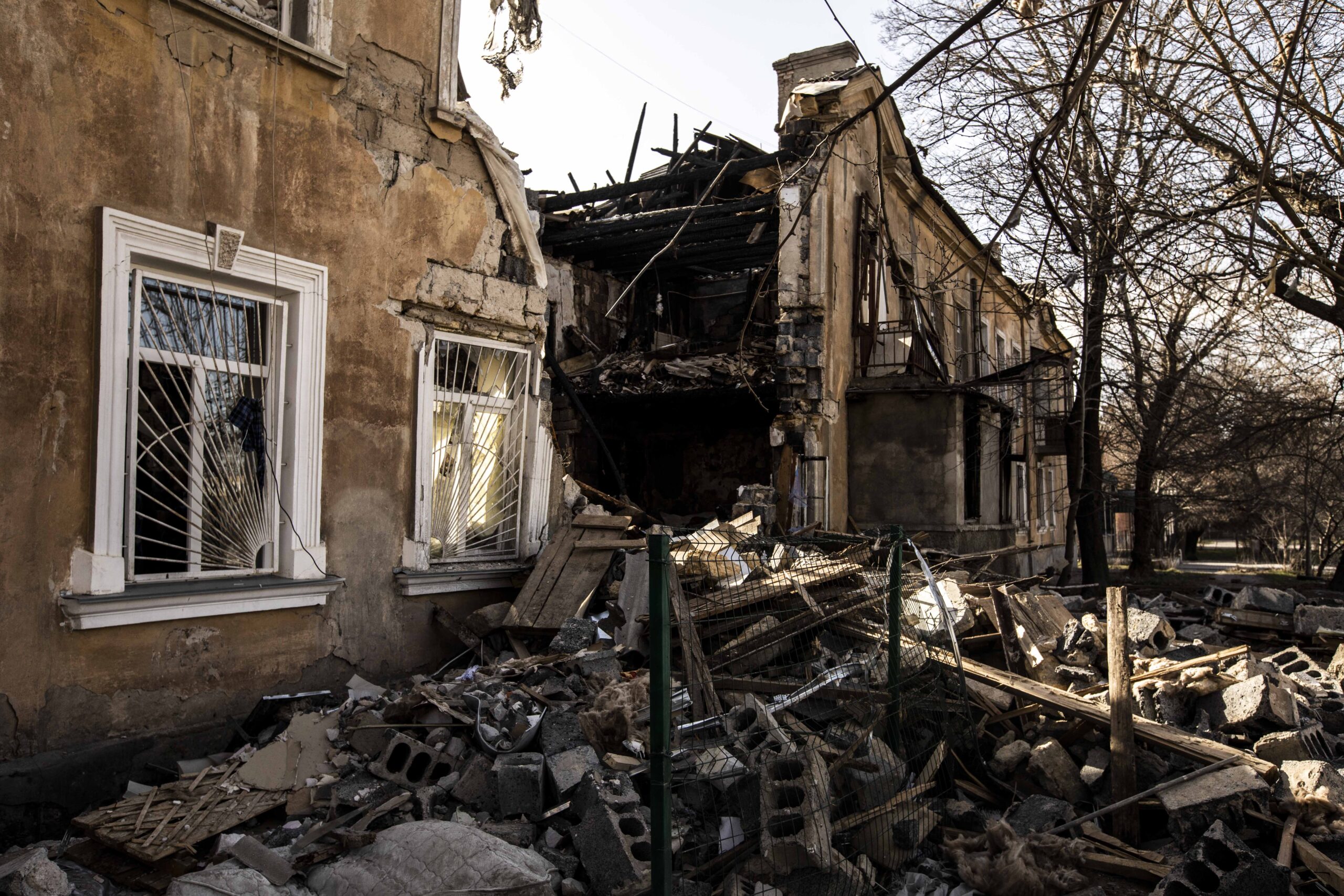
Brussels – The reconstruction of Ukraine is likely to be a long process and, above all, partial as the amount of resources needed to restore the country to its pre-war state is, first and foremost, immense: updated estimates put the figure at 507 billion dollars over the next decade – an amount equivalent to three times Ukraine’s GDP in 2025 – with transport, energy, and housing together requiring no less than 237 billion dollars. And private investment, moreover, is expected to remain confined to only a few areas, namely those that are profitable. This is the picture that emerges from the study by the European Parliament’s Research Service, drawn up on behalf of the Committee on Foreign Affairs. The European Union, which is already working with international partners on efforts to rebuild Ukraine while the conflict is still ongoing, appears not to be taking into account the limitations of a path fraught with obstacles and uncertainties.
There are at least three issues to be resolved that could affect Ukraine’s future. Firstly, there is a need for clarity on where to invest, while on the other hand, little attention is being paid to the demographic issue: between expatriates who do not intend to return, people with disabilities, and war casualties, Ukraine will face serious repercussions for its workforce. Will there be enough people to rebuild the country? This is unclear, and the international community does not seem to have given it due consideration. Finally, there is enlargement, a process distinct from reconstruction, and the two risk hindering each other.
The reconstruction of Ukraine will not be complete
The research centre warns: “current donor frameworks persistently conflate reconstruction necessities – rubble clearance, coal mine dewatering and environmental remediation – with commercially investable sectors, leaving the physical preconditions for everything else chronically underfunded.” The result is that funding is channelled “toward showcase projects.”
https://www.eunews.it/2023/10/05/ucraina-dubbi-corte-conti-ue-50-miliardi/
The situation is such that donor forums and investment conferences “tend to focus” on sectors capable of attracting private capital (critical minerals, digital infrastructure, and agri-food) because deals can be struck in these areas. “Rarely”, however, are issues discussed that do not interest private investors, such as the remediation of contaminated aquifers in the Donbas industrial belt and mine clearance. According to the authors of the study, “channelling finance toward commercially
attractive sectors while leaving reconstruction necessities without any financing is a choice that
looks like ambition but functions as a missed allocation.”
So much work to do, with so few people
Another critical issue is the decline in refugees’ intentions to return home, coupled with a mobilised and traumatised workforce; together, these represent “the overriding planning constraint.” Building for an absent population amounts to unproductive public spending. The European Union and its partners are making promises and committing resources based on forecasts that appear to be contradicted by reality. “A great deal of reconstruction planning rests on the assumption that Ukrainians who fled will come back once the fighting (with Russia, ed.) stops,” the study notes. However, the data do not support this assumption. “By late 2025, only 43 per cent of surveyed refugees outside Ukraine said they intended to return.” Therefore, fewer than half of the exiles will return to Ukraine.
The reluctance to return also has implications for EU Member States: there are currently 4.3 million Ukrainians receiving protection, and an estimated two million people will remain where they are. However, for Ukraine, the fact that some citizens will not return even once peace is restored poses a serious problem. Bearing in mind that “around 400,000 working-age men have been wounded” as a result of the war, the Ukrainian government predicts that “the population could fall to 25 million by 2051 from 42 million before the invasion.” The experts of the European Parliament do not mince words when stating that, faced with this scenario, it is impossible to talk of reconstruction. “Infrastructure scaled for a population that
does not return is not reconstruction but stranded expenditure.“
A partial reconstruction for an uncontrolled accession process
The final condition attached to the reconstruction pledges risks being the most controversial, as it would effectively grant Ukraine “simplified” accession without scrutiny. In practice, the European Parliament’s study warns, “reconstruction and Ukraine’s European Union accession pathway are formally aligned
but operationally separated”. This means that “nobody on either the European Union or Ukrainian side
currently has authority to ensure that investment decisions made today meet the
standards Ukraine will be required to apply upon accession.” This concerns individual investment decisions – such as which thermal power station to repair, which railway gauge to adopt, and which building standards to apply: none of this can be reliably verified as meeting EU single‑market standards once Ukraine joins. Ukraine’s reconstruction, therefore, risks becoming a mess for everyone.