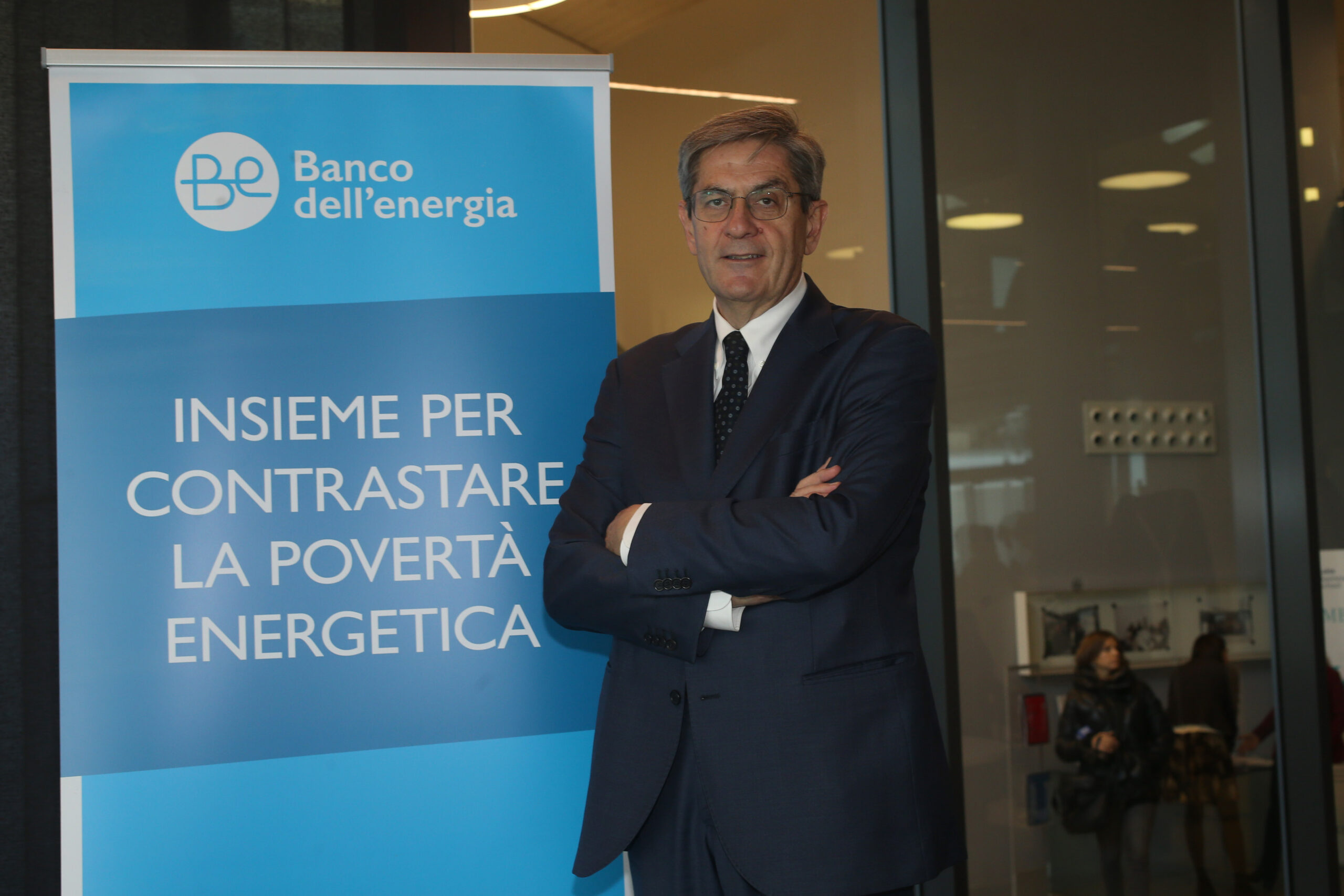
Brussels – A two-day event in Brussels aimed at strengthening a European collaboration network capable of providing structural, long-term solutions for citizens facing economic and social vulnerability. The initiative was organised by the Banco dell’Energia Foundation, a non-profit organisation that aims to raise funds to support, through an indirect solidarity mechanism, individuals and families in situations of economic and social vulnerability, with a particular focus on energy poverty. “Energy poverty is a phenomenon that transcends national borders and affects the whole of Europe. We are in Brussels to present the Energy Bank model and promote the Manifesto: our Foundation’s experience – recently recognised as a best practice in the European Commission’s annual recommendations to Italy – demonstrates how the projects and initiatives implemented in Italy in recent years can also be rolled out across Europe”, explained the president of the Banco dell’energia Foundation, Roberto Tasca.
On the first day of the event, 29 June, the European industry associations endorsed the ‘Together to Combat Energy Poverty’ Manifesto, established in 2021 at the initiative of the Banco dell’Energia Foundation. At the event, organised in collaboration with Utilitalia and Elettricità Futura, a shared commitment was expressed to strengthen a platform for dialogue between businesses, associations, institutions, and the tertiary sector, with a view to making access to energy an increasingly fair and inclusive right.
“Addressing global challenges calls for immediate action and a systemic approach,” Tasca pointed out. “We are convinced that the social dimension is also a pillar of European competitiveness: ensuring that everyone has access to essential energy services means building a stronger Union. A transition that shares its benefits fairly is also key to strengthening citizens’ trust in EU institutions and policies,” he added. Therefore, “it is essential to forge cross-sectoral alliances between the public, private and third sectors that can support the ongoing processes of change with a long-term vision”.
In numerical terms, around one tenth of the population is affected by energy poverty. In Italy, the problem affects over 2.4 million households, equivalent to 9.1 per cent of the total. In France, it affects 10 per cent of households, a situation closely linked to housing conditions; in Spain, 16 per cent of the population is unable to heat their homes adequately. Finally, in the United Kingdom, around 12 million households are struggling to pay their utility bills, indicating an emergency that requires coordinated responses at the continental level.
The second day of the conference was dedicated to the event ‘Energy poverty in Europe – How can EU social, housing and climate policies deliver a fair transition?’ Organised at the International Press Centre by the Banco dell’energia Foundation, together with A2A and Edison, in collaboration with Euractiv, the event brought together policy-makers, local administrators, representatives of the European Parliament and the Commission, as well as the research community. They discussed integrating the efforts to fight energy poverty into the EU’s climate and energy policies. “Energy poverty must be a structural dimension of European policies on climate, energy, housing, and social cohesion,” said Nicola Monti, vice-president of the Banco dell’Energia Foundation and vice-president of Elettricità Futura with responsibility for European affairs. “Today, we have the tools to move beyond a fragmented approach and build an integrated strategy by sharing the most effective practices at a European level, such as Renewable and Solidarity-based Energy Communities, which transform energy from a factor of vulnerability into a driver of inclusion and local development, and climate shelters, which offer an immediately replicable solution to protect the most vulnerable people from heatwaves. The challenge before us is not to identify individual examples of good practice, but to create the conditions – while also harnessing synergies at the organisational level – to ensure that the energy transition is a shared endeavour, capable of generating environmental, economic and social value for all,” he observed.
English version by the Translation Service of Withub