Brussels – Improving Europe’s competitiveness and productivity, supporting Ukraine and peace in the Middle East, and bringing closer those countries that aspire to become members of the European Union. These are the objectives set out today (1 July) in Dublin by the Irish Prime Minister Micheál Martin. Until 31 December, the country will hold the rotating presidency of the Council of the European Union, a central role “in shaping the decisions that affect the lives of every citizen of our Union,” the Irish Prime Minister emphasised.
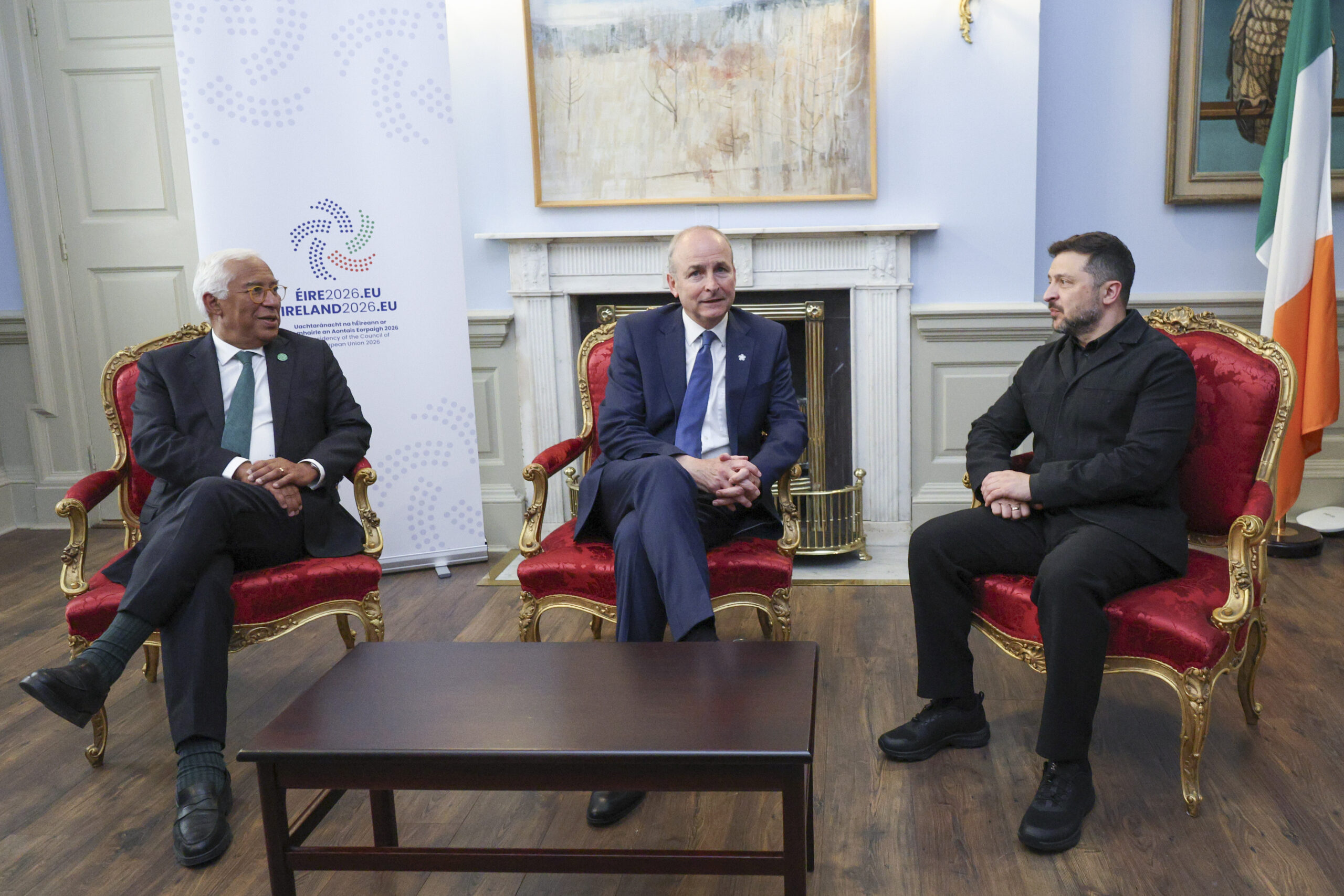
During the inauguration ceremony, Martin was flanked by the President of the European Council, António Costa, as they will be working together over the next six months on what has been described as the Union’s “challenging agenda.” “Over the next six months, Ireland will lead the Council’s work, acting in the interests of 450 million European citizens. The motto of your presidency is extremely clear: ‘Strength with Unity’ – together we are stronger,” Costa emphasised in his speech at the ceremony. “Values, competitiveness, and security are the three pillars of your presidency’s programme. They are also key priorities for our Union,” he added.
On the issue of competitiveness, it will be necessary to press ahead with the “One Europe, One Market” agenda, while on the matter of security, the “complex global geopolitical context” in which the continent currently finds itself will continue to prevail. In navigating “these difficult waters,” Costa explained, “the European Union has a compass and a map, namely international law, multilateralism, and the rules-based international order,” and these principles will underpin European support for Kyiv.
Present in Dublin alongside Costa for the launch of the Irish Presidency, the President of Ukraine, Volodymyr Zelensky, took the floor and added that Kyiv hopes for “concrete progress on the drone agreement” proposed by Ukraine to the EU, following “a significant number of bilateral agreements and broader partnerships with European countries that can help spread Ukraine’s new defence technologies.” In the near future, the Ukrainian leader added, it will also be necessary to “make it more difficult for Russia to continue this war,” both through “long-range strikes against Russian military and oil infrastructure” and “medium-range sanctions,” as well as concluding negotiations on Ukraine’s accession to the EU “in a concrete manner.”
Turning to the Middle East, Costa reiterated that “the same values and principles must guide the European Union’s positions and actions for peace and security in Gaza, the West Bank, Lebanon, Iran, the Strait of Hormuz, and throughout the wider Middle East” and that “the only possible path to lasting peace in the region” is the “two-state solution” whereby, in accordance “with the relevant United Nations Security Council resolutions,” the “two democratic states, Israel and Palestine, live side by side in peace and within secure and recognised borders.”
Finally, the key issue for the Irish Presidency: reaching a consensus on the Union’s next multiannual budget. “Our main common challenge”—as Costa described the future Multiannual Financial Framework (MFF)—on which an agreement must be reached by the end of the year. “Not just any budget, but one that has the necessary resources to meet our citizens’ expectations,” the Portuguese official noted. Building on the progress made in recent months, it will now be up to the Irish Presidency to maintain the momentum in the negotiations and to present a revised negotiating proposal in October, “which includes ambitious proposals for new own resources.” This is “the only way to bridge the gap between our level of ambition and a reasonable level of national contributions,” stated the President of the European Council. “Significant results are never easy,” he concluded, hinting at the uphill struggle that lies ahead for Dublin.
English version by the Translation Service of Withub