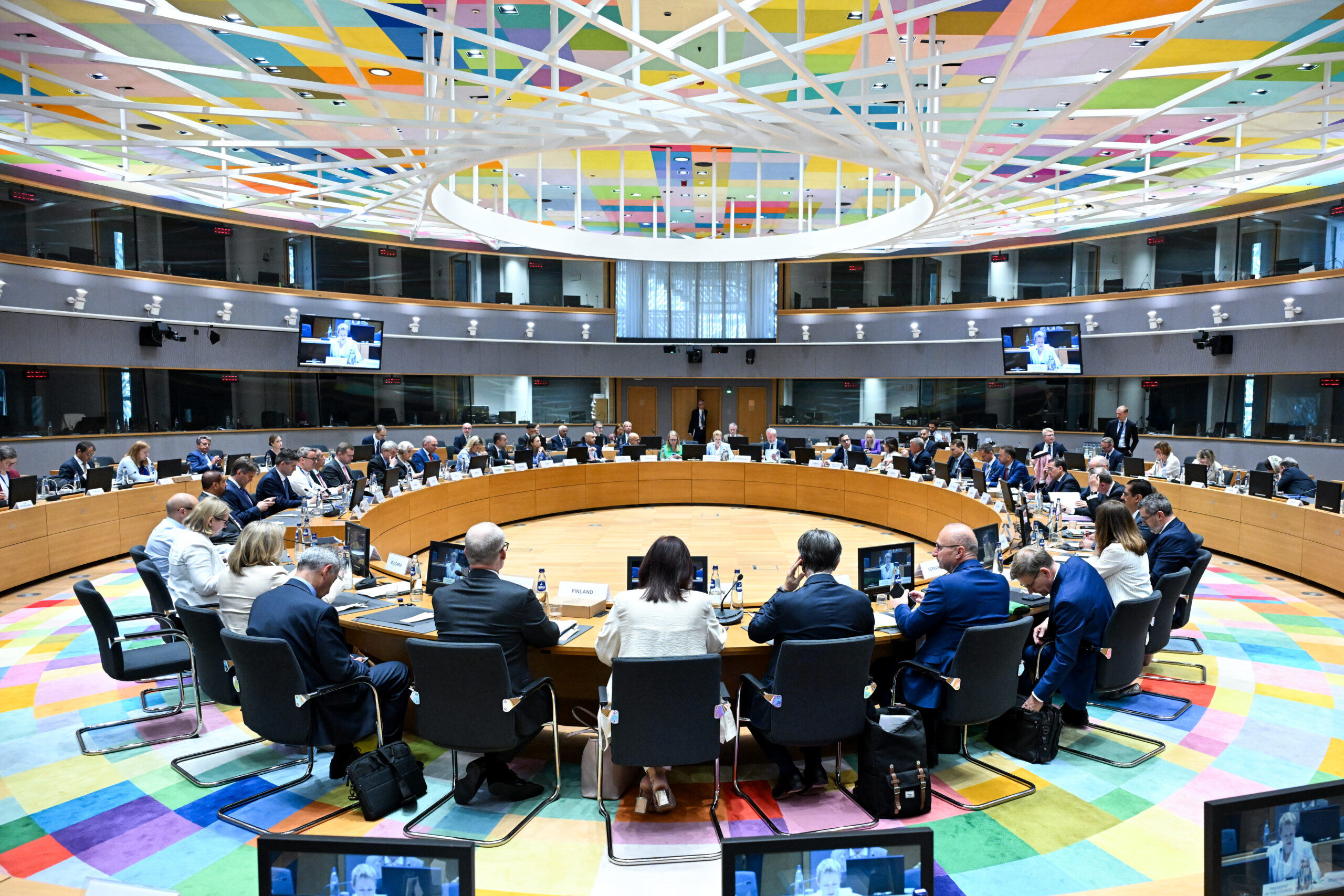

Brussels – New sanctions against Russia have been imposed. The EU Council today (13 July) adopted “restrictive measures against four individuals and five entities responsible for serious human rights violations in Russia.” Those targeted are accused of repressing civil society and the democratic opposition, as well as of undermining democracy and the rule of law. In particular, the sanctions focus “on Russia’s continued use of new technologies to restrict freedom of expression, access to information, and freedom of association.”
Among those sanctioned today are the company VK, also known as VKontakte, and its “Communication Platform”. These entities, under the supervision of the Russian Federal Security Service—Russia‘s main intelligence and internal security agency—are responsible for developing and managing the Max App smartphone application. This is an application pre-installed on all mobile devices sold in Russia which “includes extensive surveillance capabilities, subsequently used for repressive actions against users who criticise Russia’s war of aggression against Ukraine or who publish other content banned by the authorities.” Sanctions have also been imposed on Citadel, VAS Experts, and Norsi-Trans, three companies that manufacture, develop, and sell hardware and software related to the so-called SORM, the “system for operational investigative activities” used to monitor internet and mobile phone communications in Russia, with the aim of “monitoring phone calls, emails, text messages, and social media, and targeting journalists, opposition figures, minority groups, and ordinary citizens”. Similarly, the four individuals are people who “hold leadership positions in these companies and are therefore responsible for supporting serious human rights violations and for repressing civil society and the democratic opposition” in the country.
Currently, the list of EU sanctions against Russia includes 98 individuals and seven entities. All of these are subject to an asset freeze, while EU citizens and companies are prohibited from providing them with funds. A travel ban is also in force, preventing them from entering or transiting through EU territory.
In March 2024, in response to the escalation and systematic repression in Russia, the Council established a new framework of restrictive measures “against those responsible for serious human rights violations or abuses, the repression of civil society and the democratic opposition, and the undermining of democracy and the rule of law in the country,” in particular following the death of Alexei Navalny. This regime enables the EU to target those who provide support for or are involved in such violations, and also imposes trade restrictions on the export to Russia of equipment that could be used for internal repression and for the monitoring or interception of telecommunications.
English version by the Translation Service of Withub