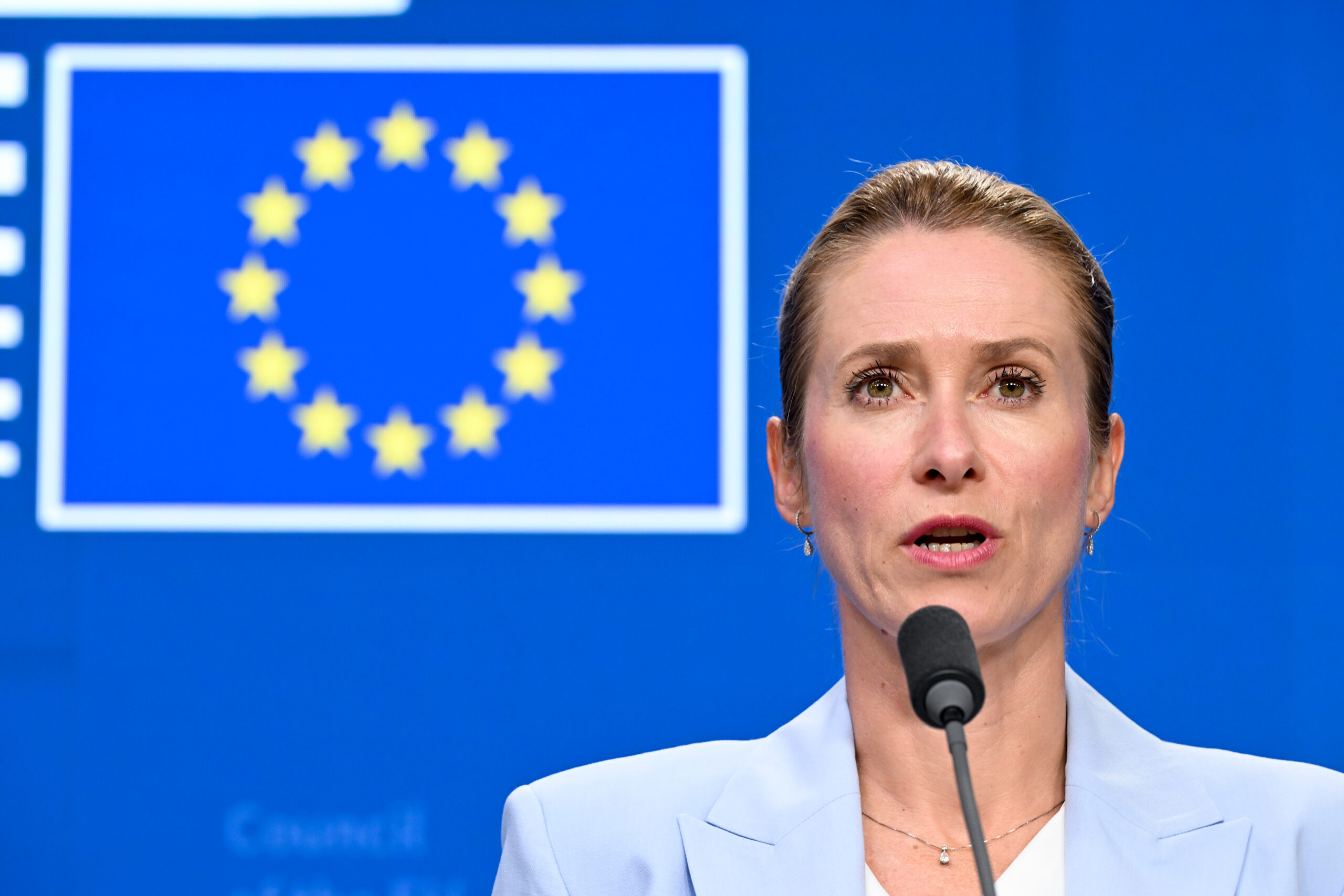
Brussels – The EU is not having it: Russia’s readmission to the Olympics is a misguided decision that comes at an even more inopportune moment. So says the EU’s High Representative for Foreign Affairs and Security Policy, Kaja Kallas, and she is not alone: “All ministers have condemned the reinstatement decreed by the International Olympic Committee,” Kallas stated at the end of the Foreign Affairs Council meeting. With the IOC’s decision to lift the suspension of the Russian Olympic Committee, even if only temporarily, “it seems as though they wish to reward the ongoing killing of civilians.”
All 27 foreign ministers of the EU Member States are convinced, Kallas insists, that the decision is highly questionable. The European Union’s line is to continue putting as much pressure as possible on Moscow. On the European side, however, this pressure is not being exerted: the Foreign Affairs Council has failed to approve the 21st package of sanctions against Russia announced in early June. The Member States are at loggerheads over sanctions on the fishing sector, on which part of the EU has significant dependencies. There is strong demand for Russian cod, whiting, and seafood, affecting Germany, Poland, the Netherlands, and France. Furthermore, the package lacks agreement amongst the 27 Member States on a visa ban for former Russian combatants.
The 21st package has therefore not been approved. What appears to be underway, in fact, is its very dismantling, highlighting the limitations of an EU that can no longer hide behind the vetoes and whims of the former Hungarian Prime Minister, Viktor Orbán. The EU is trying to save face by nevertheless approving new sanctions, alternative to the expected ones, for human rights violations, and new restrictive measures in response to cyber-attacks launched by Russia against EU Member States. “Russian cyber-attacks are increasing in scale and severity. For the first time, the EU and the UK have simultaneously sanctioned the entire ecosystem that enables these attacks, including criminals, hackers, and companies operating on Moscow’s largest IT system. This is the most comprehensive package of cyber sanctions ever adopted by the EU,” the High Representative emphasised, adding that Brussels “will also summon the Russian representative to the European Union regarding Moscow’s cyber campaign.” Finally, “for the ninth consecutive time, we are approving sanctions against Russia,” states Kallas, thereby seeking to demonstrate that the EU is not sitting idly by. She nevertheless tries to make the best of a bad situation: “I regret that there is no agreement on the 21st package, but we are close.” Yet we remain far from the initial objectives.
English version by the Translation Service of Withub