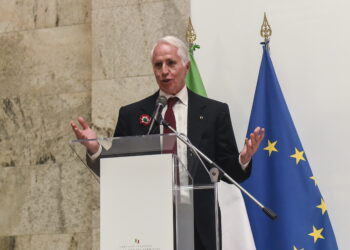
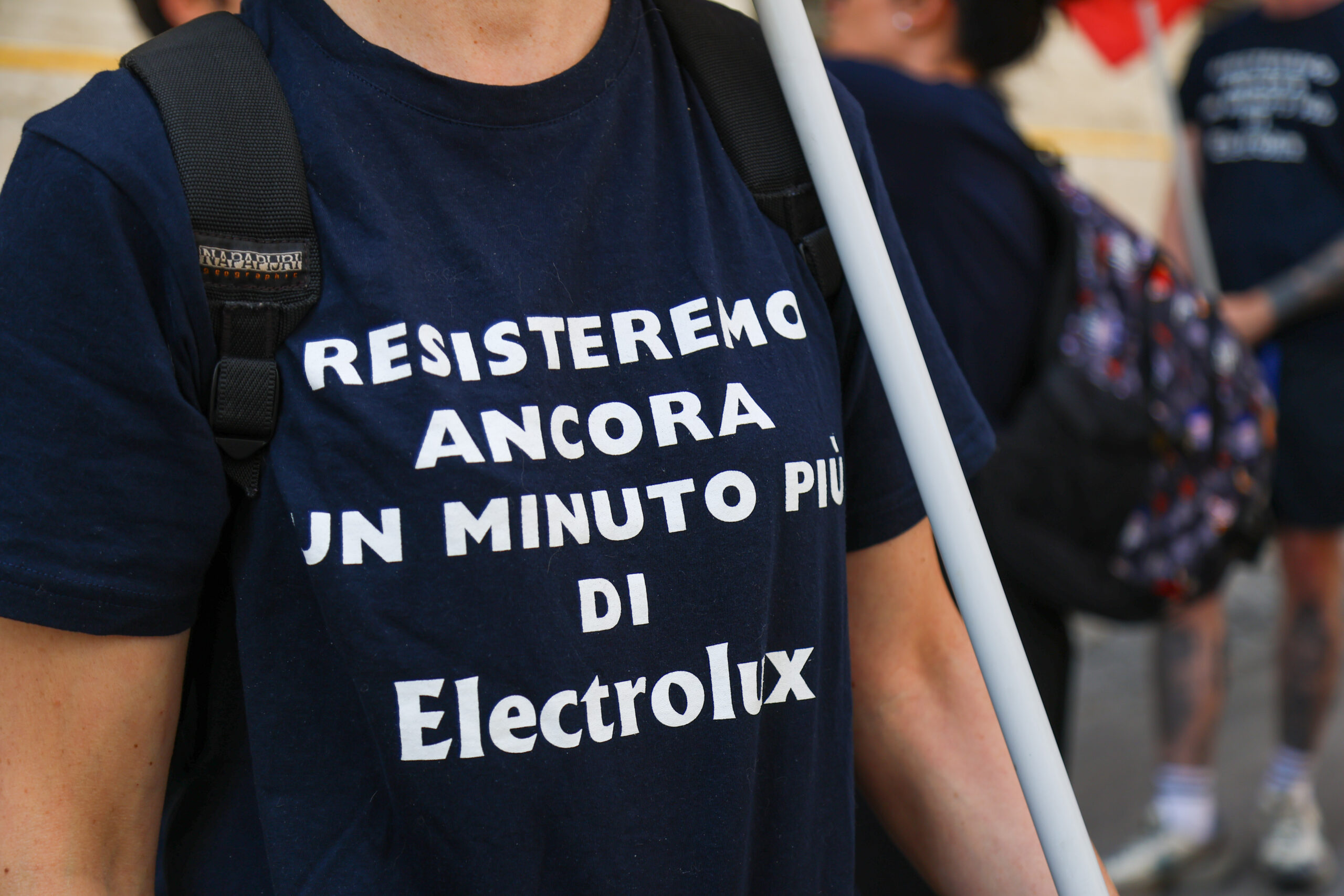

Brussels – “Electrolux’s announcement of 1,700 redundancies, equivalent to 40 per cent of the group’s Italian workforce, is the latest sign of the structural crisis in the household appliances sector.” This was stated today (14 July) by MEPs from the PD in response to the Minister for Enterprise and Made in Italy, Adolfo Urso, who argued instead that “Europe is the scapegoat of the moment.” On 11 May, the Swedish multinational announced its intention to close a factory, cut production, and reduce its workforce in Italy by almost 40 per cent. Faced with a general crisis, the PD MEPs believe the solution lies in “taking action on energy prices, trade defence against dumping, and investment.”
Before Electrolux, “which had already cut 1,500 jobs since 2022,” the same fate had befallen “Candy, whose historic Brugherio plant was closed following its sale to the Chinese firm Haier,” the group noted. Added to these is Whirlpool, “which, after taking over Ignis and Merloni, sold its plants to the Turkish firm Beko,” carrying out “a drastic restructuring.” MEPs describe the situation as “a sad reality,” given that today in Italy “the sector employs around 13,000 people, half the number compared to the early 2000s”. The situation is attributable on the one hand to weak demand and, on the other, to high production costs.
MEPs state that the European market for household appliances “has fallen from 90 million units in 2020 to 83 million in 2025.” Against the backdrop of this decline, “energy, which accounts for 18 per cent of total costs, costs 45 per cent more in Italy than in China” and “almost 25 per cent more than the European average.” The same applies to raw materials. These “account for 37 per cent of costs: European steel costs 31 per cent more than Chinese steel,” while the price of glass has risen by almost 150 per cent. Among the consequences is a sharp decline in Italian household appliance production, which has fallen “from 30 million units in 2010 to fewer than 10 million today.”
Therefore, according to PD representatives in Brussels, “to tackle the crisis, action must be taken on energy prices: structurally, by prioritising renewables and moving away from dependence on gas; and as an emergency measure, through tools such as a cap on gas prices and the use of funds raised from a one-off tax on energy companies’ windfall profits, to keep business energy bills in check.” Furthermore, resources derived from the ETS market “must be used to support businesses and not lost to general taxation.”
As regards measures to combat dumping—that is, unfair competition—“work is proceeding at a rapid pace, in particular on the CBAM, a European regulation requiring European importers to pay a price for the greenhouse gas emissions embedded in certain goods produced outside the EU, “so that the safeguard introduced for steel is extended to semi-finished products and products with a high steel content,” MEPs stated. Meanwhile, the principle of “European preference”, provided for in the Industrial Accelerator Act, also known as the “Made in EU” criterion, is a measure proposed by the European Commission to promote production, innovation, and employment in the steel sector within the Union – for certain basic products and the cleantech sector, “it must also be applied to strategic manufacturing sectors, including household appliances,” they added.
“These measures may constitute a defence strategy, but they are not enough,” the group explained. Public and private investment is needed “to rise to the challenge of global competition, as also indicated in the Draghi report, through stronger institutions and joint investment.” Without a strong push for innovation and industrial restructuring, “Europe—which is the only place where this challenge can be tackled and overcome —risks becoming trapped in intermediate technologies and losing many more jobs,” they concluded.
English version by the Translation Service of Withub