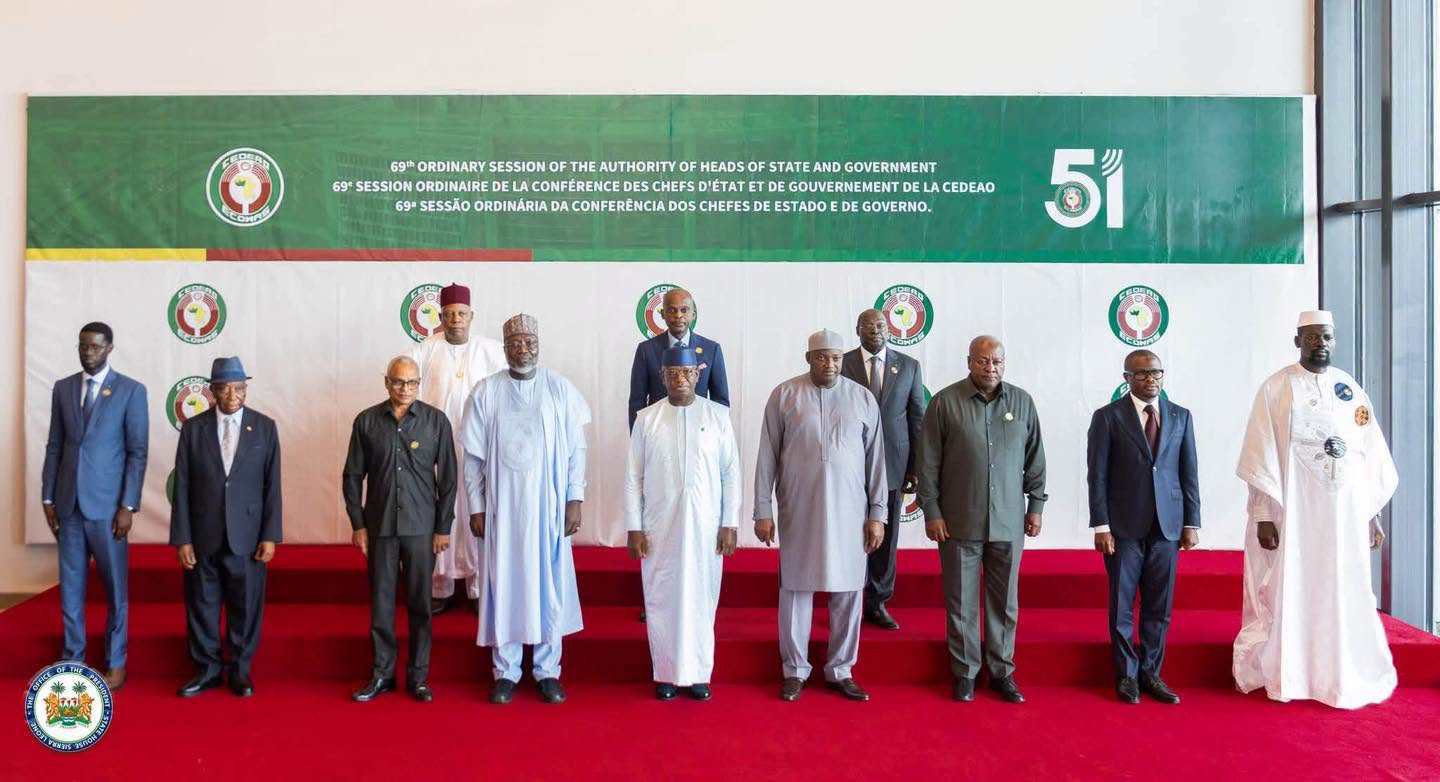

Brussels – The Heads of State and Government of the Economic Community of West African States (ECOWAS), meeting at a summit in Freetown, Sierra Leone, welcomed the signing, yesterday (19 July), of the Intergovernmental Agreement (IGA) governing the development of the Nigeria–Morocco Atlantic African Gas Pipeline (AAGP), an energy infrastructure project spanning approximately 6,800 kilometres designed to transport natural gas from Nigeria to Morocco, before connecting to the European gas network.
The signing of the agreement formalises the ECOWAS member states’ commitment to the strategic project, launched at the initiative of King Mohammed VI and the former President of Nigeria, Muhammadu Buhari, and now supported by the current Nigerian President, Bola Ahmed Tinubu. The project is being developed by Morocco’s Office National des Hydrocarbures et des Mines (ONHYM) and the Nigerian National Petroleum Company Limited (NNPC Ltd.).
The agreement marks a key milestone on the path to the project’s operational phase. The next steps involve establishing the project company, which will be based in Casablanca, and the Pipeline Higher Authority, which will have its headquarters in Abuja, prior to mobilising investors and making the final investment decision.
The process will be finalised with the joint signing by the Kingdom of Morocco and the Islamic Republic of Mauritania – both non-member states of ECOWAS – during a separate ceremony in the presence of the President of the Federal Republic of Nigeria.
Once completed, the African Atlantic Gas Pipeline will cross 13 countries along the African Atlantic coast and connect to the Maghreb-Europe gas pipeline in northern Morocco.
The infrastructure will have a transport capacity of 30 billion cubic metres of natural gas per year, of which up to 15 billion cubic metres may be destined for Morocco and European markets, while the remaining volume will supply regional markets in West Africa.
With an estimated investment of around 25 billion dollars, the project aims to create an integrated regional natural gas market, support electricity generation, promote industrialisation, and make the most of the continent’s natural resources. The first sections are expected to become operational at the start of the next decade.
Originally launched as a joint strategic initiative between Morocco and Nigeria, the African Atlantic Gas Pipeline now stands as a project shared by the whole of West Africa. The participation of ECOWAS countries reinforces its political and institutional legitimacy, consolidating the original impetus provided by the two promoting countries, which regard African energy security as a fundamental element for the continent’s sovereignty, industrialisation and shared prosperity.
According to ONHYM and NNPC Ltd., the technical, environmental, and engineering studies have now been completed, enabling the project to gradually enter the operational development phase. In addition to its energy significance, the gas pipeline aims to serve as a genuine development corridor, linking African economies and strengthening their integration and competitiveness.

![[Foto: Unsplash]](https://www.eunews.it/wp-content/uploads/2026/06/andreas-gucklhorn-Ilpf2eUPpUE-unsplash-350x250.jpg)