
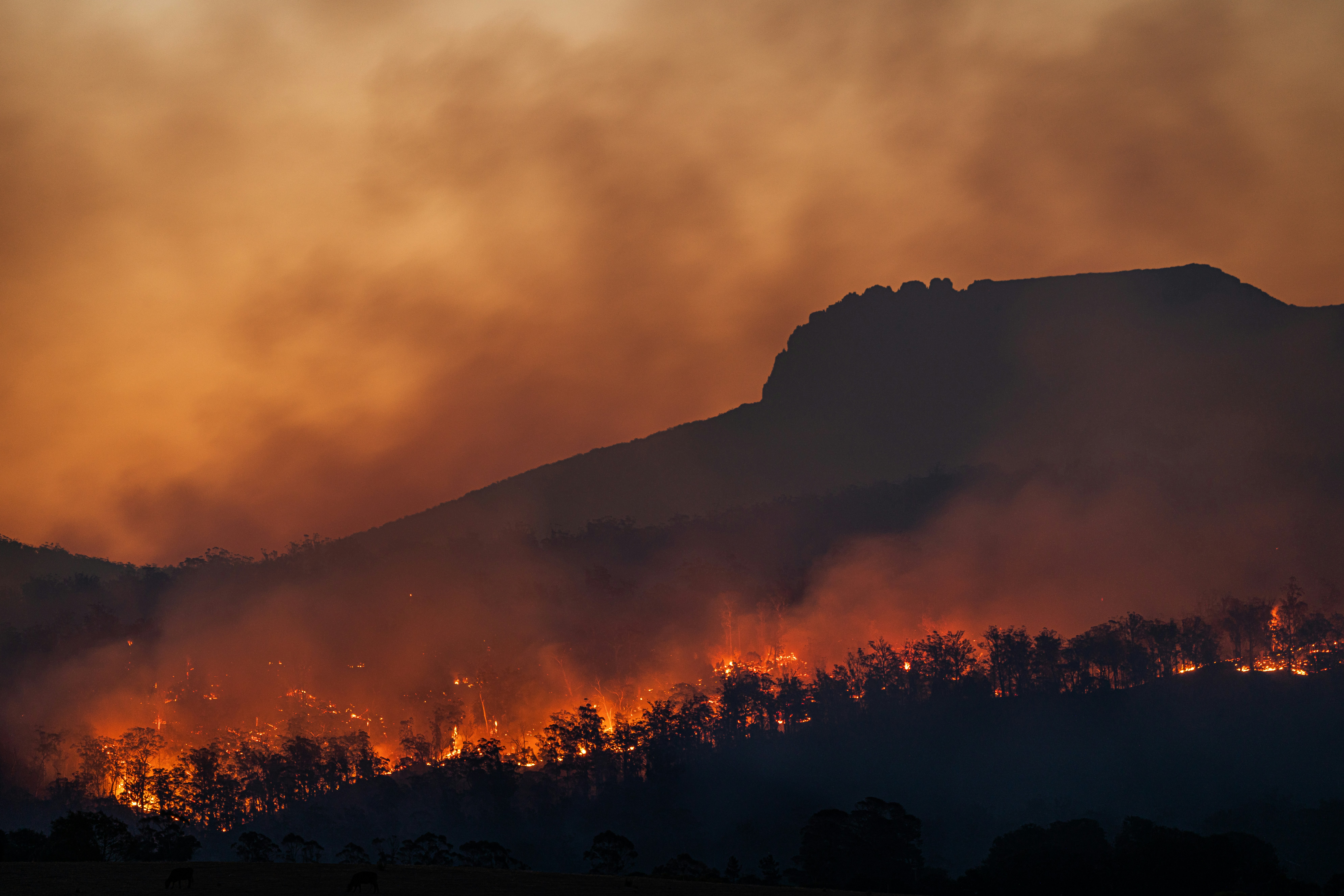

Brussels – Thirteen people have died and over 300,000 have been evacuated from their homes. This is the tragic toll so far caused by the severe wildfires that are destroying forests in south-western France, around the Bordeaux region, and in central Spain, near the capital Madrid. With high temperatures and winds fuelling the spread of the flames, thousands of hectares of woodland are going up in smoke. “The fires have spread across more than 42,000 hectares in France and 80,000 in Spain, and in both countries the situation is out of control,” a European official said today (27 July). Brussels is alarmed by the situation and has already activated the European Civil Protection Mechanism. “No country should ever have to face a disaster of this magnitude on its own” and for this reason “Europe has established a joint response capability: aircraft in the sky, firefighters on the ground and additional support ready to step in when needed,” reiterated the European Commissioner for Crisis Management, Hadja Lahbib. However, bringing the fires under control is extremely difficult. This is particularly true as Madrid and Paris fear the situation will worsen, given that a new heatwave with temperatures of up to 40 degrees is forecast for the coming hours. Around 75,000 residents have been evacuated from areas in Madrid, Ávila, Toledo and the eastern region of Castellón in Valencia. And despite European aid, “the situation is not under control,” the EU official pointed out.
“The climate emergency and rising temperatures are causing the spread and severity of the wildfires we are experiencing to increase exponentially,” stated Spanish Prime Minister Pedro Sánchez, who does not deny that some of the fires were started deliberately and that “investigations are underway to clarify the circumstances.” And while Sánchez warned that “difficult hours” lie ahead for the Spanish authorities and citizens, the French President, Emmanuel Macron, chaired an interministerial crisis meeting this morning at the Ministry of the Interior and visited the Gironde, where the “most violent fire in the last 50 years” is raging. At the end of the meeting, the Minister of the Interior, Laurent Nunez, outlined the figures relating to the emergency (since the start of the summer, 13,566 fires or outbreaks have been recorded, burning a total area of 116,085 hectares) and described the situation as “an absolutely unprecedented, exceptional season” and “far from over.” In France, in particular, the fires that have been spreading since Wednesday in the Gironde department have not only devastated 42,000 hectares but have also forced the evacuation of around 220,000 people, destroyed at least 240 homes, forced 45 campsites, with their approximately 40,000 holidaymakers, to close, while a further 30,000 people have fled the flames raging in other regions of France. So far, nearly 2,500 firefighters have been deployed, 84 of whom have been injured (one seriously as a result of an explosion).
This situation is causing concern for the EU and Brussels, particularly given the risk that it could worsen. According to a senior European official, the common factor in the fires in both countries “is their complexity, as well as the difficulty in extinguishing them due to the urban area affected.” This means that “the fire is spreading to both residential and industrial areas, placing a heavy strain on national resources and the national strategy.”
To tackle the situation, the two countries have activated the EU Civil Protection Mechanism, the key instrument that coordinates the rapid, solidarity-based response of the EU and participating countries to natural or man-made disasters when emergencies exceed individual states’ capacity to manage them on their own. So far, the EU has deployed to France two Air Tractor fire-fighting aircraft from Portugal; one Black Hawk helicopter from Slovakia and one from the Czech Republic; one Canadair fire-fighting aircraft from Croatia; two water-bombing aircraft and a technical team, both from Sweden. Germany will shortly send two more helicopters, and two more are expected from Turkey. Two Canadair fire-fighting aircraft from Greece have arrived in Spain, along with two aircraft from Italy—plus two deployed by Turkey—and three ground-based forest fire-fighting teams from Portugal, comprising 134 firefighters and 41 vehicles.
The Berlaymont Building has announced that the EU’s Copernicus satellite service—the European Earth observation programme managed by the European Commission—is also providing “real-time emergency maps to support operations on the ground,” while the EU Emergency Response Coordination Centre remains in close contact with the French and Spanish authorities to assess what further support can be mobilised. At present, a European Commission liaison officer is in Bordeaux to help the national authorities coordinate EU assistance. As part of the preparatory measures taken by the EU for this year’s fire season, firefighting teams from other European countries were already present in France and Spain before the fires broke out, enabling them to immediately reinforce national emergency services.
Most of the assets provided by the European Union are part of the firefighting fleet of rescEU, the Union’s strategic emergency and civil protection reserve, which comprises 22 aeroplanes and 5 helicopters. In clarifying the arrangements for its deployment, the European official explained that “the first level of response consists of voluntary offers from Member States” and participating states, and where this is not sufficient “to ensure a predictable and comprehensive response”, recourse is made to the European Civil Protection Pool. These resources may consist of rescue teams or medical teams, experts, specialised equipment or transport. Should these two levels, voluntary offers and the pool, prove insufficient, “the Commission has an additional level of capacity called ‘Rescue’, a safety net within the system that supplements the Member States’ response”, the official explained. Furthermore, when a country sends an aircraft, it must provide a vehicle “that is technically suited to the geographical features, water resources, and infrastructure of the area.”
Emergency response, however, should only come after other preparatory steps have been taken. “Today we are talking about response, but we are well aware that response alone is not enough,” because “many of these fires reach levels that exceed our capacity to extinguish them,” the EU official explained. Therefore, the Commission’s priority is “to make resilience to forest fires an integral part of our planning and investments for the future.” In this context, “a key part of this work is preparedness and prevention,” which means action will also need to be taken in relation to the “next Multiannual Financial Framework (MFF).”
In one proposal, “35 per cent is earmarked for climate resilience, which obviously already includes adaptation to weather events caused by climate change,” alongside a “simplification of access to funding for regions following extreme weather events, as most of the restoration work will be borne by local communities and the regions themselves.” Furthermore, “a Council recommendation on the integrated management of forest fire risk, a matter due for approval shortly” will be put forward, as risk information is essential “to ensure that local communities, residents, tourists, and citizens are better informed and receive all necessary information in a timely manner, with early warnings and local preparedness.” All these measures aim to ensure we are “ready for the start of the next season, because, unfortunately, what is happening now will become an annual occurrence.” Therefore, the aim is “not to fight any more fires, but rather to have comprehensive global policies that minimise the risk and prevent fires from the outset,” he concluded.
But as regards the current emergency, Lahbib admitted that “our teams are currently engaged in a race against time on the ground”. However, she assured: “We are working round the clock.”
English version by the Translation Service of Withub
![[Foto: Unsplash]](https://www.eunews.it/wp-content/uploads/2026/06/immo-wegmann-V2AMRkAUCnA-unsplash-350x250.jpg)