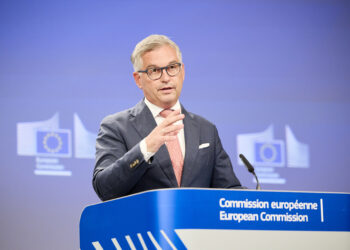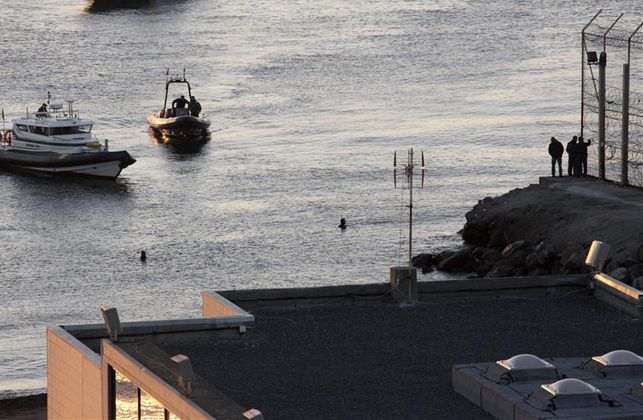

Brussels – “We have observed the presence of information and manipulation channels, Russian ones in particular, that have been urging action on various online platforms starting on 30 July,” said the European Commission spokesperson, Guillaume Mercier, today (6 August), regarding the viral spread of fake news that has exaggerated the recent events in Ceuta.
During the daily press briefing, Mercier reiterated that, in the period before 30 July, the government had not observed any such activity of this kind “and is now analysing the events in the framework of foreign information manipulation and interference (FIMI)” – a concept introduced by the European External Action Service (EEAS) to describe hostile campaigns by foreign powers that use fake news, fake accounts, bots, and state-run media to influence public opinion and destabilise democracies. The spokesperson clarified that these channels could “be state-controlled media, diplomatic channels, or even sources close to the Kremlin” itself.
On the subject of online disinformation, Mercier explained that the European Digital Services Act (DSA) obliges large online platforms and search engines “to assess and mitigate systemic risks relating to civic discourse or public security, including risks stemming from false or misleading information on their services within the European Union.” For this reason, national authorities may ask the Commission to consider greater cooperation with a large online platform and, in such cases, “the Commission stands ready to collaborate with national authorities and online platforms.” As for the exploitation of the migration crisis by human traffickers and smugglers, however, the Commission is leaving it to Spain to investigate. At present, “we are closely monitoring the information landscape and are seeking to coordinate with the platforms using the various tools at our disposal,” concluded Mercier.
English version by the Translation Service of Withub