
Brussels – “It is not possible to dismantle the fight against illegal immigration and shift its cost on Morocco.” This is Rabat’s response to the migration crisis that swept through Ceuta last Friday (31 July) and to the controversy that followed in Spain. After days of silence, a government source from the Kingdom of Morocco defended the country’s role in controlling the western Mediterranean route. The source also reiterated that international cooperation “is the only effective response to the new migration dynamics”.
This statement comes after the tension that erupted in Ceuta, the Spanish exclave on the North African coast, where thousands of people attempted to reach European territory. The incident sparked a debate in Spain on border management and cooperation with Rabat, putting pressure on Pedro Sánchez’s government. For Morocco, the management of irregular migration “cannot be considered the sole responsibility of transit countries.” On the contrary, it is a transnational challenge that requires “a shared commitment between countries of origin, transit, and destination.” International cooperation, the source stressed, remains “the only effective response” to the new migratory dynamics.
Rabat also highlights the efforts made in recent years. According to data released by a Moroccan government source, over the past two years, around 160,000 attempts at irregular migration have been thwarted, while over the past five years the Moroccan authorities have prevented more than 360,000 departures. During the same period, 632 criminal networks involved in human trafficking are reported to have been dismantled, and more than 32,000 rescue operations at sea were carried out.
The government source also emphasises the role of cooperation with Madrid, described as “one of the main factors that have made it possible to keep the western Mediterranean migration route under control.” As evidence of the effectiveness of bilateral coordination, Rabat cites the swift return to Morocco of those who had crossed the Ceuta border in recent days, an operation carried out – according to the government – in full cooperation with the Spanish authorities.
There is also a pointed reference to the recent decision by the Spanish judiciary, issued on July 8, which restricts immediate pushbacks (‘devoluciones en caliente’) of migrants who reach Ceuta and Melilla by swimming. According to Rabat, this decision risks undermining the joint framework for combating illegal immigration. “It is not possible to dismantle the framework for combating illegal immigration and ask Morocco to bear the consequences,” the source said, warning that unilateral approaches could jeopardise years of operational cooperation.
The Moroccan government also criticises what it calls “electoral statements”, arguing that migration should not be used as a tool of domestic politics. According to Rabat, fuelling controversy on this issue “risks undermining a partnership that has yielded tangible security benefits” for both Spain and the European Union as a whole. As for developments on the European front, it will be necessary to wait for the summit of Interior Ministers of Member States, scheduled for this afternoon (4 August), where the sole topic of discussion will be, precisely, the serious crisis in Ceuta.
English version by the Translation Service of Withub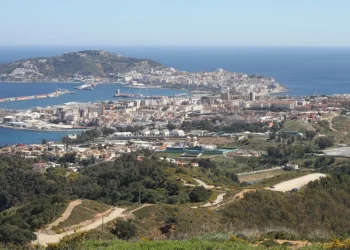
![Il vertice dei leader Ue si apre con tensioni su Schengen. La Germania chiede una soluzione [foto: imagoeconomica]](https://www.eunews.it/wp-content/uploads/2022/12/Imagoeconomica_1366264-scaled.jpg)




![Il ministro dei Trasporti, Matteo Salvini [Bruxelles, 5 dicembre 2024. Foto: Emanuele Bonini per Eunews]](https://www.eunews.it/wp-content/uploads/2024/12/salvini241205-120x86.jpeg)