
Brussels – Ceuta: there is far more at play than migration alone. The region sits within a complex and delicate geopolitical landscape shaped by unstable, never fully defined relationships and balances, underpinned by historical and regional dynamics that remain unresolved. In this context, Morocco wields the Western Sahara issue as a lever of pressure — and a significant one — on the European Union and its member states, starting with Spain.
In the north-western African region, Morocco and Algeria play a key role for the EU: the former represents an important market for Europe in the agricultural, textile, technology, and transport sectors, while the latter supplies energy, particularly gas. In both cases, however, these are critical dependencies: Algiers can use energy as a weapon, which is exactly what it is doing, and Rabat can use the migrant issue as a bargaining chip, given that it has now become clear that asylum seekers, whether legal or not, are the real Achilles’ heel of this divided and quarrelsome Union.
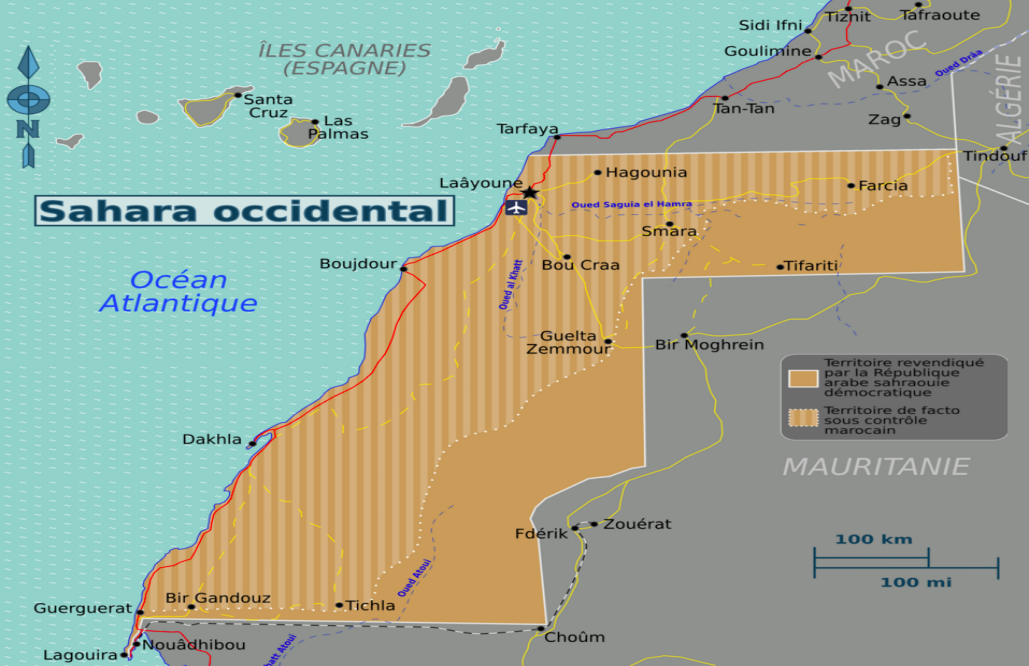
In the background lies the issue of Western Sahara, a territory seeking independence which Morocco claims as its own. Although the declaration of independence dates back to 1976, the Sahrawi Arab Democratic Republic’s capital, El Aaiun, is largely controlled by Morocco and remains the subject of a dispute. Furthermore, the Republic remains unrecognised internationally. However, around 80 countries have recognised the country as independent and sovereign, whilst just 20 have an embassy there; meanwhile, the UN includes Western Sahara on its list of non-self-governing territories.
Among the few countries to fully recognise Western Sahara is Algeria, a country bordering Morocco which has always supported the Sahrawi people. Proof of this is Tindouf, an Algerian city just a few kilometres from the borders with Morocco and Western Sahara, which is home to Sahrawi refugees and, above all, the Sahrawi government-in-exile, effectively making Algeria a base for anti-Moroccan political activities amid the disputes and tensions across North Africa. 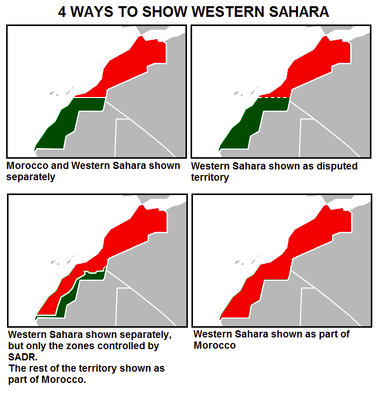
The UN is backing the proposal put forward by Morocco in 2007 to create an autonomous region of Western Sahara within the Kingdom of Morocco. On 31 October 2025, the United Nations Security Council voted in favour of a resolution calling for action in this regard, with the European Union backing it: “The EU continues to support fully
the United Nations-led process, in line with UN Security Council resolution 2797(2025),” the one from October 2025, notes the EU’s High Representative for Foreign Affairs and Security Policy, Kaja Kallas.
Kallas responds to a parliamentary question submitted in the wake of targeted Moroccan attacks against Lehbib Mohamed Abdelaziz, commander of the Polisario Front, the main pro-independence organisation in Western Sahara. The senior officer is reported to have been killed by a drone launched by the Moroccan government, an act which the EU has not openly condemned: “The EU recalls that now is the time for dialogue and negotiations and that any military
escalation runs counter to this effort and should be avoided,” Kallas said.
The recent situation in Ceuta forms part of this complex web of relations, alliances, and interests. As early as 2021, Spain’s own territory in North Africa came under attack when the Sánchez government decided to provide medical treatment to Brahim Ghali, leader of the Polisario Front, Morocco’s sworn enemy due to its claims for independence. In response, Morocco sent migrants to Ceuta. The same scenario appears to have repeated itself five years on: Spanish Prime Minister Pedro Sánchez travelled to Algiers to revitalise bilateral relations between Spain and Algeria, an African country that supports the cause of the Sahrawi people in open contrast to Morocco’s interests.
Rabat therefore appears to have significant leverage, and the EU is well aware of this. This would explain Kallas’s timid condemnation – if it can even be called that – of Morocco’s operations against the Sahrawi political leadership, and other matters as well.
English version by the Translation Service of Withub