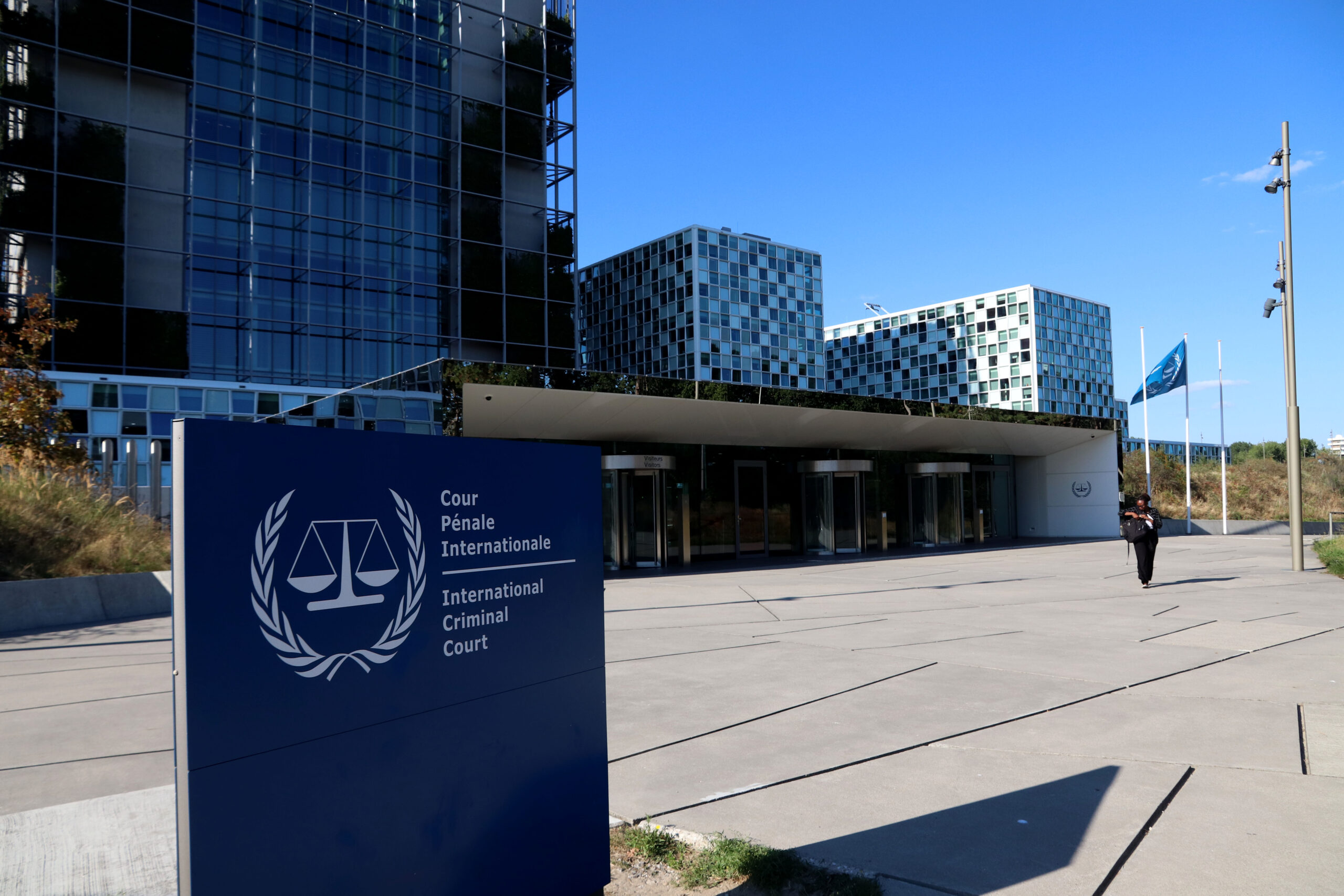
Brussels – Washington’s attack on the International Criminal Court (ICC) is intensifying, with the European Union expressing its support on social media in an attempt to defend the rules-based international order and international law. Following the new sanctions announced by the United States against the President of the Court, Tomoko Akane of Japan, and Deputy Prosecutor Abdoulaye Seye of Senegal, Brussels is taking a stand in defence of the institution based in The Hague. European Commission President Ursula von der Leyen and European Council President Antonio Costa have expressed their support for the Court, to Akane and the “officials who uphold its mission.”
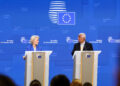
“The ICC helps deliver justice to the victims of some of the world’s most horrific crimes,” wrote the two leaders in a joint post on X. “To carry out this vital work, its judges and officials must be able to act independently and free from external pressure,” they added.
Rubio: “The ICC is a threat to US sovereignty”
The message comes after the latest crackdown by Donald Trump’s administration against the international court. The sanctions were announced by US Secretary of State Marco Rubio, a key figure in Washington’s new diplomatic campaign to weaken and, according to the United States’ stated intentions, “dismantle” the International Criminal Court.
Rubio described the Court as “a corrupt and irredeemably politicised supranational tribunal,” accusing it of having “deliberately abused its authority” and of having exceeded its mandate. According to the Secretary of State, the ICC has also attempted to exercise its jurisdiction over US citizens and citizens of other countries that have not ratified the Rome Statute.
It was on the basis of Executive Order 14203, signed by the Trump administration to impose sanctions on the ICC, that Rubio designated Akane and Seye. “These individuals have been directly involved in the ICC’s efforts to investigate, arrest, detain or prosecute government officials from countries that have not consented to the Court’s jurisdiction,” he argued.
Washington’s decision marks the latest escalation in a campaign that Rubio has led personally.
In July, the Secretary of State announced the launch of a diplomatic offensive to “dismantle” what he considers a threat to American sovereignty,
also promising to pressure other countries to cut off funding and
withdraw from the Court. The proposed measures include further sanctions, visa restrictions, and diplomatic pressure on states that continue to cooperate with the institution. In July, spokespeople for the EU executive set out the EU’s position on the matter, explaining that the Commission stood by the International Criminal Court and considered any attack or threat against the ICC, its officials, and its staff “unacceptable.”
The ICC: “The international legal order has been undermined”
The United States has long contested the legitimacy of the ICC’s actions against American citizens and has intensified the conflict, particularly following the proceedings relating to Israel. In November 2024, the Court issued an arrest warrant against Israeli Prime Minister Benjamin Netanyahu and the then Defence Minister Yoav Gallant, fuelling Washington’s accusations of politicised action. With these new measures, the number of ICC members and officials affected by US sanctions has risen further: according to the Court itself, this now includes nine of the 18 judges, both deputy prosecutors, the former prosecutor and a member of staff.
The Hague’s response is unequivocal. Sanctions against judges, prosecutors and staff acting to fulfil the mandate entrusted to the Court by the States Parties to the Rome Statute “undermine the rule of law.” “When judicial officials are threatened for having applied the law, it is the international legal order itself that is put at risk,”
the ICC stated in a press release. In the Court’s view, US pressure affects not only the institution itself, but also the victims of international crimes, who turn to the ICC when all other avenues for obtaining justice have been exhausted. The Court has therefore given assurances that it will continue to carry out its mandate “with independence and impartiality,” in accordance with the Rome Statute.
Brussels sides with the Court
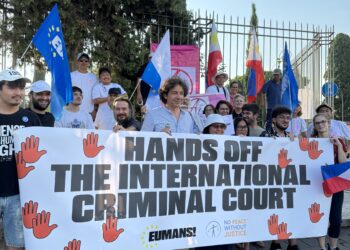
IAgainst this backdrop the European Union’s leadership has taken a stance. Von der Leyen and Costa have chosen to express joint support for the ICC and its president—making no mention of who is behind the threats, namely the US—and emphasised the need for judges and officials to operate without interference. “The ICC helps deliver justice to the victims of some of the world’s most horrific crimes,” the two leaders reiterated, defending the Court’s role at the very moment when Washington is contesting its legitimacy and calling on other countries to distance themselves from the institution.
European support therefore comes at a time when the Trump administration’s attack on the International Criminal Court in The Hague is entering a new phase. On the one hand, Washington, with Rubio at the forefront, is seeking to isolate the ICC through sanctions and diplomatic pressure. On the other hand, the European Union reaffirms the need to safeguard its independence and its role in the international legal order.
English version by the Translation Service of Withub
![[Foto: Unsplash]](https://www.eunews.it/wp-content/uploads/2026/06/jakob-rubner-oqCRCYUiJpw-unsplash-350x250.jpg)