
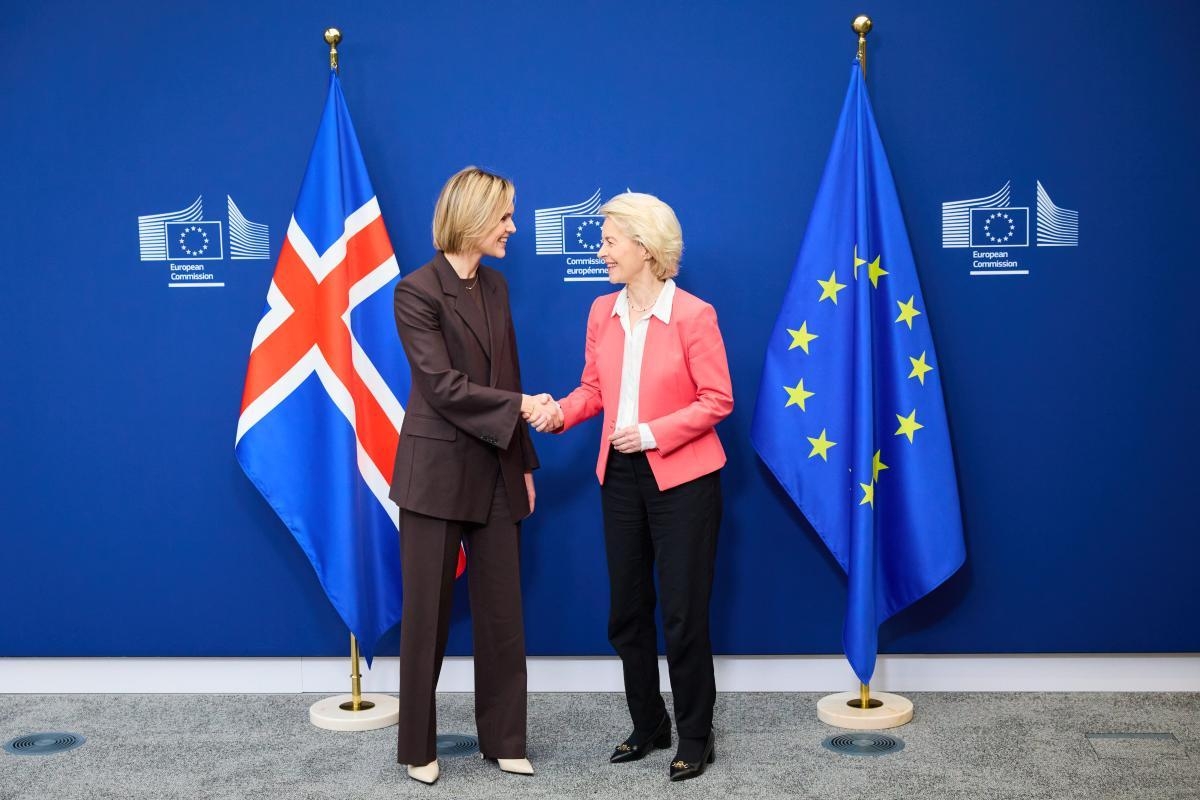
Brussels – Iceland and the EU: the referendum on whether to resume the accession process has yet to take place, but the debate is already heating up. This is partly due to the European Conservatives and Reformists (ECR) group, and in particular its member Emmanouil Fragkos, who, in a parliamentary question, touches on what may well be the central issue of the negotiations. There is concern that Iceland might demand, concerning fisheries, “to retain full sovereign control over its exclusive economic zone and fishery resources.” The ECR Group therefore wishes to know what the Commission’s intentions are regarding the negotiations, which may begin after 30 August – the day following the referendum on the resumption of Reykjavik’s EU accession process.
The rules would require Iceland, should it decide to join the European Union, to comply fully with EU regulations, including the provisions on fisheries policy. However, as the Commissioner for Fisheries, Costas Kadis, points out, according to the rules and practice, “a treaty of accession may provide for certain derogations from EU rules
applicable to a new Member State.” In any case, he adds, “pending the outcome of the referendum and any
decision to resume accession negotiations, it is premature to comment on any related aspects
that might be agreed upon in the context of Iceland’s possible accession to the EU.”
https://www.eunews.it/en/2026/07/27/iceland-early-voting-begins-in-the-referendum-on-eu-membership/
Kadis does not confirm that informal negotiations are already underway, merely noting that exceptions and derogations are possible. This was the case for the United Kingdom, which negotiated its accession to the then European Economic Community with the option to opt out of monetary union, thereby remaining exempt from the obligation to adopt the euro. Currently, Denmark and Ireland retain, respectively, exemptions from adopting the euro and from the Schengen free movement of people, goods, services, and capital.
Iceland: an accession process revived at breakneck speed
On 29 August, Icelandic citizens are set to go to the polls to decide whether to restart the EU accession process, which began almost twenty years ago. The government of Reykjavik had submitted an application for EU membership in July 2009, and negotiations began a year later, in July 2010. However, in September 2013, the government chose to block the entire process, with fishing and EU restrictions among the main reasons for a complete withdrawal, officially announced in early 2015 after negotiations on eleven chapters had been completed.
Russia’s military aggression in Ukraine, the shift in US policy under the Trump administration (Iceland is one of NATO’s founding members, ed.) and geopolitical uncertainties have prompted the current Icelandic government to reconsider the EU and its membership once again. In 2026, Iceland signed a defence cooperation agreement and joined the ECB’s instant payments platform. All eyes are on the island and on Saturday’s vote (29 August). Meanwhile, however, the debate is heating up and getting into full swing.
English version by the Translation Service of Withub![Banconota da 500 corone islandesi [foto: By Central Bank of Iceland, Bradbury Wilkinson, New Malden. - http://coinsbanknotespictures.blogspot.com/2012/06/currency-of-iceland-500-kronur-banknote.html, Public Domain, https://commons.wikimedia.org/w/index.php?curid=29951906, elaborazione eunews]](https://www.eunews.it/wp-content/uploads/2026/06/euro-corona-islanda-350x250.png)



![Il ministro dei Trasporti, Matteo Salvini [Bruxelles, 5 dicembre 2024. Foto: Emanuele Bonini per Eunews]](https://www.eunews.it/wp-content/uploads/2024/12/salvini241205-120x86.jpeg)