
Brussels – In July, interest rates remained unchanged because conditions did not call for intervention in one way or the other. However, the European Central Bank’s decision at the end of July was influenced by a hot summer, though not yet as scorching as it later became. In other words: while the crisis in the Strait of Hormuz was taken into account, the effects of the extreme weather could not be fully factored in. Therefore, as stated in the minutes of the meeting published today (27 August), all members of the Executive Board of the ECB made it clear that “the September meeting will provide the next opportunity for a comprehensive assessment of the inflation outlook and related risks, taking into account developments in the conflict in the Middle East.”
So far, there have been no surprises compared with what ECB President Christine Lagarde stated at the end of the July meeting. However, the minutes reveal the reason for this postponement: the members of the Governing Council agreed that “food price trends would be monitored closely in the September projections and beyond.”
The fear in Frankfurt is that rising energy prices could coincide with a general rise in food prices, leading to a more severe inflationary spiral that is harder to contain. As early as July, it was observed that global food prices remained “sensitive to changes in energy supplies, fertilisers, and weather events.” It is here, in this last passage, that one can better understand the decision not to change interest rates: however hot Europe was on 23 July, the effects of the heat were still only partial.
https://www.eunews.it/en/2026/06/25/ecb-flags-high-energy-prices-this-summer-and-inflation-above-target-through-mid-2027/
In any case, as a result of the energy price surge caused by the US war in Iran, food prices had “risen sharply since the June meeting, driven by sub-components such as coffee and cocoa.” In this context, the minutes of the July meeting state: “Looking to the medium term, various factors could push up food price inflation again, including the impact of the energy shock feeding through to agricultural input costs, including transport costs, as well as the weather-related effects of recent heatwaves and the onset of El Niño.”
In a nutshell: what US President Donald Trump has failed to achieve with the war in Iran, in which he has become bogged down, is now in serious danger of being brought about by climate change. The link between climate and food is being considered in Frankfurt for at least a couple of reasons. Firstly, “they could be an indicator of the indirect effects of the energy shock, although it was welcomed that, for the time being, energy inflation and food inflation were not moving in the same direction”.
Secondly, the ECB’s Governing Council notes that the costs of food and drink are “highly visible to consumers” and, for this reason, food prices play “an important role in shaping perceptions and expectations of inflation and could exert some pressure on wage demands.”
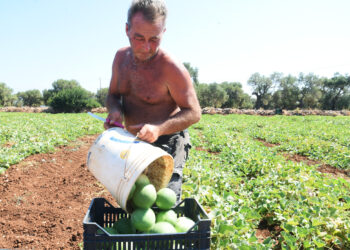
What virtually everyone around the European Central Bank’s Governing Council table seems to agree on is that “extreme weather events and, more generally, the ongoing climate and natural crises, could push food prices up more than expected.” This point was highlighted back in late July. September will therefore be the time to review the situation, not only in terms of the war in Iran but, above all, the impact of climate change on agricultural production. Any potential—and anticipated—rise in interest rates hinges on this.
English version by the Translation Service of Withub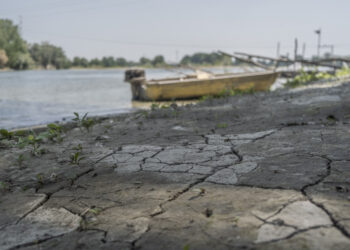

![[archivio]](https://www.eunews.it/wp-content/uploads/2025/09/bavaglio-350x250.png)