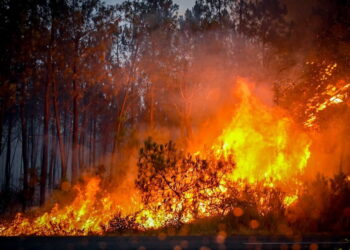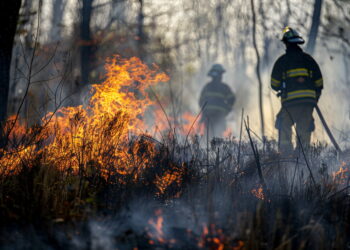

Brussels – Europe will be increasingly affected by wildfires.
This
climate will almost certainly become the norm, but it remains to be seen
whether the EU can provide an adequate political and economic response.
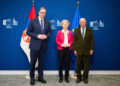
The President of the European Commission, Ursula von der Leyen, is aware of what lies ahead for the bloc of 27: “The risks surrounding us are changing. They are becoming more frequent, more complex and more serious. Global climate change is contributing to this instability.”
This realisation, which also serves as a warning, came during the President of the European Commission’s visit to the Emergency Response Coordination Centre, the EU’s crisis management hub. And there is no doubt that the EU is already in the midst of a crisis: “This summer the forest fire season began exceptionally early, at the end of April, and put national services under severe strain,” recalls von der Leyen. The EU alone demonstrates that the situation is coming to a head: “Since April, the Civil Protection Mechanism has been activated ten times for forest fires in eight different countries, sometimes with several fires burning simultaneously.”
Looking
ahead, von der Leyen believes we must prepare for a new reality, characterised
by climate change that can no longer be denied.
“All over the world we are seeing higher temperatures and erratic rainfall,” she warns. “For the emergency services this is not an abstract warning about the future, but is already changing the emergencies they face today.” Yet the EU’s current situation is characterised by inadequacy and decisions that are heading in the opposite direction.
The French MEP Anthony Smith (La France Insoumise/laSinistra) points out that the EU “does not have sufficient industrial capacity” to renew and expand its fleet of Canadair firefighting aircraft, and that in light of “fires that are becoming more intense, more frequent and more widespread,” it would be appropriate to take action to address the problem, which is more serious than anticipated.
Funds are needed to purchase and manufacture firefighting aircraft, and all of them have to be found. The European Commission has decided to acquire 12 aircraft of its own to avoid asking national governments every time and to be better prepared and more independent in responding to the crisis. But that is not enough. This is why the Commissioner for Crisis Management, Hadja Lahbib, is calling on Smith to persuade his fellow MEPs to work together: “In the context of negotiations on the next multiannual financial framework (MFF 2028–2034), the European Parliament’s support will be essential to ensure the effective implementation of activities aimed at building a more resilient and better-prepared Europe.” It is a pity that budget negotiations are practically at a standstill, partly because some countries want to spend as little as possible by cutting across all areas of expenditure.
In short, the EU risks not having the money to prevent and tackle future wildfires. This is partly because the European Commission’s 12 Canadair aircraft are not due to be delivered until 2027, and in the view of the “frugal” countries, this alone is enough to justify cutting spending.
English version by the Translation Service of Withub