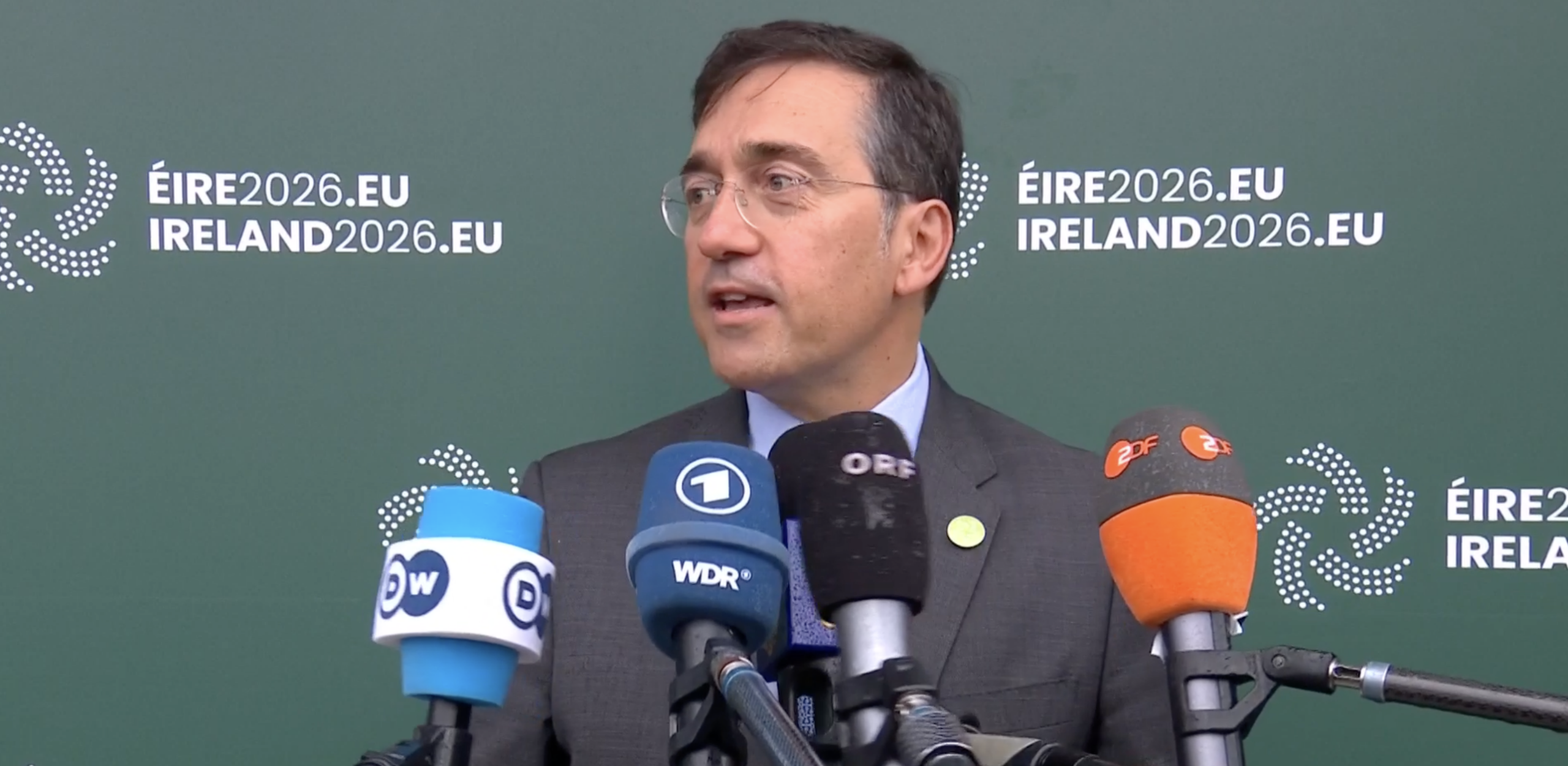
Brussels – Spain has always offered “its solidarity to every Member State of the Union” and expects to be treated in the same way. The Spanish Minister for Foreign Affairs, the European Union and Cooperation, José Manuel Albares, reiterated this speaking of the migration crisis in Ceuta – where, between 30 and 31 July, around 60,000 migrants from Morocco entered the country. During a press briefing at the Gymnich meeting – the informal gathering of European Union foreign ministers – taking place today and tomorrow in Wicklow (Ireland), the minister wished to convey a message to the entire Union, but above all to Italy.
From 1 August 2026, Italy temporarily suspended the Schengen agreement on cross-border connections with Spain, triggering a diplomatic crisis that prompted the government in Madrid to introduce similar controls on arrivals from Italy. For this reason, Albares recalled all the times his government provided aid to other Member States and beyond. He mentioned, for example, the reception given to Ukrainian refugees following the outbreak of the war with Russia, as well as the aid provided in 2021, when Aleksandr Lukashenko drove thousands of migrants towards the borders of Poland, Lithuania, and Latvia. He then turned his attention to 2023, when “Italy was inundated with migrants in Lampedusa,” and Spain committed to relocate some of them to its territory.
For these reasons, the monarchy expects solidarity and political support from its European partners “when it comes to its southern land borders,” because these borders “are just as important as those to the east, north, and west”, according to the minister. In addition to political solidarity, Albares called for “financial solidarity,” referring to the upcoming negotiations for the next Multiannual Financial Framework – the EU’s long-term spending plan – for the period 2028–2034.
Finally, the minister explained that the Union must tackle the other “hybrid threats” it faces, particularly disinformation. On this point, he expressed regret at having observed that, regarding Ceuta, even “some EU governments have amplified it,” so “we cannot allow it to seep into our societies,” he concluded.
English version by the Translation Service of Withub