
Brussels –Germany, year zero. The far right returns to power for the first time since the defeat of the Nazi Reich, and the federation suddenly finds itself projected back into a past that was believed to be overcome. In Saxony-Anhalt, Alternative für Deutschland (AfD) emerged victorious—a nationalist party that denies climate change, is anti-immigration, anti-Islam, anti-European Union, anti-euro, anti-everything but not anti-Nazi—an expected and decisive victory: 43.8 per cent of the vote, exceeding even forecasts. Chancellor Friedrich Merz’s CDU trails far behind, coming second with 17.2 per cent of the vote. The Social Democrats (SPD) failed to break the 10 per cent threshold, coming third with 9.3 per cent.
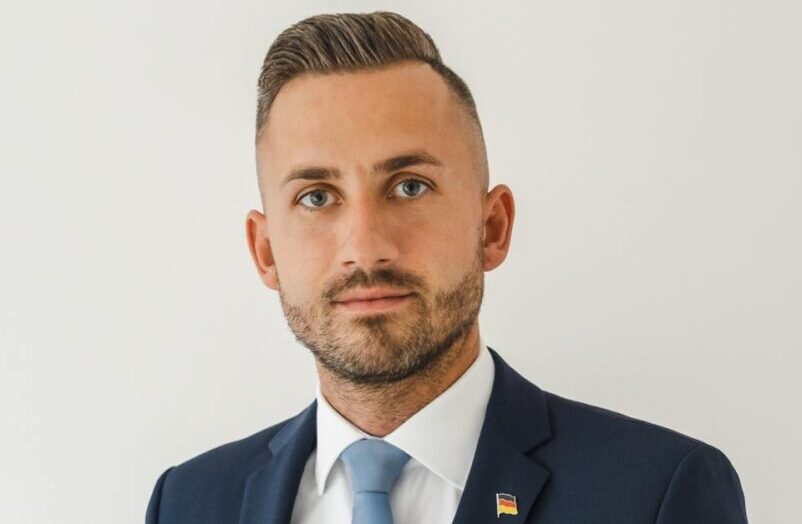
The local AfD leader, Ulrich Siegmund, is understandably jubilant, describing the result as “sensational”. The unprecedented breakthrough raises questions about a Germany attempting an immune‑style reaction to extremism through a non‑collaboration cordon sanitaire. No party has declared itself willing to form a coalition with the AfD, the largest political force but one lacking the numbers required to govern alone.
The AfD is reported to have won 39 seats, three short of the 42 required for a majority. However, the CDU (15 seats), the SPD (8 seats), the Greens (8 seats) and the left-wing party Die Linke (8 seats) would together have one fewer seat than the far right. The deciding factor, one way or another, is likely to be the BSW, the party formed following a split within Die Linke, which is said to have already begun exploring cooperation possibilities, including with the AfD. The risk now is that Saxony-Anhalt will become ungovernable.
Siegmund rules out the possibility of forming minority governments, and adds: “If necessary, new elections will be held, and we will still secure 50 or 55 per cent.” This is no longer a challenge to the entire German political and party spectrum, but rather to the entire nation, which is rediscovering the weaknesses and fragility of the Weimar Republic.
Meanwhile, in Italy, the governing parties are split. The Deputy Prime Minister and Secretary of Forza Italia, Antonio Tajani, has distanced himself, describing the AfD’s victory in Saxony-Anhalt as “the rise of a political force that is antithetical to the liberal and Western values with which Forza Italia identifies, and it is very bad news that we hope will prove to be a local exception.” The other Deputy Prime Minister and leader of the League, Matteo Salvini, is jubilant: “It is a resounding success, which highlights the strong demand for change, security, and jobs.” From eastern Germany: “No danger – it’s called democracy. Another Europe is possible.”
The remarks made by the various Salvini allies prompt an irritated reaction from Polish Prime Minister Donald Tusk, who hits back hard from Warsaw: “In Poland, only idiots and traitors can rejoice at the AfD’s triumph.” France’s Minister Delegate for European Affairs, Benjamin Haddad, is also concerned: “It is a serious moment for Europe to see the far right win regional elections in Germany. We must not forget our history. Nationalism and xenophobia will never be a solution. We must never stop defending our democratic values and the European project.”
Meanwhile, the European Union wakes up to find the far right as the leading political force in Germany, and with the inevitable questions it must address. Speaking from the Socialist benches, MEP Sandro Ruotolo (PD/S&D) calls for a new political era: “The answer lies in rebuilding a social Europe: housing, decent wages, work, healthcare, education and social security. We must strip the ‘black wave’ of the ground on which it thrives.”
English version by the Translation Service of Withub