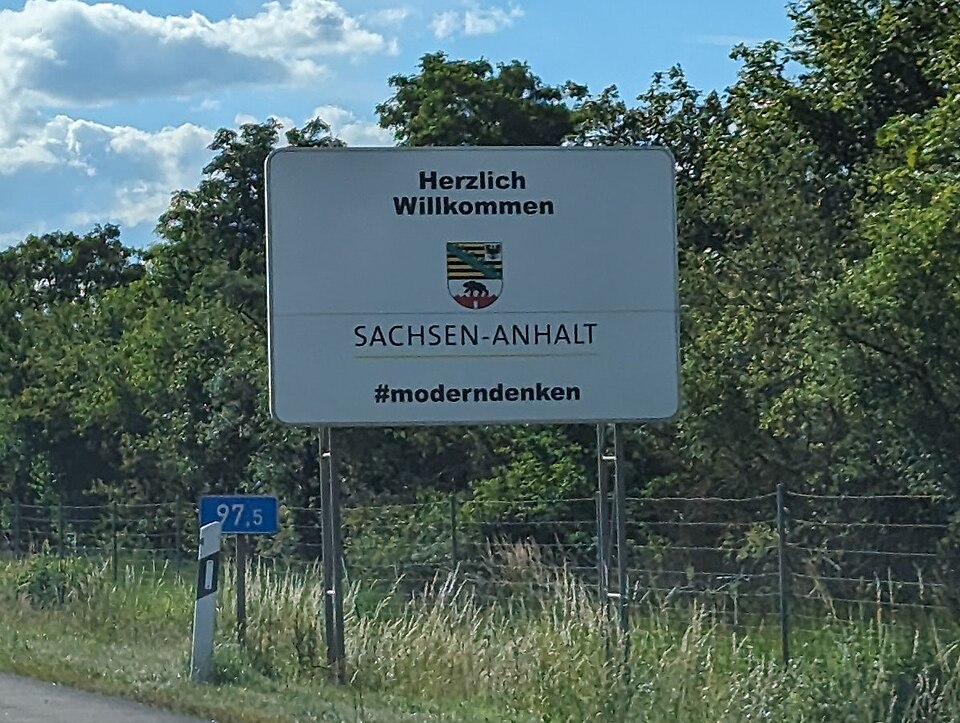
Brussels – Germany and the far right: this is the vote that is now causing concern. The local elections in Saxony-Anhalt are not a routine electoral event; they are a test for the German federation and for Europe. For the first time since the end of the Second World War, a far-right party could come to power in the country: this is why the 6 September elections are fuelling fears – and well-founded ones. Polls suggest that Alternative für Deutschland (AfD) is at around 40–42 per cent of the vote, with Chancellor Friedrich Merz’s Christian Democratic Union (CDU) trailing, with estimated support of between 23 and 26 per cent.
The victory of the far right — climate‑denialist, anti‑immigration, anti‑Islam, anti‑European Union, anti‑euro, anti‑everything except not anti‑Nazi — appears highly likely. The 6 September vote is considered a national test and more. For many analysts, a potential victory for the AfD in Saxony-Anhalt could pave the way for a definitive expansion at the federal level. Second in the 2025 general election, the AfD has found itself in the spotlight after being declared incompatible with democratic life and because some of its elected Members of the European Parliament insulted the then President of the institution, David Sassoli, on the day of his death.
Not since the days of Adolf Hitler’s Nazi Germany have such national-conservative parties been at the helm of institutions, whether local or federal. But the AfD is growing steadily and consistently: in Germany, its share of the vote rose from 4.7 per cent in 2013 to 20.8 per cent in 2025; in the European Parliament, it has risen from 7.1 per cent and 7 seats in the 2014 elections to 15.9 per cent and 15 seats in the 2024 election.
Chancellor Merz makes no secret of his concerns, both about the vote and its possible consequences. He is trying to warn the electorate that voting for the far right would spell the economic demise of Germany: “The state will suffer considerable damage if things were to turn out as we now fear,” namely the rise of Alternative für Deutschland, he said in an interview with the public broadcaster ARD, to which he confided: “I cannot imagine international investors attending an opening ceremony with an AfD Minister-President for the construction of new facilities and the launch of new businesses in Saxony-Anhalt.”
It is an admission of fears regarding the outcome of a vote that could have repercussions in other European countries as well, in the many elections following 6 September, all of which will be decisive for the future of the EU. Germany risks writing new chapters in an old story, and the EU risks having to deal with the consequences.
English version by the Translation Service of Withub




![[Copyright: European Union]](https://www.eunews.it/wp-content/uploads/2026/10/euco-261015-120x86.png)