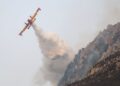
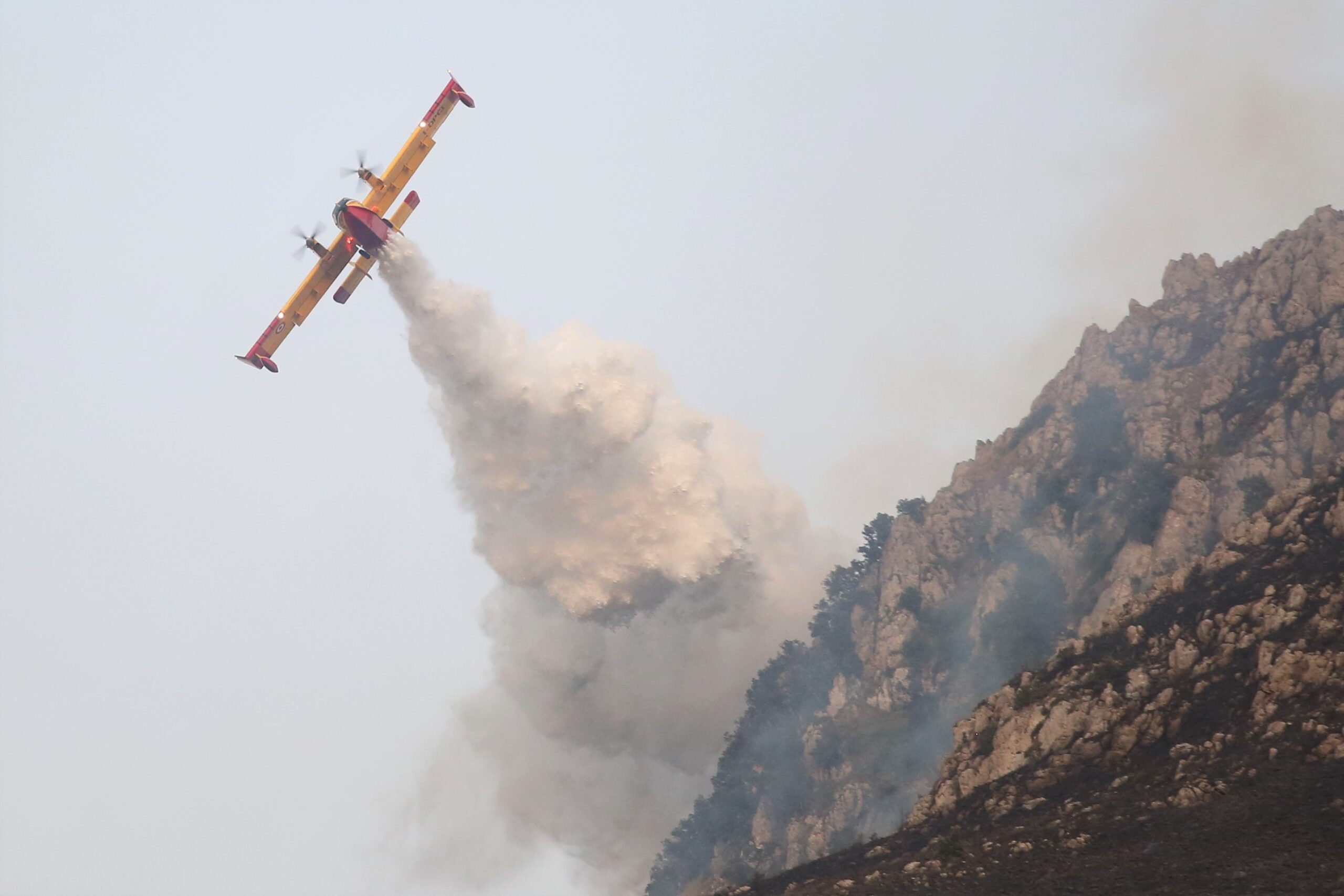

Brussels – The European Union, understood as the collective body comprising national governments and EU institutions, should devise an entirely new industrial strategy to manufacture Canadair aircraft within the EU, enabling it to respond decisively and effectively to summer wildfires whilst remaining competitive and safeguarding both the environment and the economy. The debate on the scorching summer of 2026, characterised by fires and prolonged drought, has seen the European Parliament put forward a further proposal for the 12-Star agenda, on a topic seen as beneficial to both security and growth.
“The civil protection mechanism should be expanded, using equipment manufactured in Europe,” argues Pascal Arimont (EPP), explaining what he considers to be one of the lessons to be learnt from the summer that is drawing to a close. By proceeding in this way, “we will also be able to increase our security” through contracts that do not result in risky dependencies. The Socialists also welcome the idea: “an industrial plan is needed to produce Canadair aircraft in Europe,” Christofe Clergeau (S&D) stresses, highlighting a political convergence between the EPP and the Socialists – the two main parliamentary groups – which could serve as a potential political mandate for the European Commission.
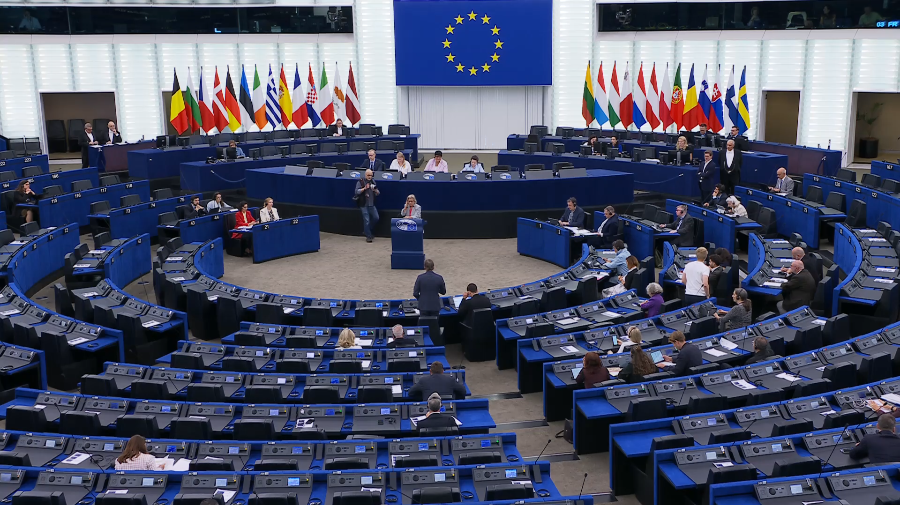
This is the only significant moment in a debate that fails to honour the fire victims, the firefighters battling the flames, and the farmers affected by a summer already consigned to oblivion: the chamber is half‑empty, uninterested, and the debate soon derails.
The League MEP, Silvia Sardone, spoke out to criticise the Green Deal and the Socialists who support it. A speech that earned her a blue card and criticism for failing to mention the main topic of the debate. The Vice-President of the European Parliament, Antonella Sberna (FdI), in a burst of patriotic pride, took the opportunity to stress how the European solidarity shown in the management of the wildfires follows in the footsteps of Giuseppe Zamberletti, a member of parliament, senator and minister for the Christian Democrats, and the father of the Italian Civil Protection Agency.
Emma Fourreau (The Left) launched a direct attack on the European Commission and “the system”. “Commissioner Lahbib, what further lessons do you need after the summers of 2023, 2024 and 2025? You are liberals, you are capitalists, you are in power, and you have drawn your conclusions: to continue with your policies and carry on as before.” The Five Star Movement (The Left) also presses this point, with Valentina Palmisano emphasising that “the von der Leyen Commission and the Meloni government are working together to weaken, postpone or scrap all those measures designed to tackle the climate crisis” and that this “is a short-sighted strategy that puts citizens’ safety and future at risk” because “the fight against climate change is a social, economic and health priority”.
Liberals and Greens, instead, are waiting for the Commission president and turning their attention to tomorrow’s (16 September) State of the Union speech: “Von der Leyen should put on the table a plan to tackle climate change, complete with funding, call for a summit of leaders – something she should already have done – and set a specific date for phasing out fossil fuels,” argues Lena Schilling (Greens). “It is important that von der Leyen puts this issue on her daily agenda,” urges Gregory Allione (Renew Europe, RE).
The clash with the far-right groups begins from the Liberal benches: “Denying climate change will not improve our future,” said Gerben-Jan Gerbrandy (RE). In a half-empty and suddenly rowdy Chamber, Annalisa Corrado (S&D) attempts to offer a collective self-critique: “Over the course of this year, 180 billion euros have gone up in smoke – equivalent to 1 per cent of our GDP. It is our fault, as we are not doing enough.” This is an opportunity for Isabelle Le Callennec (EPP) to reiterate her call to “produce in Europe” what is needed to combat heatwaves and wildfires and, in this regard, to highlight the importance of “having the right allocation in the next multiannual financial framework” (MFF 2028–2034).
“Manufacturing Canadair aircraft in Europe is something I have spoken about,” recalls the Commissioner for Crisis Management, Hadja Lahbib, who adds, however: “This is a reaction after the event, and I want to be sure that there is a prevention strategy in place.” That is why, she announces, “we will present a strategy for climate resilience in the autumn.” The issue of resources remains central: “The next multiannual budget will be of crucial importance for funding prevention measures,” Lahbib stressed, warning that “without prevention, the costs of interventions will rise. I am counting on the support of this House.” However, she faces opposition from Member States ready for substantial and widespread cuts.
English version by the Translation Service of Withub
![ALLARME CALDO VENTILATORI NEI BAR. [Foto: Imago economica]](https://www.eunews.it/wp-content/uploads/2026/05/Imagoeconomica_1781593-350x250.jpg)