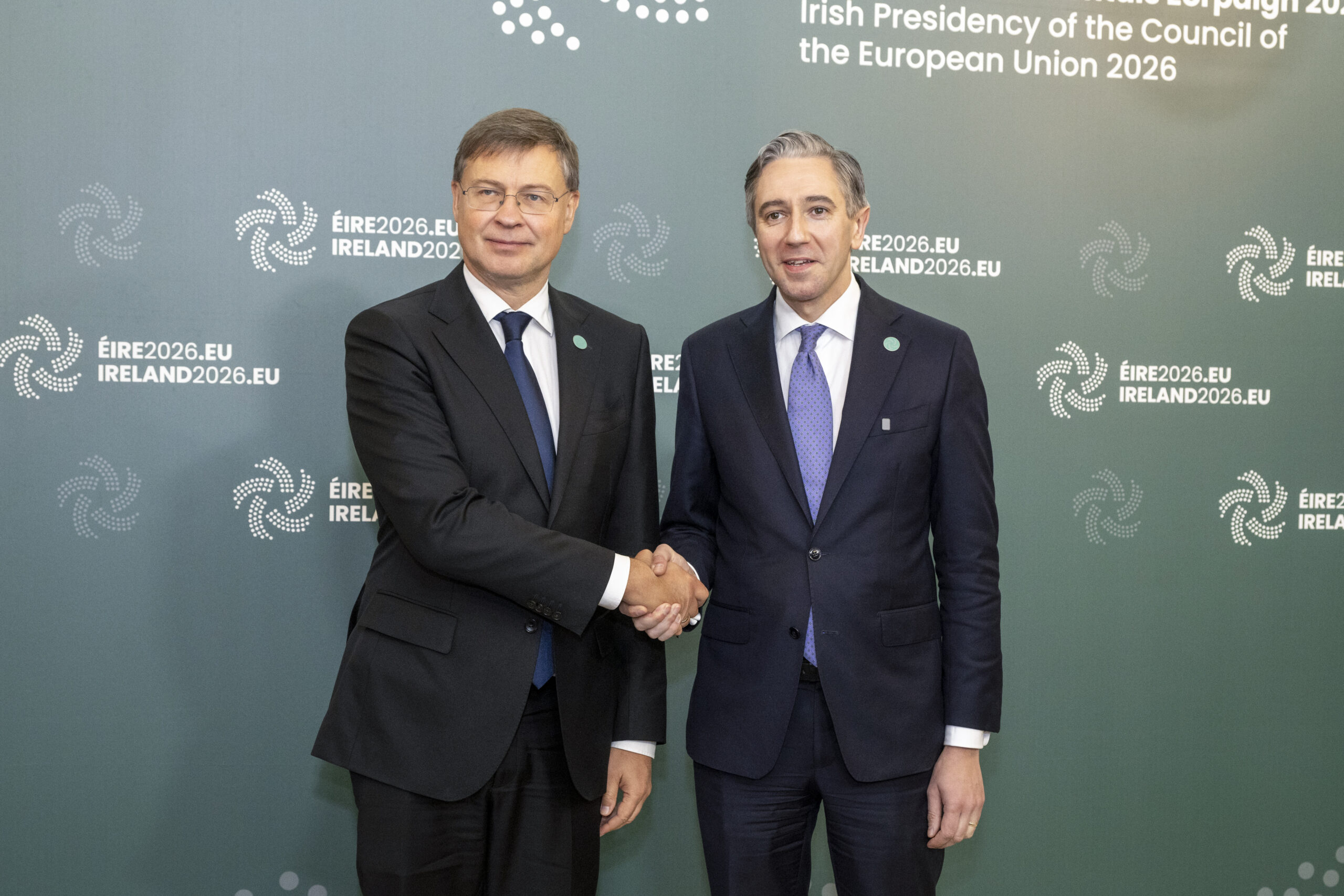

Brussels – Things are starting to look bleak for the European Union: “According to the latest estimates from the European Commission, we are forecasting a slowdown in growth for next year.” The Commissioner for Economic Affairs, Valdis Dombrovskis, has dampened the optimism expressed so far regarding the eurozone’s resilience and confirmed that the general trend has reversed. At the conclusion of the proceedings of the Eurogroup, he points out that “Europe has productivity problems,” but the twelve-star competitiveness is inevitably beginning to feel the effects of rising energy prices: an issue back on the ministers’ agenda with renewed urgency.
Faced with this deterioration in the situation, “Member States must give priority to prudent fiscal policies, while adhering to the targets set out in their medium-term plans and implementing targeted and temporary energy support measures,” insists Dombrovskis, setting the stage for a clash with the Italian government, which is determined to respond to rising energy prices. The Minister for the Economy, Giancarlo Giorgetti, has made this a priority for the country and for the government’s agenda: “I’ve made a fairly clear and direct statement regarding the reality we are currently facing in the economy in Europe and in Italy,” explains the Finance Minister. In summary, he elaborates, the new energy crisis is “a genuine emergency,” particularly for Italy, a manufacturing nation where industry is beginning to suffer.
Giorgetti also takes issue with the European Central Bank and the decision to raise interest rates, as the tightening of monetary policy has meant that “the debt burden has begun to rise at an alarming rate.” Admittedly, the decision taken in Frankfurt “may help, but it does not in itself solve the problem.” The hope is for an exemption from the Stability Pact rules, and “I believe the Commission will be open to granting us this leeway,” the Minister for the Economy confides.
While the Commission is urging that public spending and debt be kept under control, warning against continuing with measures to tackle high energy prices and sparking a row with Italy, the same EU executive is calling for a coordinated response to high energy prices. “Building a more competitive Europe is a shared responsibility.” Therefore, Dombrovskis emphasises, “we must all be prepared to shoulder this responsibility, acting together on all fronts and at all levels.” Including the energy sector. The Commission, he assures, “is ready to support Member States” in responding to rising prices.
Ministers are divided over what to do. Germany and Austria are calling for taxes on energy companies’ windfall profits. Spain supports the idea and is asking Italy and Poland to back it. France is putting the brakes on: “We must take national specificities into account,” thunders Paris’s Finance Minister, Roland Lescure, convinced that when faced with a common problem, “the solutions are different.” He is awaiting the European Commission and any proposals it may put forward, but is keen to ask that they be “tailor-made”.
Faced with divided nations, the President of the Eurogroup, Kyriakos Pierrakakis, sees no alternative but to “accelerate our path towards greater energy independence.” This means implementing the sustainability agenda and the green transition without delay: “Developments in the Middle East are once again putting upward pressure on oil and gas prices, with direct consequences for our citizens and our businesses.” Making the green economy a reality “is now more important than ever. Our economy, our competitiveness, and our security are at stake.”
English version by the Translation Service of Withub