
Brussels – The European Union has approved a three-year extension of sanctions designed to safeguard Ukraine’s territorial integrity, targeting individuals and entities supporting Moscow’s military campaign against Kyiv. But not for two Russian oligarchs – Alisher Usmanov and Mikhail Fridman. This is the result of a compromise reached by the ambassadors of the 27 EU member states at the meeting of the Permanent Representatives Committee (COREPER). The green light – which must always be unanimous on sanctions and must now be approved by the Council – came about because Latvia, which had previously opposed the removal of the two oligarchs, agreed to abstain, allowing the deadlock to be broken and the green light to be given with the approval of the other 26.
Negotiations between the countries were not easy. “To maintain the scheme, we have reached a difficult compromise,” explain sources from the Irish Presidency of the Council of the EU. “The compromise provides for a 36-month extension of the regime, until 22 September 2029,” and therefore no longer just six months as has been the case until now. “The restrictive measures linked to the regime for the territorial integrity of Ukraine will therefore continue to apply to nearly 3,000 individuals and entities, with many others currently being assessed for inclusion on the list,” they clarified. “To date, these lists have been reviewed and assessed on a half-yearly basis; today’s decision to renew the regime for a period of 36 months reinforces the stability and predictability of the EU’s sanctions framework,” they emphasised, while noting that “a decision has also been taken to remove certain names from the list under the regime.”
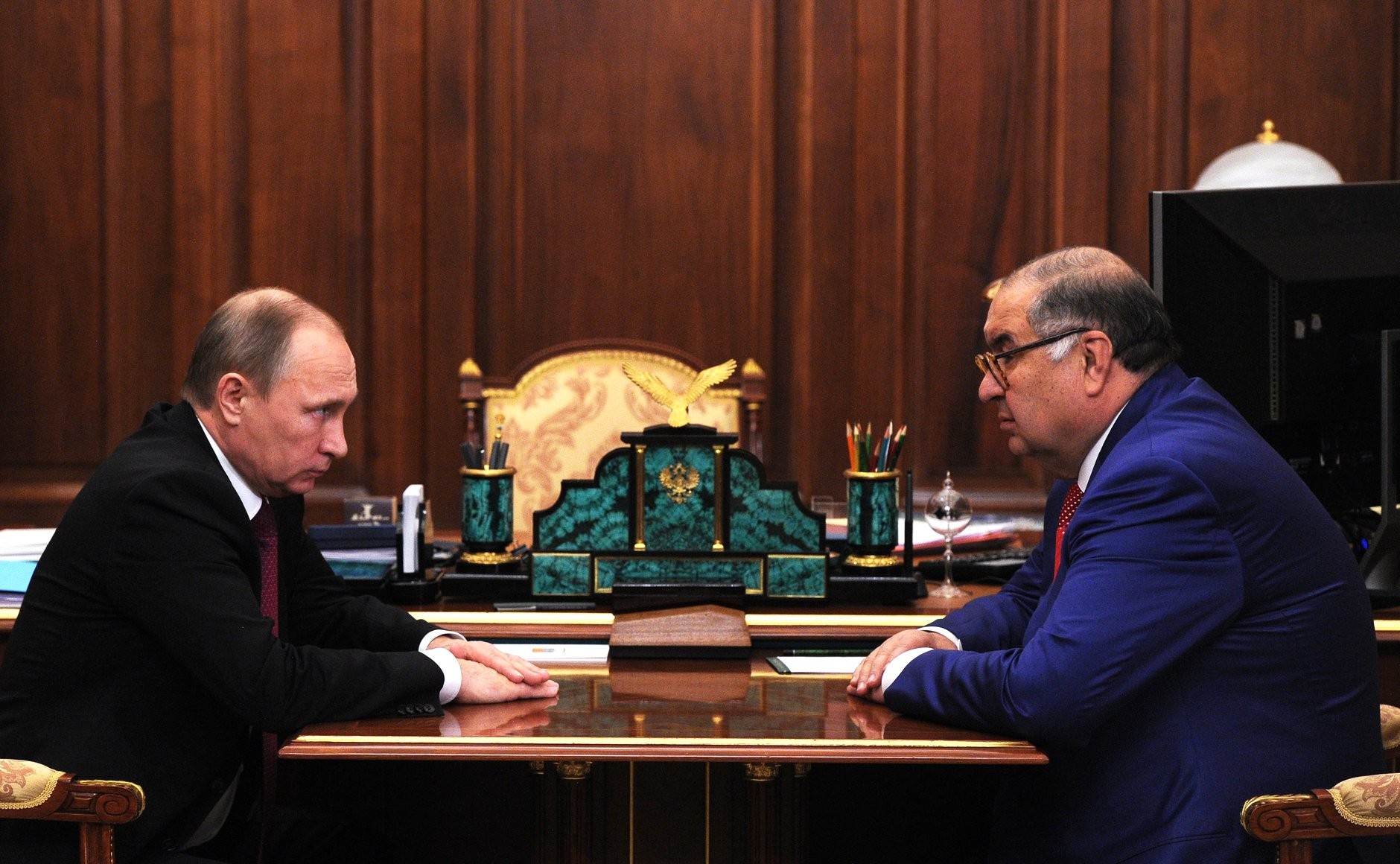
France and Luxembourg have called for the oligarchs Alisher Usmanov and Mikhail Fridman to be removed from the sanctions lists. Paris has asked for Usmanov to be exempted from sanctions in order to secure the release of several French citizens detained in Azerbaijan, given the oligarch’s close ties to the government in Baku. Meanwhile, Luxembourg has requested the lifting of sanctions against Fridman because he has brought a lawsuit against the Grand Duchy seeking nearly €15 billion in damages: this amounts to half the small state’s budget.
Forbes magazine estimates the net worth of Alisher Usmanov, aged 73, at around $14.1 billion. Among the various positions and roles he has held – including that of president of the International Fencing Federation – he is the owner of the daily newspaper Kommersant and co-owner of the USM holding company, which includes Russia’s second-largest mobile phone operator, MegaFon. He has a stake in the steel giant Metalloinvest, and also holds shares in Xiaomi and stakes in other companies in the telecoms, mining, and media sectors. Fridman was born in Lviv, Ukraine, in 1964, and, according to Forbes, his net worth is estimated at around $16.6 billion. He holds dual Russian and Israeli citizenship. “In 1989, he founded the commodities trading firm Alfa-Eco together with his university friends German Khan and Alexei Kuzmichev. Thanks to their ties to the Kremlin, in 2003 Fridman and his partners succeeded in setting up a joint venture with British Petroleum, TNK-BP. In 2013, he received $5.1 billion in cash when the trio and their partners sold their stakes in TNK-BP for $14 billion,” explains Forbes.
While EU ambassadors were negotiating the agreement, the Ukrainian President Volodymyr Zelensky sought to remind them that, “when Russia constantly demonstrates its desire to escalate the war, the response should be tougher sanctions, not the opposite.” “No name on the sanctions list is there by chance: each one represents a reason why this war began and continues to this day, and why our people are being killed every day,” he wrote on X.
English version by the Translation Service of Withub