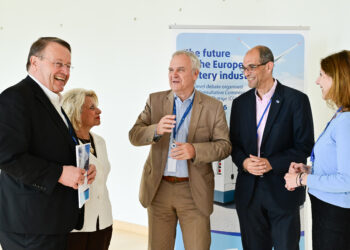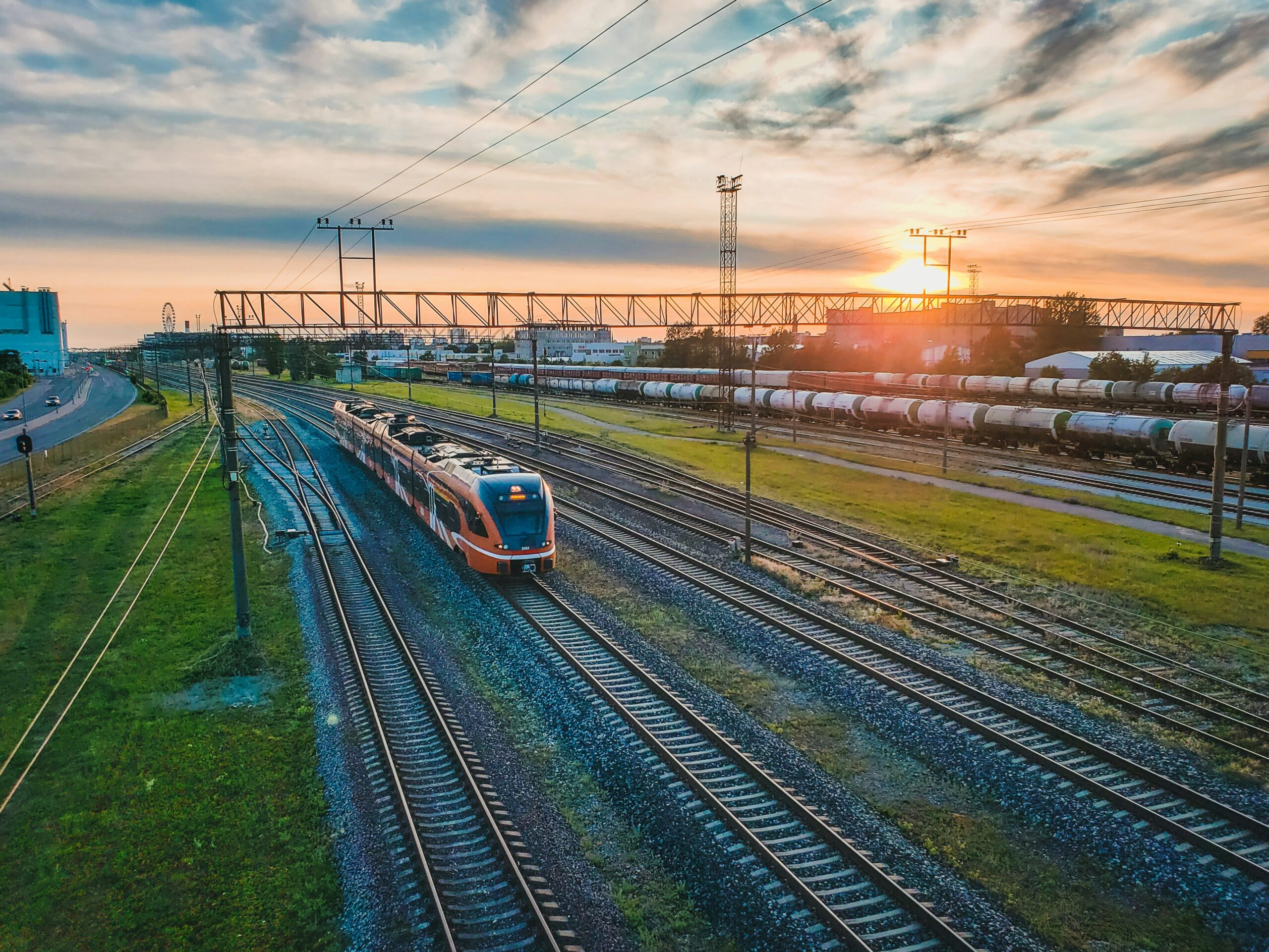

Brussels – The European Union must step up its efforts towards climate-neutral, resilient, and competitive mobility systems, as well as towards military mobility capabilities. This was the message that emerged from the forum “Mobility in Europe 2030: supporting sustainability and military objectives”, which took place in Riga on 17 September 2026. Organised by the “Transport, Energy, Infrastructure and the Information Society” Section (TEN) of the European Economic and Social Committee (EESC) in collaboration with the Latvian association “Sustainability Cluster”, this high-level event brought together representatives from European institutions, national authorities, the business and academic communities, and civil society. It provided a forum for strategic dialogue to assess progress, share best practices and set out concrete pathways both for achieving sustainable mobility and for enhancing military mobility capabilities across Europe. In this context, the European Economic and Social Committee (EESC), in collaboration with the Latvian association “Sustainability Cluster”, stressed the need to make “substantial progress on delivering the EU’s vision
for an improved mobility system.”
“By 2030, Europe must be able to move around in a sustainable, competitive, equitable and safe manner“, commented Marcin Nowacki, Chair of the Transport, Energy, Infrastructure and Information Society Section of the European Economic and Social Committee (EESC). “Our task is to design a European mobility system in which these objectives do not compete but reinforce one another,” he added.
The starting point for the discussion is that, now more than ever, European mobility is required to meet a wide range of needs: for Europe’s economy, its citizens, and its climate, and, increasingly, for its security as well. The aim is that, by 2030, it will better connect Europe and make it truly sustainable and more resilient, while ensuring that no one is left behind. Against this backdrop, the EESC has identified a number of specific points. The first concerns mobility, which is becoming a “strategic issue”. Therefore, “it must be cleaner and more sustainable; infrastructure must strengthen the EU’s competitiveness and the single market; transport must remain accessible and affordable for citizens.” Furthermore, “in the current geopolitical context, networks must be resilient and capable of supporting Europe’s security.” The second element encompasses sustainability and resilience, which “must reinforce one another” because “reducing dependence on imported fossil fuels can strengthen both the EU’s climate objectives and its strategic autonomy”.
As for security, it is recognised that the system can serve multiple purposes. For this reason, “Europe’s future mobility system must invest in dual-use infrastructure (civil and military) – such as railways, roads and technologies – and, at the same time, in people and skills”. According to Baiba Miltoviča, Chair of the EESC’s Standing Group on Transport, “mobility is no longer simply a matter of transport, but a strategic issue” and “Europe needs infrastructure that serves its citizens and the economy, while strengthening resilience, security and military readiness across borders.” On the strictly military front, the Vice-President of the European Parliament, Roberts Zīle, emphasised that “military mobility is an easily achievable objective: it requires neither substantial financial resources nor a long time to implement. I am certain that we will be able to find solutions together with our colleagues in the Council and the Commission. We must learn from the experience of Ukraine and strengthen our mobility and security,” he observed.
In the section on connectivity, the EESC states that “the EU must invest in order to eliminate infrastructure bottlenecks, complete cross-border links and modernise transport networks.” In this regard, the Committee has called for at least €100 billion to be allocated to the transport sector under the Connecting Europe mechanism for the period 2028–2034, emphasising that investments must generate European added value and comply with social and environmental criteria. Finally, the last points concern sustainability, which “must address people’s everyday mobility” – and it is therefore emphasised that “the transition to green mobility will only succeed if citizens perceive it as an improvement in mobility” and must not create “new inequalities” – and that of competitiveness, sustainability and social responsibility. Here it is recognised that “the EU needs an economically sound, environmentally sustainable and socially responsible transport system”, where digitalisation and interoperability reduce unnecessary administrative burdens and simplification promotes the enforcement of rules, safety, workers’ rights, and the single market.
“A sustainable future cannot be built on vision alone: it requires decisive action today,” said Armands Gūtmanis, president of the Latvian association “Sustainability Cluster”. “Sustainability has become a strategic imperative that shapes our economy, security, mobility and quality of life.
The challenge before us is to move beyond isolated projects and short-term solutions and build resilient, interconnected systems capable of meeting the needs of future generations,” he explained. The host, the Latvian Minister for Transport, Rihards Kozlovskis, also recognised mobility as “a fundamental pillar of European security and competitiveness.” “It requires infrastructure to facilitate economic movement while enabling rapid military deployments.
Addressing these challenges requires strong EU funding support and cross‑sector cooperation to integrate regional projects, expand energy resilience and build a connected, dual-use transport network,” he concluded.
English version by the Translation Service of Withub![La Presidente del CESE, Nicoletta Merlo [fonte Eunews]](https://www.eunews.it/wp-content/uploads/2026/07/WhatsApp-Image-2026-07-22-at-12.21.14-350x250.jpeg)