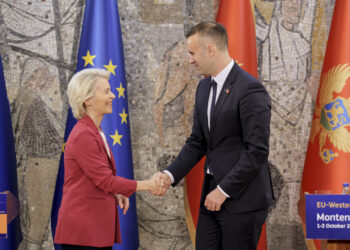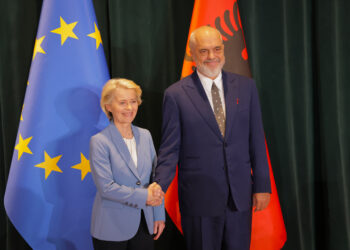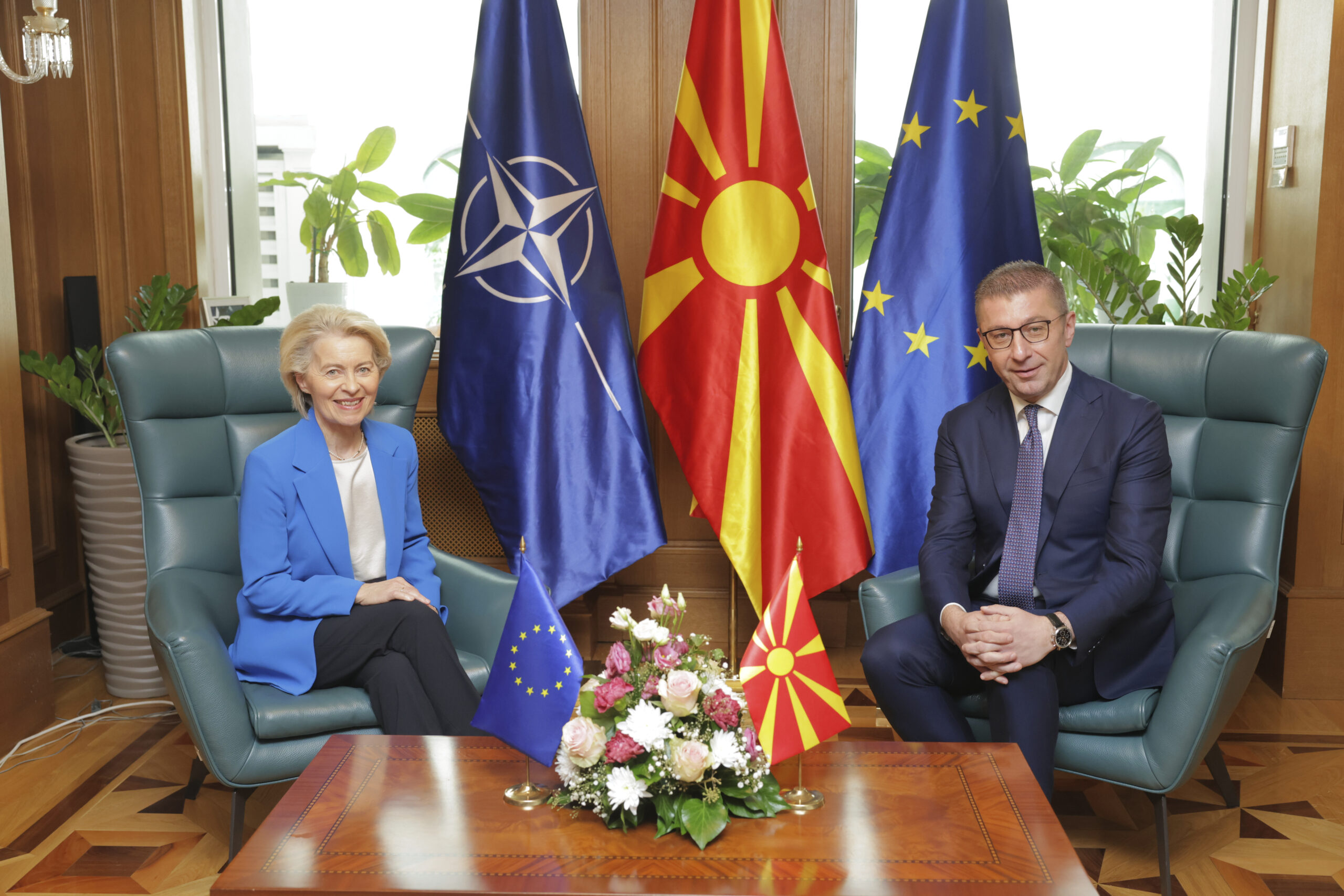
Brussels – A first step towards breaking the deadlock between Skopje and Sofia over the issue of recognition of Bulgarian minorities in North Macedonia could come next week. This would pave the way for the Western Balkan country’s path towards the EU. The announcement was made by the President of the European Commission, Ursula von der Leyen, during the visit to Skopje, where she met the North Macedonian Prime Minister Hristijan Mickoski. At the heart of the discussions was the stalemate in the accession process, which has been at a standstill for years due to Bulgaria’s as-yet unmet demands for amendments to the North Macedonian Constitution within the framework of the agreement reached between the two countries.
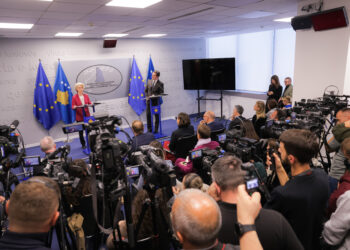
“We have agreed to take a first step next week to try to break the deadlock and get the process back on track,” von der Leyen said at a press conference. The President of the European Commission emphasised that North Macedonia is missing “the final step” required to open the first group of negotiation chapters, namely those covering “fundamentals.” The sticking point remains the constitutional amendments required to include the Bulgarian minority amongst the communities recognised by the North Macedonian Constitution. This is an issue that has contributed to the stalemate in the accession process and which Skopje has so far struggled to address.
“North Macedonia belongs in the EU,” von der Leyen reiterated, while assuring that its accession must take place “with full respect for its identity and language.” “We believe that Macedonian culture and language can only enrich our Union,” she added, referring to the European motto “united in diversity.”
Relations between Bulgaria and North Macedonia are characterised by a long-standing dispute over national identity, which in recent years has become intertwined with the country’s path to EU accession. Sofia disputes certain interpretations by Skopje regarding Macedonian national identity, particularly concerning the language and shared historical figures, while calling for compliance with the commitments set out in the 2017 Treaty of Friendship and Good Neighbourliness.
In 2020, Bulgaria blocked the start of Skopje’s accession negotiations, calling for progress on historical issues and the implementation of the treaty. The compromise reached in 2022 stipulates, amongst other things, that North Macedonia must amend its Constitution to include Bulgarians amongst the recognised communities. That amendment has not yet been approved and currently represents the main obstacle to the actual opening of accession negotiations.
The first concrete step could come in a matter of days, right here in Bulgaria. Mickoski explained that von der Leyen had suggested he make the most of the North Macedonian Foreign Minister’s visit to Sofia next week, as part of the Corridor 8 projects – a strategic transport and energy corridor linking Italy (starting from the Apulian ports of Bari and Brindisi) to the Black Sea, passing through Albania, North Macedonia, and Bulgaria. This will be the opportunity for von der Leyen and Mickoski to request a bilateral meeting with their Bulgarian counterpart. “I have asked the minister to request a meeting with his counterpart and to set the process in motion,” confirmed Mickoski, announcing that a diplomatic note would be sent. The aim is “to start moving the process forward” and to reopen dialogue between the two countries.
According to von der Leyen, once the deadlock has been broken, the process could move forward rapidly. “Once we have unblocked the situation, my personal view is that we can move very quickly with North Macedonia, because we are already working intensively on the necessary reforms,” she said. The Commission President did, however, warn that “there is still a lot of work to be done,” while describing Skopje’s achievements to date on the reform front as “impressive.”
The announcement comes on the eve of another stage in the enlargement process: next week, the Commission will present its reviews of pre-enlargement policies. Brussels will examine the EU’s institutions, policies, and budget to assess what changes are needed ahead of the accession of new Member States. “We must ensure that the EU is ready to grow,” explained von der Leyen, citing the protection of democratic values and the rule of law as key priorities.
English version by the Translation Service of Withub