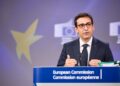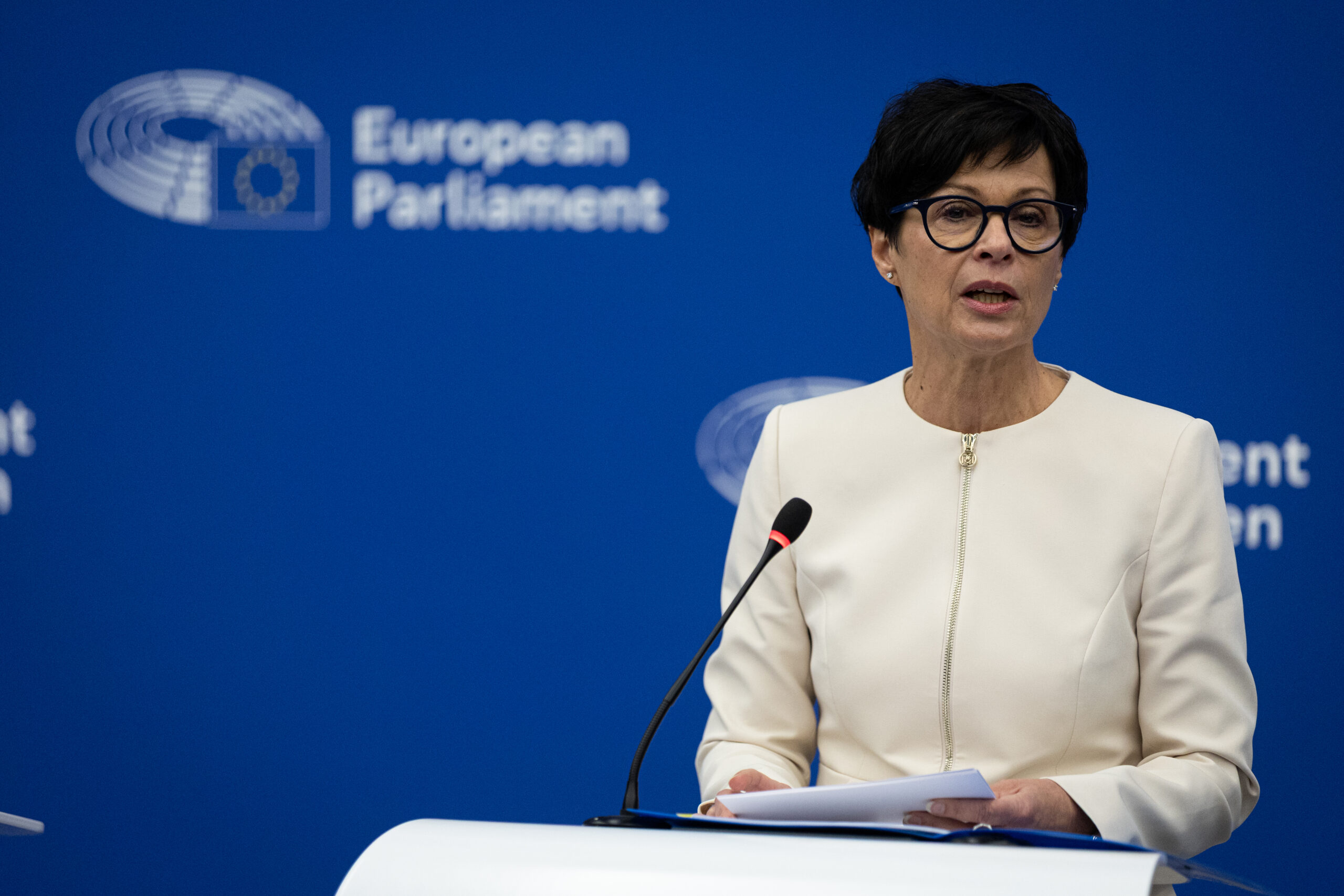
Brussels – The European Union is preparing to expand, but to do so it first wants to reform itself. Following a week’s delay from the originally scheduled presentation, the Commissioner for Enlargement, Marta Kos, presented today (6 October) at a press conference in Strasbourg, its pre-enlargement plan, the package with which Brussels is preparing its institutions, policies, and budget for an EU that could soon have new members. Kos claimed that the package was “strongly desired and supported” by the entire College of Commissioners.
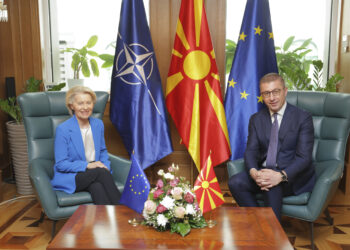
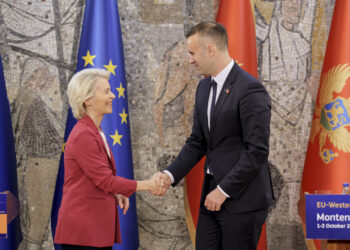
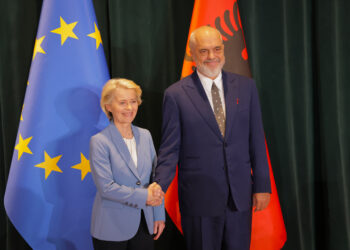
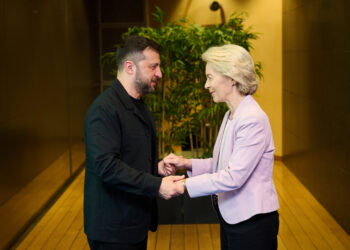
The document comes as Montenegro, Albania, Ukraine, and Moldova are the four countries furthest along the path to accession. It comes following the tour of the President of the European Commission, Ursula von der Leyen, in the Western Balkans, where she met with the region’s governments and took stock of progress on the reforms necessary for European integration. This timing lends the package further political weight: while the candidate countries are stepping up their reforms, Brussels wants to demonstrate that it is ready on the other side of the table.
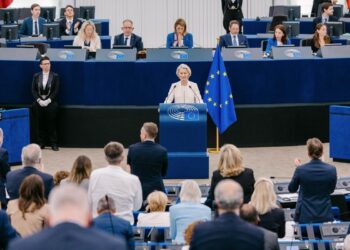
“The future of Europe depends on the choices we make today. The enlargement of our Union is a geopolitical imperative,” said von der Leyen. “Today we are laying the foundations for a larger Union that is also stronger: more resilient, more effective, and firmly anchored in the values and rules that define us.”
In Brussels, the mood regarding enlargement is far from that of a process that has come to a standstill. “My optimism about the future of EU enlargement stems from the fact that the best results in 25 years have been achieved in the accession process, in just one year,” explained Enlargement Commissioner Marta Kos in Strasbourg. “We have closed more chapters in the last nine months than in any comparable period over the last quarter of a century,” she emphasised, describing this result as “proof that even Member States facing domestic political problems support the process.”
The first issue in this package concerns governance. A larger EU will also need to be able to make decisions more quickly. The European Commission is therefore proposing to make the institutions “leaner” and, where possible, to extend the use of qualified majority voting, thereby reducing the weight of unanimity in certain areas.
The aim is to prevent the accession of new members from making the EU even more difficult to govern, particularly in areas where any single Member State can currently block a decision. The EU Commission also proposes to use qualified majority voting at certain intermediate stages of the accession negotiations. Unanimity would, however, remain necessary for the final decision on the accession of a new Member State. This is an attempt to streamline the process without, however, altering the fundamental rule that the accession of a new country must be approved by all Member States.
The EU Commission is also focusing on the gradual integration of candidate countries, even before accession. The idea is to allow countries that are making progress with reforms to gradually join certain policies, programmes, and parts of the single market, based on the results achieved. Accession would therefore no longer necessarily be an all-or-nothing process, but a journey in which integration can deepen as conditions are met.
The second area concerns values and the rule of law. Brussels wants to strengthen the tools to prevent backsliding in democracy following accession, including by linking funding more closely to compliance with reforms. “One” of the challenges is precisely “the rule of law and sincere cooperation,” explained Kos. The Commission is proposing stronger tools to prevent backsliding, including the possibility of “reducing funding or restricting voting rights.”
The third area concerns European policies, which will need to be adapted to a larger Union. Among the most sensitive issues is Ukrainian agriculture. The Commission intends to “assess targeted measures limited to agricultural products,” taking into account “the structure and extremely high productivity of the agricultural sector” in Ukraine. “Ukraine’s accession must not have a negative impact on EU farmers,” Kos emphasised. The Commissioner clarified that Kyiv will, in any case, become a full participant in European agricultural policy: “Ukraine will become a member of the EU and an integral part of European agricultural policy. The terms of this integration will be the subject of discussion.”
Finally, the fourth area is the budget. A larger EU will need adequate resources to fund new policies and programmes without compromising existing ones. The European Commission therefore wants the next multiannual financial framework to take account of enlargement and its implications for the various European policies.
“Member states want enlargement based on merit,” said Kos. But “it is also a matter of geopolitics.” We can therefore look forward to the roadmaps for Montenegro, Albania, Moldova, and Ukraine at the end of October, which will set out the next steps on their path towards the EU, Kos announced.
English version by the Translation Service of Withub