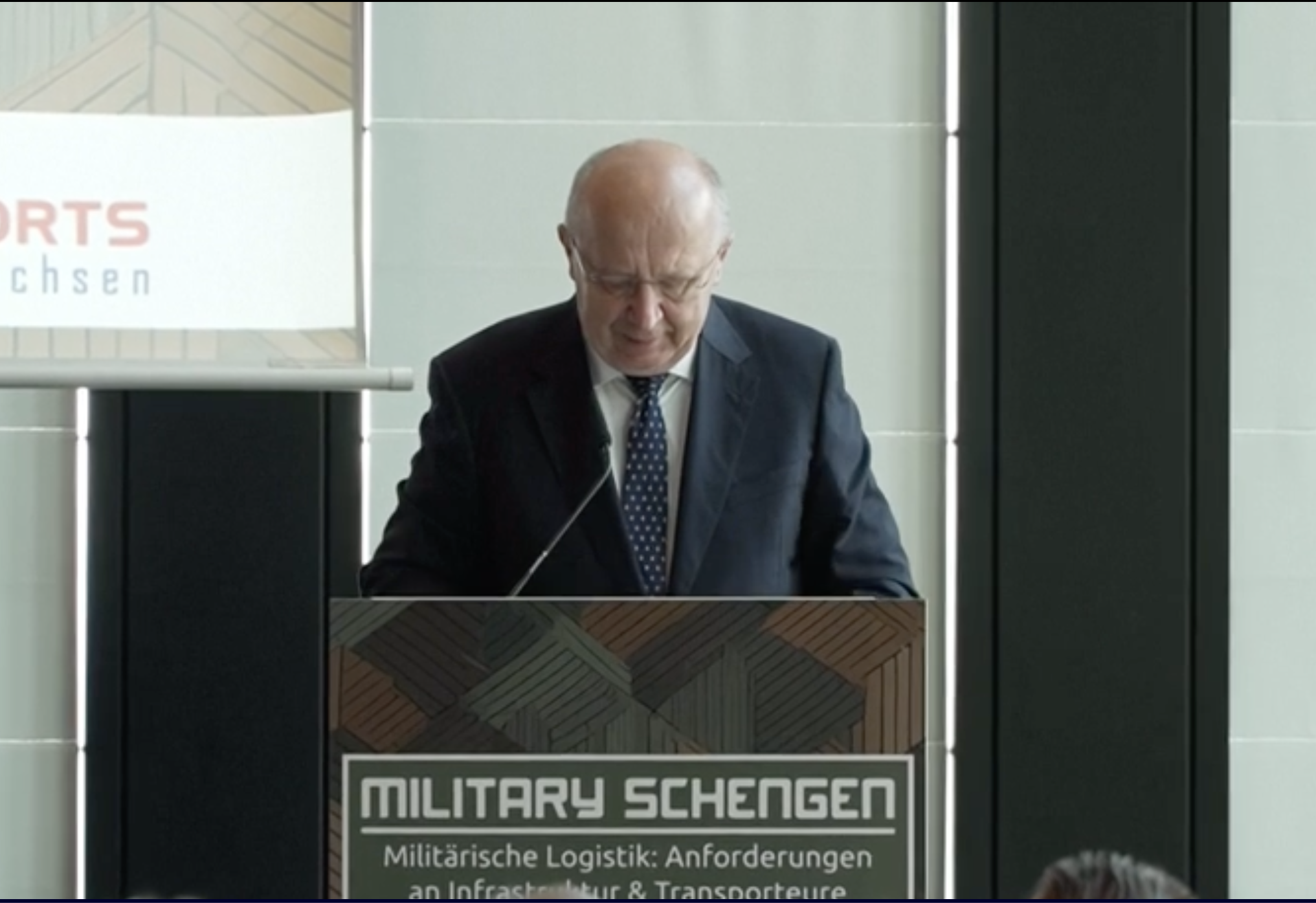
Brussels – Next year, “Russia will spend an amount equal to, or even slightly greater than, the combined total of all EU Member States, namely between 500 and 550 billion euros.” The Council and the European Parliament “must understand this and act accordingly, including at national level, particularly with regard to military mobility.” This was stated today (7 October) by the European Commissioner for Defence, Andrius Kubilius, in Hamburg (Germany) at a conference on “Schengen – military logistics and transport”.
Military Schengen is a European Commission initiative aimed at speeding up the movement of military equipment within the EU. It is a proposal that “replaces a patchwork of 27 different national regulations with a single, clear European regulation,” the European Commissioner explained. In particular, it proposes to remove existing administrative, financial, and infrastructural barriers in order to create a sort of area of free movement, modelled on the “Schengen area” of the same name – the area of free movement in which systematic internal border controls have been abolished. The text is currently being negotiated in a trilogue – between the Commission, the Council, and the European Parliament – and the Commission fears that its ambitions may be scaled back as a result of the interinstitutional negotiations.
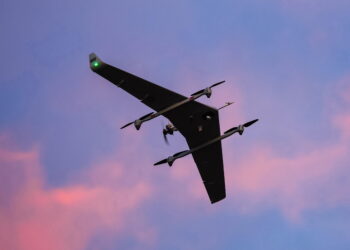
Speaking on the German stage, Kubilius took the opportunity to reiterate that, on the contrary, “defence readiness” must be accelerated, as “should ‘Day X’ arrive – that is, the day of a potential Russian aggression – we must realise that we would be facing a Russian army hardened by combat and capable of deploying 10 million drones a year.” According to the Commissioner, “in Europe, the defence of every single country depends on the collective European defence architecture, within which the movement of troops and equipment between different countries and regions is of crucial importance.” Therefore, “our ability to deter an attack does not depend solely on how much we spend on defence,” but “on how, at what speed, and in what quantities we are able to move military equipment across the European continent.” The European Commission has understood this and “has acted accordingly.” The reason? “NATO cannot do it alone. Nor can individual Member States, nor can the military or civilians succeed on their own. But together, as a Union, we can do it,” he concluded.
English version by the Translation Service of Withub