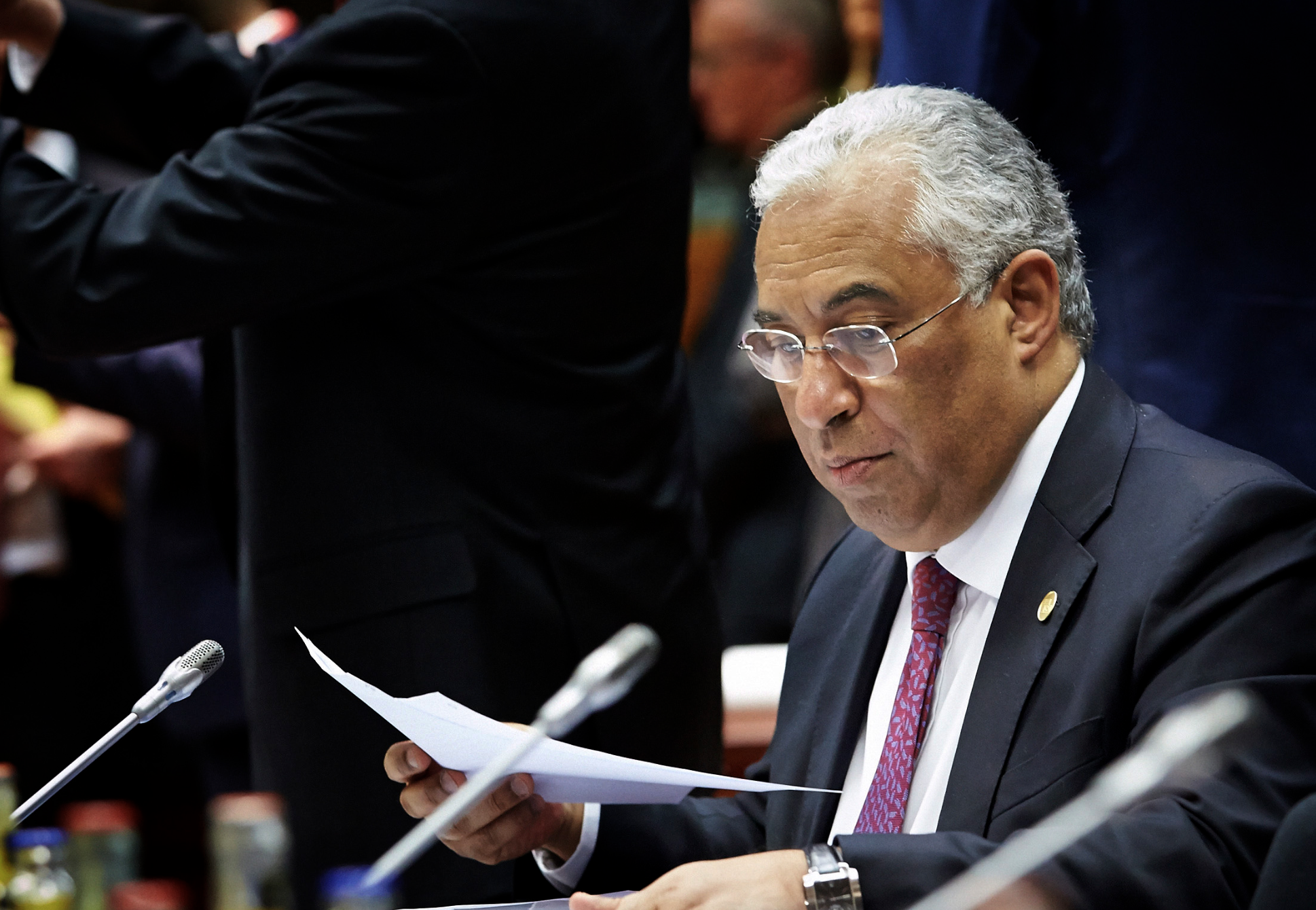
Brussels – The Multiannual Financial Framework (MFF), the single market, support for Ukraine, enlargement and the situation in the Middle East: these are some of the issues on the agenda for the imminent European Summit in October. The President of the European Council, António Costa, sent today (8 October) the official invitation letter to the 27 leaders, outlining the issues awaiting them. The heads of state will meet in Brussels on Thursday 15 October; proceedings will begin at 10.00, and Costa hopes to “conclude the proceedings with lunch on Friday 16 October.”
“Against a backdrop of growing geopolitical uncertainty, our next meeting will focus heavily on the economy and on finding answers to the challenges affecting European competitiveness and affordability,” announced Costa, suggesting that economic issues will be the main focus of the meeting. Very specific pressing concerns drive this need: “We must provide guidance to the Commission on targeted and temporary measures to alleviate the impact of high energy prices on citizens and businesses, while continuing to pursue our strategy of reducing Europe’s dependence on fossil fuels,” explained the President.
At the same time, it will be important to “review, together with the President of the European Parliament, the implementation of our 2026–2027overarching competitiveness strategy: the ‘One Europe, One Market’ agenda.” This is the roadmap in which the European Council had adopted a programme of concrete measures with ambitious deadlines to strengthen the EU’s competitiveness, resilience and strategic autonomy “in 2026, where possible, and by the end of 2027 at the latest”. Costa warned: “We need to ensure that additional progress is made, so that the ambition at Leaders’ level – and the expectations that have been raised – are matched by concrete outcomes.”
With regard to the MFF – the EU’s long-term spending programme – for the period 2028–2034, the President stated that the negotiations “will enter a decisive phase” and that “our next meeting must therefore bring us closer to consolidating the key elements needed to reach a final agreement by the end of the year”. For this reason, the Portuguese President is counting on both the leadership of his colleagues and their spirit of cooperation. “Achieving a timely agreement,” he noted, “will be crucial to ensuring that our economies have the predictability and stability they need in an unstable and unpredictable world.”
Turning to foreign policy, Ukraine remains “a key priority”, but above all the Union’s support in the face of Russia’s war of aggression. As winter approaches, “it will therefore be important to hear from President Zelenskyy regarding operational needs,” Costa emphasised. For this reason, it is advisable for the leaders to “take stock of Ukraine’s progress on the path to EU accession, by then hopefully having opened further clusters.” The meeting “will also address Russia’s increasingly reckless behaviour, including its campaign of hybrid attacks across Europe,” he added.
In addition to the economy and Ukraine, leaders must tackle what Costa has described as “two important strategic discussions”. The first is migration. Although there has been a “significant and steady decrease in arrivals of irregular migrants,” demonstrating that “the EU legislation adopted is producing results,” it is necessary to “remain vigilant and prepared, act in a spirit of solidarity when Member States face crisis situations, and continue to work to improve our capacity to deal with crises, including all cases of instrumentalisation,” urged the Portuguese leader.
The second will focus on enlargement and reforms. Following on from the recent communication from the Berlaymont building entitled “Preparing for a larger Union” – a pre-enlargement package presented on 6 October through which Brussels is preparing its institutions, policies and budget for an EU that may soon have new members – the debate “will provide strategic guidance on the way forward.” In particular, “it will highlight the ongoing work on the accession treaty with Montenegro and the aim of concluding negotiations with that candidate country, hopefully by the end of the year,” he added.
Finally, the Middle East. According to Costa, we need to return to discussing this issue. The talks will then ‘take stock of the latest developments in the region, including their impact on freedom of navigation – a fundamental principle of international law – and on maritime security.’ These are two “crucial aspects for global supply chains, particularly with regard to energy, fertilisers, and food,” he concluded.
English version by the Translation Service of Withub