From our correspondent in Strasbourg – The European Parliament has rejected the Council’s proposed cuts to the EU budget for 2027 and is pushing for increased investment. The position adopted today (21 October) by the European Parliament aims to recoup one billion euros from the cuts demanded by governments and to increase appropriations by a further one billion, thereby strengthening programmes for research, health, the environment, and education. This battle is part of the wider and more heated clash over the next Multiannual Financial Framework (MFF), where the proposal from the Irish Presidency of the Council of the EU envisages a reduction in resources compared to the requests made by the Parliament and the European Commission. Just as with the multiannual budget, where Parliament is calling for more resources while the Council is seeking to make cuts, so too with next year’s budget: the plenary is opposing the cuts proposed by the EU Member States.
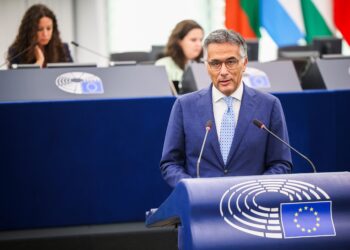
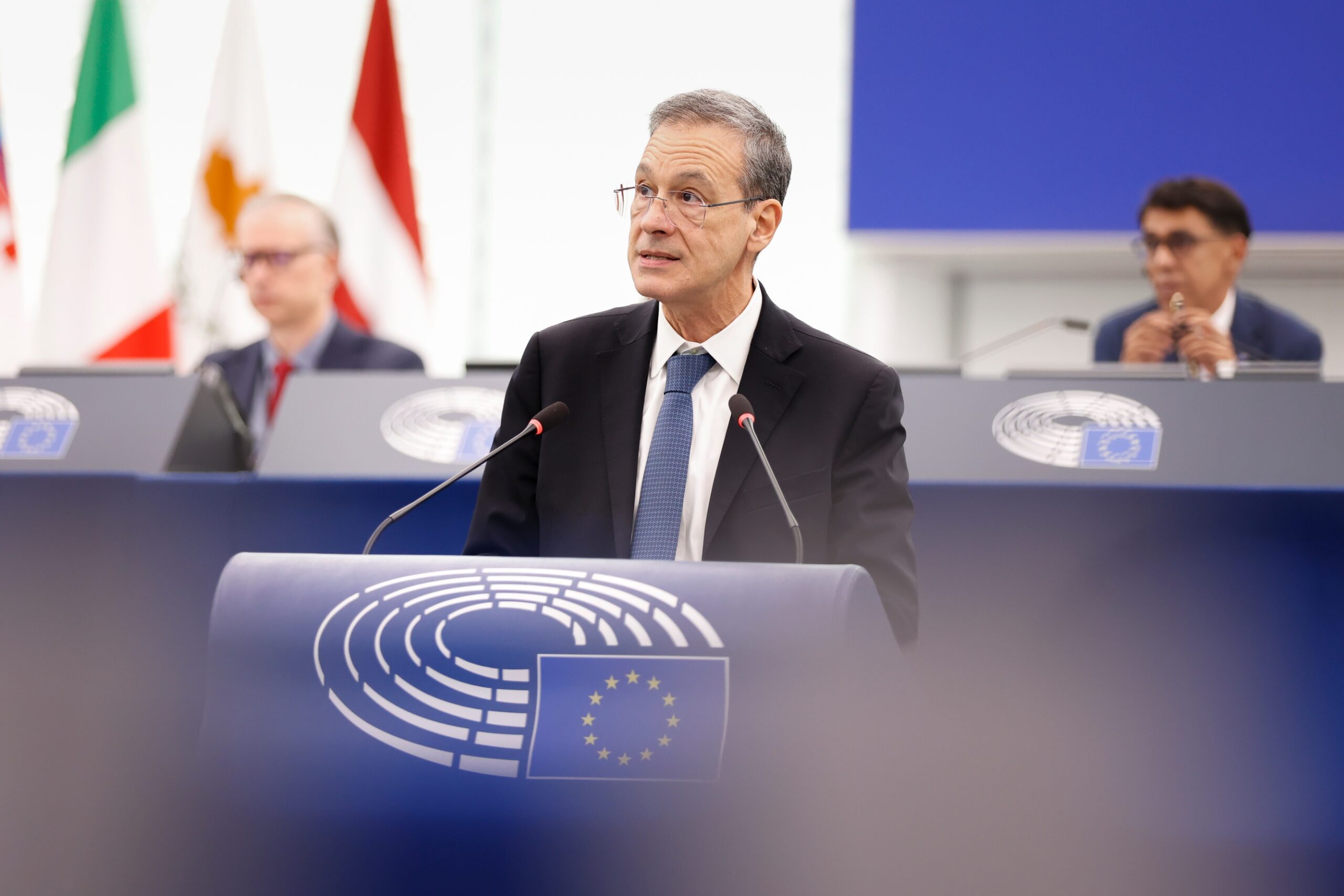
“We have strengthened a number of extremely important programmes such as Horizon Europe, EU4Health for health, the LIFE programme for the environment, Erasmus for young people, as well as the European Social Fund and the agricultural funds,” said the MEP from the Democratic Party, Giuseppe Lupo, on the sidelines of the plenary session in Strasbourg. “These are absolutely vital priorities for us as the S&D Group and as the Democratic Party delegation,” he emphasised.
The Democratic Party’s delegation leader, Nicola Zingaretti, examines the vote on the annual budget through the prism of the MFF negotiations and criticises the Irish Presidency’s proposal, which is accused of envisaging cuts of 8 per cent compared with the Commission’s proposal and of around €300 billion compared with Parliament’s. “These cuts are all concentrated in Chapter 3 of the MFF, which covers investment, competitiveness, development, and everything needed to guarantee a future for the young people of our Europe,” said Zingaretti. “These are short-sighted choices,” he added, denouncing a political vision of the nationalist right which, in his view, aims to strengthen individual states rather than the Union.
According to the PD’s head of delegation, competitiveness and social cohesion are closely linked. Hence the call to make greater use of the EU’s own resources, including a possible web tax, to fund common policies without cutting back on investment.
Zingaretti also thanked the President of the European Council, António Costa, for his efforts to steer governments’ positions towards a clearer commitment to development. “If there are no resources in Europe today, it is not an inescapable twist of fate, but the result of misguided political choices that have failed to invest in Europe,” he concluded, criticising the hypocrisy of those who call on the EU to intervene in crises but then advocate cuts to its budget.
Parliament’s request for the 2027 budget
More specifically, Parliament has set the overall level of commitment appropriations for 2027 at €194 billion, representing a targeted increase of €1.17 billion compared with the Commission’s initial proposal. MEPs have set the total level of payment appropriations at €203.3 billion. “MEPs aim to ensure adequate funding for Parliament’s priorities, while respecting current budgetary constraints. Parliament also calls for the repayment of the EU’s debt to be financed without cutting spending on the Union’s key programmes,” explains the European Parliament.
In the areas of European competitiveness, innovation and cross-border connectivity, MEPs are proposing to increase funding for Horizon Europe by €63 million, for transport and energy networks by €260 million, and for support for small and medium-sized enterprises by €31.5 million. They are also proposing an extra €50 million for the EU4Health programme and an additional €96 million for Erasmus+.
On agriculture and the environment, MEPs are calling for an increase of €85 million in funding for the European Agricultural Guarantee Fund (EAGF) – of which €20 million specifically for young farmers – and for an increase of €85 million for the LIFE programme. To improve the response to natural disasters, they are calling for an increase of €80 million in funding for the Civil Protection Mechanism.
In the chapter on borders and neighbourhood policy, the House is calling for a €20 million increase in funding for the Asylum, Migration and Integration Fund (AMIF) and a €40 million increase for the Border and Visa Management Instrument. It is also calling for an additional €20 million for military mobility. Funding for the Southern Neighbourhood should increase by €60 million, and that for the Eastern Neighbourhood by €30 million, with a further €40 million earmarked for humanitarian aid.
English version by the Translation Service of Withub