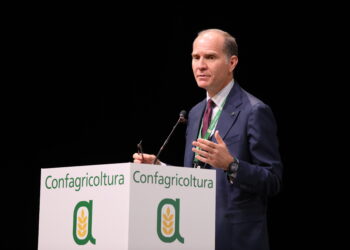
Brussels – The Committee of Professional Agricultural Organisations of the EU (COPA) says a “firm no” to illegal labour recruitment and the exploitation of workers in the agricultural sector, and those who breach the rules must not have access to resources under the EU’s Common Agricultural Policy (CAP). However, in the case of minor infringements, imposing a duplication of penalties – those laid down by labour regulations and those involving the suspension of funding – would be “a disproportionate consequence”. Massimiliano Giansanti, president of COPA and Confagricoltura, sheds light on COPA’s position on social conditionality, which links the allocation of EU funds to respect for workers’ rights.
“In Europe, when it comes to labour matters, we have 27 different regulatory frameworks, which are inconsistent both in how they assess breaches and in how they define the relevant penalties. This can result in advantages for some Member States and disadvantages for others, and therefore poses a risk of distortions of competition,” Giansanti explained. “We firmly say no to illegal recruitment practices and exploitation, without a shadow of a doubt. If a company is found to be exploiting workers, it must not have access to public funds,” he stressed.
“It is quite a different matter if a business has committed a simple infringement or has made an administrative error. A duplication of the penalties (the application of sanctions under labour legislation followed by a reduction in CAP payments) constitutes a disproportionate consequence,” he continued. For this reason, “COPA’s position, adopted with the support of almost all its members, is not to apply social conditionality at least until there is a framework labour law applicable to all”, concluded President Giansanti.
English version by the Translation Service of Withub