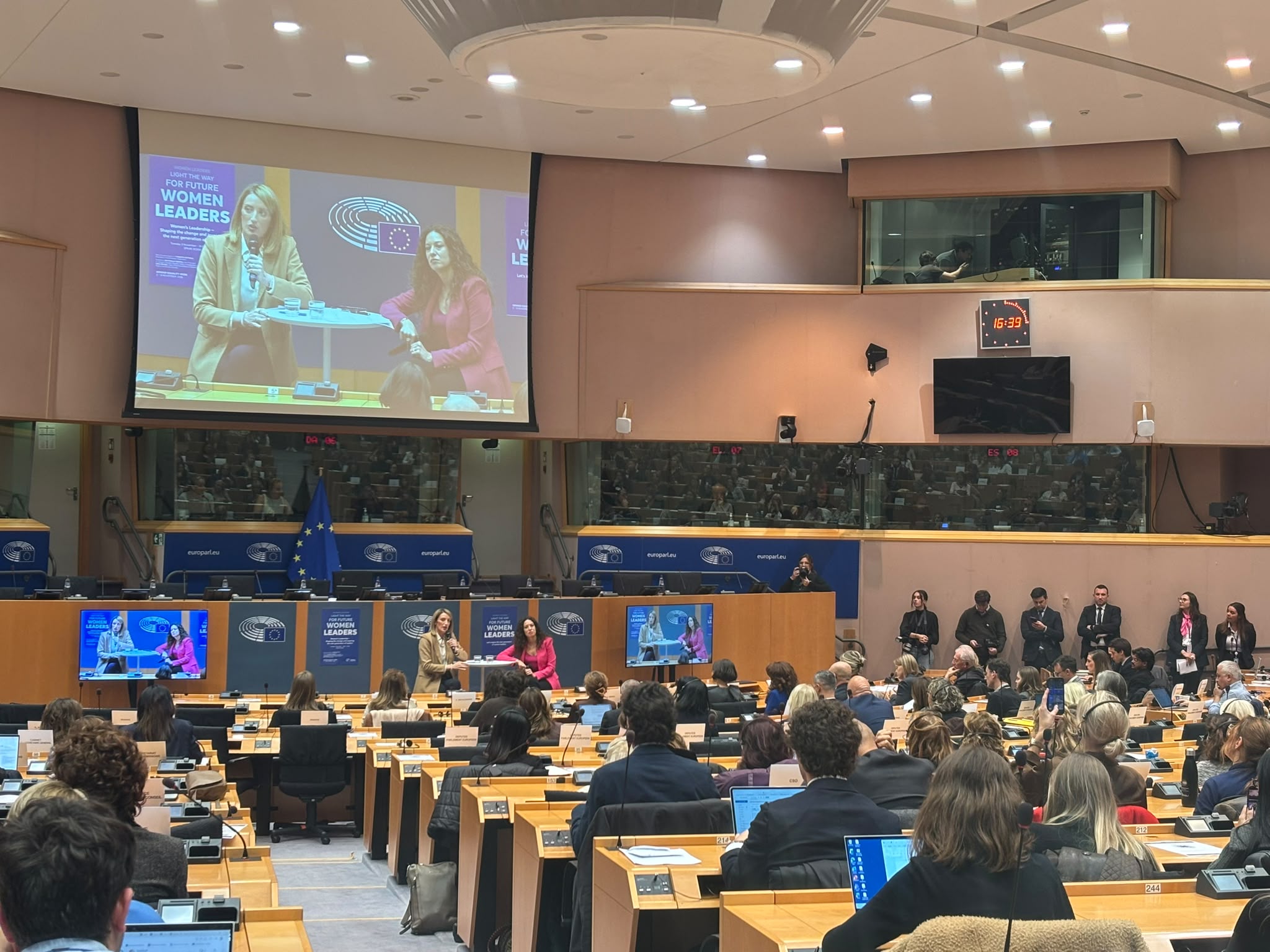
Brussels – “More women in politics who make decisions.” The President of the European Parliament, Roberta Metsola, expresses this “need” in no uncertain terms on the day the European Parliament launches its week dedicated to gender equality. An event which, now in its seventh year, focuses this year on women’s leadership. Because, despite the progress made in recent years, equality in the corridors of power is still far from being achieved.
The week is being opened by Antonella Sberna, Vice-President of the European Parliament and head of the initiative, who calls for the debate to be taken beyond the institutions in Brussels, involving civil society, organisations, and the younger generations. The aim is to transform the testimonies of women who have reached positions of responsibility into tools to make those very same positions accessible to those who will follow. Therefore, it is not merely a matter of celebrating the achievements made, but of examining the barriers that remain.
The figures explain why. In 2025, women held 33.6 per cent of seats in the national parliaments of the European Union. This represents an increase of 5.4 percentage points compared with 2015, but is still a long way from balanced representation. And, according to the European Institute for Gender Equality (EIGE), progress is slowing down. In short, the presence of a few women in top positions does not mean that the system has become equally accessible to all.
This is the point Metsola emphasises. “Some call it the ambition gap. I call it the leadership gap,” she says, challenging the notion that the lower representation of women in politics is primarily due to a lack of ambition on the part of women. What is needed, instead, is more support for candidates, more opportunities to persevere after a defeat, and greater responsibility on the part of those already in positions of power. “I wasn’t elected the first time round, and I wasn’t elected the second time either. But here I am, at last,” she says.
The President of the European Parliament also highlights the campaign to allow female MEPs to delegate their vote during pregnancy and after giving birth, overcoming legal and political obstacles. This may appear to be a procedural matter, but it touches on a fundamental issue: “A woman should not be forced to choose between her political career and the chance to start a family.”
Leadership, however, is not measured solely within European institutions. Kata Tüttő, President of the European Committee of the Regions, recalls that she was often the only woman in political circles at the start of her career, twenty years ago. Today, she warns that the climate of national politics is becoming “increasingly toxic,” while care work, everyday experiences, and the needs of communities risk being sidelined in decision-making.
The message coming from Brussels is clear: it is not enough for a woman to reach the top. She must be able to do so without additional obstacles and, once there, help to pave the way for others. Having more women in politics is neither a concession nor an issue that concerns women alone: it means giving democracy a wider range of experiences, more voices, and a greater capacity to represent society. And it allows girls to imagine themselves in positions of power even before they have to prove they are up to the task.
English version by the Translation Service of Withub