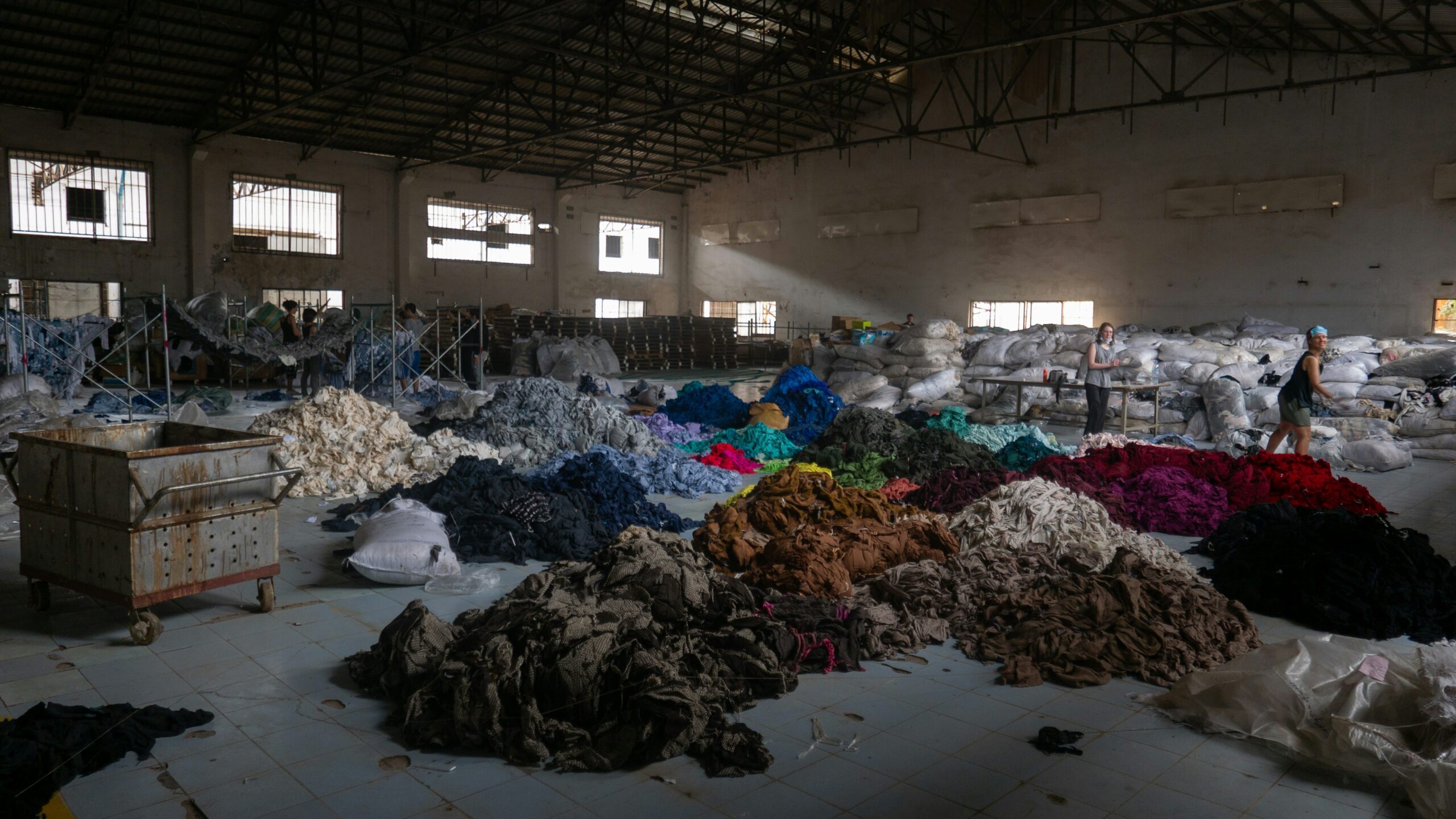
Brussels – Italy is the leading country in the European Union in both the quantity of textile waste produced and the volume of materials sent for treatment and recycling. In 2024, Italy generated 441,736 tonnes of textile waste, of which 280,680 tonnes were processed. This snapshot of the situation comes from Eurostat, the European Union’s statistical office, which published data on textile waste management across the 27 Member States.
A figure that reflects the scale of the Italian textile sector while also highlighting the challenge of managing the waste generated by industry and consumption. After Italy, the leading European producers include France, with 339,965 tonnes of waste generated and 258,129 tonnes treated, and Germany, with 212,107 tonnes generated and 207,156 tonnes treated.
In 2024, a total of 2.3 million tonnes of textile waste were generated in the EU. More than half of this came from household waste, confirming the significant role household consumption plays in generating it. In the same year, 1.4 million tonnes were treated, accounting for 63 per cent of the total textile waste generated.
Regarding management methods, 91 per cent of the EU’s textile waste was treated in recovery operations. In particular, recycling accounted for 78 per cent of the total, while 13 per cent was sent for incineration with energy recovery. The remainder was disposed of in landfill (8 per cent) or incinerated without energy recovery (1 per cent).
In terms of the share of recycled textiles out of the total volume of textile waste processed, Italy and France rank at the top, both at 98 per cent. They are followed by Lithuania (87 per cent) and Slovenia (83 per cent). At the other end of the scale, Latvia recorded no recycling of textile waste. Estonia and Romania stood at 5 per cent and 23 per cent, respectively (for the latter, the figure refers to 2022).
On 9 February, the European Commission adopted new rules under the Ecodesign for Sustainable Products Regulation (ESPR) to prevent the destruction of unsold clothing, accessories, and footwear. “Every year in Europe, an estimated 4-9 per cent of unsold textiles are destroyed before ever being worn. This waste generates around 5.6 million tons of CO2 emissions – almost equal to Sweden’s total net emissions in 2021,” the European Commission had written.
English version by the Translation Service of Withub